
What to Look for in Medical Grade Cleaning
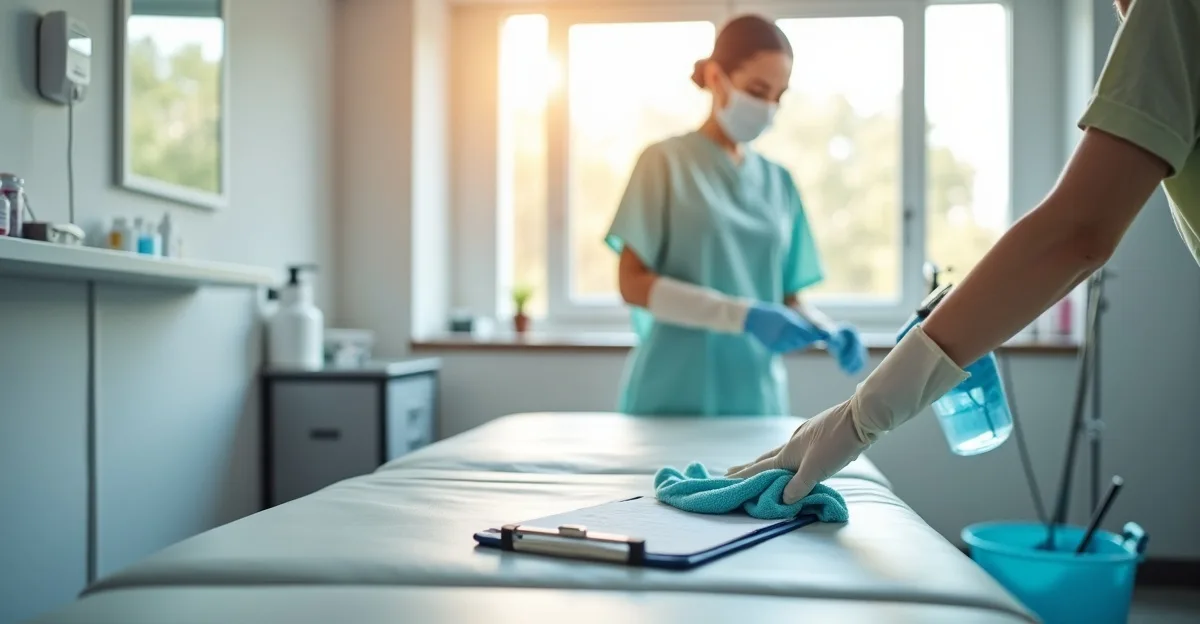
Medical grade cleaning relies on documented infection control systems, formal risk assessments, and strict compliance standards that exceed routine commercial cleaning. We build a structured medical grade cleaning checklist that defines what we clean, how we disinfect it, how often we perform each task, and how we verify results. This framework reduces cross-contamination in healthcare and other high-risk settings.
Key Takeaways
- Medical grade cleaning targets controlled risk reduction through site-specific infection control protocols, rather than surface-level appearance alone.
- A formal risk assessment defines clinical zones and high-touch surfaces, and we link cleaning frequency directly to each area’s risk level.
- We follow a strict two-step method—physical cleaning first, then correct disinfectant application with the right dwell time—without exception.
- We use colour-coded equipment, clean-to-dirty workflows, correct chemical handling, and appropriate PPE to minimise cross-contamination.
- We record documentation, require sign-offs, log incidents, and conduct internal audits to create traceable proof of compliance and accountability.
Medical Grade Cleaning: What Actually Sets It Apart from Standard Commercial Cleaning
Medical grade cleaning follows structured infection control systems built to reduce cross-contamination in healthcare and high-risk environments. It focuses on documented processes, risk assessment, and compliance with healthcare cleaning requirements Australia and Safe Work Australia cleaning guidelines.
Standard commercial cleaning is different. It concentrates on general hygiene and presentation—vacuuming floors, emptying bins, wiping surfaces, keeping spaces tidy. Medical grade cleaning goes further. Its core purpose is risk reduction. Every task is defined, recorded, and reviewed.
The difference isn’t about being “extra thorough.” It’s about being process-driven. A medical grade cleaning checklist outlines what must be cleaned, how it must be cleaned, how often, and how it’s verified. That checklist becomes the backbone of compliance.
These standards apply in:
- Medical centres
- Allied health clinics
- Dental practices
- Day surgeries
- Aged care facilities
- High-traffic corporate offices where health risks are elevated
Requirements vary. A GP clinic will not have the same risk profile as a surgical day hospital, and neither will mirror a corporate office with shared health rooms. Cleaning systems should reflect that risk level.
It’s also important to be clear: medical grade cleaning does not eliminate infection risk. Nothing can promise zero transmission. What it does deliver is controlled risk reduction through documented systems, trained personnel, and accountable reporting.
The Non-Negotiables: Infection Control and Risk Assessment
Every medical grade cleaning program starts with written, site-specific, and practical infection control cleaning protocols. A template alone is not enough. Protocols must reflect the actual layout and operations of the facility.
We begin with a formal risk assessment. That means identifying and mapping:
- Clinical zones
- Treatment rooms
- Waiting areas
- Bathrooms
- Staff rooms
- Storage areas
Next comes identifying high-touch points. These often include door handles, light switches, EFTPOS machines, reception counters, treatment beds, armrests, keyboards, and shared equipment. These surfaces require frequent, scheduled attention. For facilities with high patient flow, high-touch surface cleaning may be required multiple times daily.
Frequency standards must be tied to risk level. A waiting room chair in a busy clinic will require more frequent attention than a low-use admin office.
Medical grade cleaning also follows a strict two-step approach:
- Physical cleaning to remove dirt and organic matter.
- Application of the correct disinfectant with appropriate dwell time.
Skipping the first step reduces disinfectant effectiveness. Rushing dwell time compromises outcomes. These are non-negotiable standards.
Products should be suitable for healthcare environments, and where applicable, regulated by the Therapeutic Goods Administration (TGA) and listed on the ARTG. Chemical logs and Safety Data Sheets must be accessible upon request. Transparency builds trust.
Facilities looking for healthcare facility cleaning Adelaide or healthcare facility cleaning Sydney should expect this structured approach as standard, not as an add-on. The same principles apply whether services are delivered through medical cleaning in Adelaide or medical cleaning in Sydney.
For administrators reviewing internal processes, understanding what medical centres should expect from cleaners helps benchmark whether infection control cleaning protocols are genuinely compliant or simply cosmetic.
Equipment, Chemicals, and Cross-Contamination Controls
The right system can fail with the wrong equipment controls. Cross-contamination is one of the biggest risks in healthcare environments.
Colour-coded equipment systems are essential. Separate cloths and mops should be designated for bathrooms, clinical spaces, kitchens, and general areas. Mixing these creates unnecessary exposure pathways.
Clinical zones may also require dedicated cleaning equipment that does not move into lower-risk spaces. This zoning reduces pathogen spread.
Best practice follows a clean-to-dirty workflow. Clean clinical rooms first. Move last into bathrooms and waste areas. That order matters.
Chemical handling must align with guidance on cleaning chemicals and PPE. Products require secure storage, proper labelling, and correct dilution. Measured dispensing systems provide consistency. Guesswork has no place in healthcare cleaning.
Waste management procedures should also be clear. Even if cleaners are not directly disposing of sharps, they must understand the risks, escalation steps, and site protocols if sharps are discovered.
Personal protective equipment (PPE) depends on task and environment. Gloves are standard. Masks and eye protection may be required in clinical or isolation contexts. During higher-risk outbreaks, facilities may require COVID cleaning services with elevated PPE standards.
There is a difference between mandatory infection control steps and best practice enhancements. Colour zoning is mandatory. Routine internal audits are best practice. Enhanced documentation is best practice. A detailed clinical cleaning checklist bridges both and supports medical centre cleaning compliance.
For those wondering whether disinfection is automatically included, clarity matters. Disinfection is part of structured medical cleaning programs, but it must follow defined protocols. This is explained clearly in do cleaners handle disinfection too.
Training, Certifications, and On-Site Accountability
Healthcare environments demand cleaners trained in healthcare cleaning requirements Australia, not just general commercial processes.
Staff should complete formal infection control training before entering clinical sites. Refreshers must follow regularly. Standards shift. Procedures update. Teams need current knowledge.
A proper onboarding process prepares new team members for clinical risks before they are assigned to live environments. Shadowing, supervised shifts, and documented sign-offs reduce errors.
Escalation procedures are equally important. If contamination, spills, or infection risks arise, staff must know who to notify and what steps to take immediately. Fast communication protects both patients and staff.
Supervisor oversight strengthens accountability. Routine site inspections and internal reviews ensure infection control cleaning protocols translate from paper into daily practice.
Documentation and communication channels must be direct. Facility managers and medical administrators should know exactly who to contact and how issues are recorded.
True commercial medical cleaning services function as operational partners. They integrate into the facility’s wider compliance structure. That’s particularly important in environments such as medical and healthcare facility cleaning and high-care settings like aged care cleaning, where aged care infection prevention expectations apply.
Documentation, Reporting, and Auditing: The Compliance Backbone
Documentation is where medical grade cleaning proves its value.
Every site should operate under a structured medical grade cleaning checklist specific to its risk category. This checklist outlines daily, weekly, and monthly tasks. Each task should be signed off and traceable.
Incident reporting procedures must exist. If a breach occurs, records should show when it was identified, how it was addressed, and what corrective actions followed.
Internal audit systems matter. Supervisors should conduct quality checks. Corrective actions should be documented. Patterns should be reviewed and addressed.
Transparent reporting protects both the facility and the cleaning provider, aligning with national healthcare infection prevention and quality standards. During external reviews or compliance checks, clear logs demonstrate adherence to medical grade cleaning standards and Safe Work Australia cleaning guidelines.
For managers unfamiliar with audit expectations, reviewing what happens during a commercial cleaning audit offers practical insight.
Without documentation, even well-executed cleaning becomes difficult to verify. With it, facilities gain defensible compliance records and operational clarity.
Questions to Ask Before You Hire or Review Your Cleaning Provider
Before engaging or renewing a contract, structured questions cut through sales talk and reveal real capability.
Under a formal review, we recommend asking:
- Can we see your medical grade cleaning checklist for our facility type?
- How are high-touch points identified and scheduled?
- What infection control cleaning protocols are followed?
- Are disinfectants appropriate for healthcare settings, and how are chemical logs managed?
- What training do staff complete before entering clinical areas?
- How are daily and periodic tasks documented?
- What is the escalation process for contamination or infection risk?
- Are you familiar with healthcare facility cleaning Adelaide or healthcare facility cleaning Sydney requirements?
Comparing responses against healthcare cleaning requirements Australia quickly shows whether a provider operates at a medical grade level or a standard commercial level.
Facilities that want clarity without pressure can arrange a scope review or compliance walkthrough. We assess existing processes against medical grade cleaning standards and provide practical recommendations. No obligation. Just a clear comparison of where systems stand today and where improvements may strengthen compliance and risk control.
For teams ready to review their current setup, reach out through our contact page. We’ll walk through the details and provide straight answers grounded in real-world healthcare environments.
Frequently Asked Questions
A medical grade cleaning checklist outlines all cleaning and disinfection tasks required to control infection risks in healthcare environments. It typically includes high-touch surface cleaning, treatment room sanitation, bathroom disinfection, waste handling procedures, and equipment zoning. The checklist also defines cleaning frequency, approved disinfectants, required PPE, and verification steps such as sign-offs or inspection logs to ensure compliance.
Medical facilities should follow a medical grade cleaning checklist daily, with some high-touch areas cleaned multiple times per day. Frequency depends on the risk level of each zone, patient traffic, and the type of healthcare service provided. Clinical areas, treatment rooms, and shared equipment usually require more frequent cleaning than administrative offices or storage areas.
A two-step process is required because disinfectants work properly only on clean surfaces. The first step removes dirt, organic matter, and debris through physical cleaning. The second step applies a healthcare-approved disinfectant and allows the correct dwell time for pathogens to be neutralized. Skipping the first step or shortening dwell time can significantly reduce the effectiveness of infection control cleaning.
Responsibility is typically shared between the cleaning provider and the healthcare facility’s management or infection control team. Professional cleaning staff follow the checklist during daily operations, while supervisors or facility administrators review documentation and audit results. This shared accountability ensures the checklist is followed correctly and updated when clinical risks or regulatory requirements change.
Yes, a medical grade cleaning checklist helps demonstrate compliance during healthcare inspections or internal audits. Documented checklists provide traceable records of cleaning schedules, completed tasks, disinfectant use, and staff verification. These records show that infection control procedures are consistently followed and help facilities meet healthcare cleaning standards and workplace safety guidelines.