
What is the going rate for a contract cleaner?
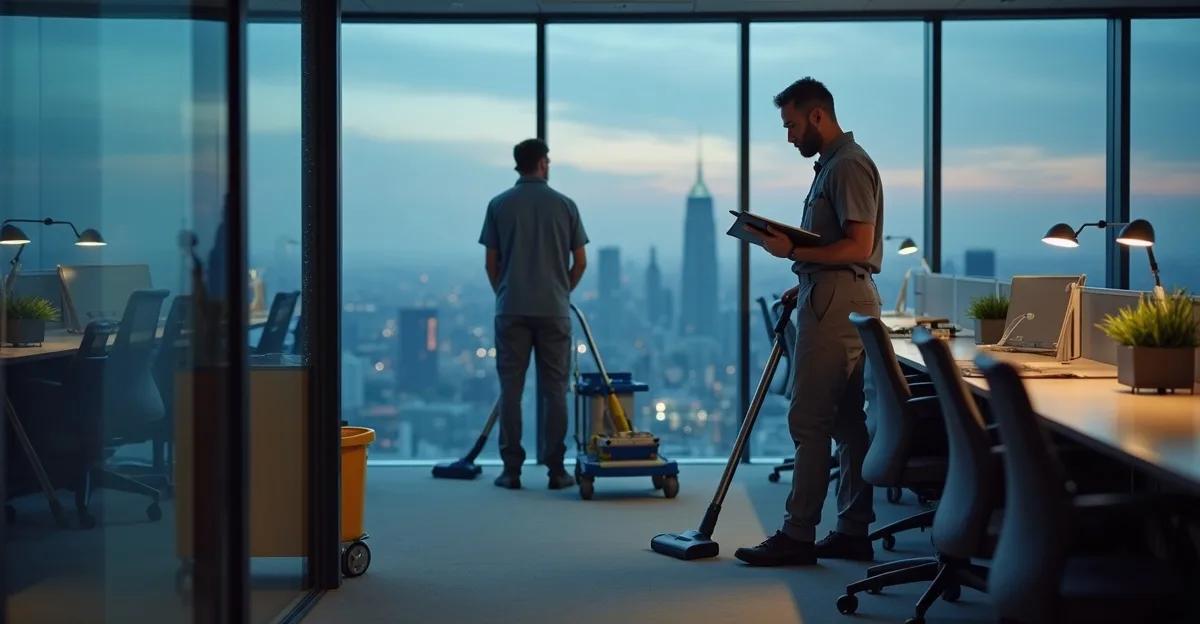
Contract cleaner pricing in Adelaide and Sydney usually ranges from $35–$60+ per labour hour. Actual costs depend on building size, cleaning frequency, total scope, and compliance needs. We see pricing shaped more by results and required standards than by a simple hourly rate. Standard office cleaning costs less than medical centre or strata services because the expectations and risks differ.
Key Takeaways
- Hourly commercial cleaning rates commonly sit between $35–$60+ per hour, while fixed contracts vary based on square metres, scope, and frequency.
- Medical and healthcare sites cost more than standard offices due to infection control, documentation, and trained staff requirements.
- Location affects pricing, with differences between Adelaide and Sydney driven by labour markets, access conditions, and site complexity.
- Fixed-price contracts offer clearer budgeting and defined service levels, while hourly models can lead to fluctuating monthly costs.
- The cheapest quote often reduces labour hours, supervision, or compliance, which can lower service quality over time.
We recommend looking beyond the base hourly figure. A lower rate often means fewer allocated hours or minimal supervision. That approach can affect consistency and long-term presentation.
Healthcare and clinical environments require strict infection control processes. Teams must document cleaning tasks and follow compliance standards. These requirements increase labour costs and management oversight. Offices, by contrast, usually follow general cleaning checklists with lower compliance pressure.
Adelaide and Sydney markets also influence price. Sydney sites often carry higher labour costs and access challenges, such as high-rise buildings or restricted loading zones. Adelaide contracts may offer slightly lower rates, yet specialised facilities can still command premium pricing in either city.
Fixed-price contracts give us and our clients clear expectations. We define scope, frequency, and service levels upfront. This structure supports accurate budgeting and accountability. Hourly agreements can work for small or irregular sites, though monthly costs may vary.
We encourage clients to compare inclusions, supervision levels, and quality assurance processes before choosing a provider. Strong contract cleaning supports presentation, safety, and compliance. Price plays a role, but consistent outcomes deliver the real value.
Do not modify or enhance the wording; the text must remain identical except for the HTML markup.
Do not convert the first sentence or introductory text into a heading — it must remain a normal paragraph (<p>).
How Much Do Commercial Contract Cleaners Charge in Adelaide and Sydney?
Contract cleaner pricing depends on scope, frequency, and building size. It doesn’t sit neatly on a single flat hourly rate.
In Adelaide and Sydney, commercial cleaning rates commonly fall within:
- Hourly commercial cleaning: approximately $35–$60+ per labour hour, depending on site complexity and compliance requirements.
- Fixed price contracts: vary widely based on square metres, frequency, and agreed service levels.
Standard office cleaning rates are usually lower than medical centre cleaning costs. Healthcare environments require stricter infection control, documentation, and trained staff. That adds time and oversight. Strata cleaning pricing also shifts based on common area size, bin management, lifts, and daily foot traffic.
Location plays a role as well. Contract cleaning costs Adelaide can differ from contract cleaning costs Sydney due to labour availability, wage pressures, and access challenges in larger metropolitan sites. Even within one city, two properties of the same size can price very differently.
The real driver isn’t the headline number. It’s the outcome required. A 2,000 m² office cleaned three times per week costs far less than a 2,000 m² medical centre cleaned daily with detailed compliance reporting. Risk profile, access conditions, and expectations all shape contract cleaner pricing.
For a broader view of what impacts commercial budgets, our guide on commercial cleaning hourly rates in Australia breaks down the national context.
What Actually Affects Commercial Cleaning Costs?
Commercial cleaning rates move based on practical, measurable site factors. In real buildings, these are the elements that matter:
- Building size and usable cleaning footprint. A large open-plan floor is faster to clean than tight offices with multiple partitions.
- Cleaning frequency. Daily attendance costs more than weekly or rotational schedules.
- Scope of work. Bathrooms, kitchens, disinfecting high-touch points, carpet care, window cleaning, and consumables replenishment all add time.
- Compliance requirements. Medical centres require documented infection control processes, which raises medical centre cleaning costs above standard offices.
- After-hours access and security procedures. Sign-in protocols or restricted floors extend labour time.
- Site complexity. Multi-level strata buildings with lifts, bin rooms, and car parks require setup time and coordination.
- Supervision and quality checks. Ongoing inspections and account management ensure consistency but form part of the cost structure.
- Multi-site reporting. Centralised management for several properties adds administration time.
Medical environments illustrate this clearly. Infection control standards demand trained staff, specific chemical systems, colour-coded equipment, and reporting in line with Australian Government infection prevention and control guidelines for healthcare settings. That’s built into pricing. A simple office won’t require that level of structure.
Strata properties bring different challenges. Early morning starts, waste rotation, shared facilities, and high foot traffic shift strata cleaning pricing compared to a private office tenancy.
Understanding what commercial cleaning covers helps clarify why two quotes rarely match line for line.
Hourly Rates vs Fixed Price Contracts: How Pricing Models Work
Most commercial cleaning quotes follow one of two structures.
Hourly cleaning rates commercial offer flexibility. Clients pay for time spent. This can suit short-term or irregular works. The downside is variability. Monthly budgets fluctuate if more hours are required.
Fixed price cleaning contracts are scope-based. The monthly fee reflects agreed tasks, frequency, and service standards. Costs remain stable provided the scope doesn’t change.
Fixed pricing is calculated from core inputs:
- Estimated labour hours required to meet the agreed standard.
- Award wages and compliance obligations under the Cleaning Services Award (MA000022) published by the Fair Work Ombudsman.
- Equipment, chemicals, and consumables.
- Supervision, inspections, and administration overhead.
For commercial property managers, fixed contracts offer clear benefits. Scope is defined. Service standards are documented. Budgeting becomes predictable.
Purely hourly arrangements on larger sites can create problems. Scope creep happens easily. Staffing may vary week to week. Accountability becomes vague if expectations aren’t documented.
Contract cleaning costs Adelaide often reflect smaller site footprints and shorter travel distances. Contract cleaning costs Sydney may account for traffic, parking constraints, and larger multi-level buildings. Labour markets differ, as reflected in Australian Bureau of Statistics labour cost index data by state, which directly affects commercial cleaning rates.
We typically recommend fixed agreements for established sites. They remove guesswork and shift the focus onto outcomes, not time spent.
Why the Cheapest Quote Can Cost More in the Long Run
Price pressure is normal. Still, a quote that looks dramatically cheaper usually signals risk.
Warning signs include:
- Underestimated labour hours. Staff rush tasks to fit unrealistic timeframes.
- High staff turnover caused by below-award wages that fail to meet Fair Work Ombudsman minimum pay requirements.
- Gaps in Fair Work compliance or insurance coverage required under SafeWork NSW employer obligations and ReturnToWorkSA employer requirements.
- Minimal supervision and reactive management.
- Vague scope definitions inside the commercial cleaning quote.
Property managers frequently tell us they’re frustrated with inconsistent service and limited communication. Those issues often trace back to contracts priced too low to sustain proper staffing or oversight.
Commercial cleaning is labour-intensive. If the rate doesn’t realistically cover wages, supervision, equipment, and quality checks, something will give. It’s usually the standard of clean.
The smarter question isn’t “What’s the cheapest rate?” It’s “What level of service does this building require?” Reliability, compliance, and responsiveness protect asset value. They also reduce complaints and disruptions.
We’ve outlined broader concerns in our article on disadvantages of contract cleaning, which highlights risks when agreements lack structure.
How to Compare Commercial Cleaning Quotes Fairly
Comparing total monthly figures alone leads to mismatched expectations. Quotes must be assessed based on scope and delivery method.
Each commercial cleaning quote should clearly define:
- Detailed scope of work.
- Cleaning frequency and attendance schedule.
- Clear exclusions.
- Whether consumables are included.
- Supervision, quality checks, and reporting processes.
Once details are confirmed, compare like for like. A lower price may exclude carpet maintenance or periodic deep cleans, while another includes them.
We also recommend asking direct questions:
- How many labour hours are allocated to the site?
- What happens if tasks fall behind schedule?
- How are issues reported and resolved?
- Are cleaners trained appropriately for specialised environments such as medical centres?
Understanding how often offices should be professionally cleaned helps align frequency with actual workplace activity levels.
Building managers reviewing contract cleaning costs Adelaide or contract cleaning costs Sydney should measure quotes against their property’s operational demands. Average numbers don’t clean buildings. Clear scope and accountability do.
Getting an Accurate Cleaning Quote for Your Property
Accurate contract cleaner pricing starts with an on-site walkthrough. Floorplans help, but seeing the site in person reveals access points, storage constraints, traffic patterns, and risk areas.
We recommend a structured approach:
- Conduct a facilities assessment to measure true cleaning footprint.
- Discuss expectations and existing pain points.
- Identify compliance requirements, especially in healthcare or regulated settings.
- Confirm cleaning frequency and agreed service standards.
From there, a commercial cleaning quote should reflect realistic labour allocation, proper supervision, and sustainable staffing levels. Transparency prevents disputes later.
For businesses requiring ongoing support, our commercial cleaning services cover offices, medical centres, strata properties, and multi-site portfolios. We operate across Adelaide and provide commercial cleaning in Sydney with structured contracts built around clear scope and consistent delivery.
If you need clarity around footprint-based pricing, our resource on commercial cleaning per square metre explains how size influences calculations.
Contract cleaner pricing should reflect your building’s actual needs, not guesswork. The right agreement balances cost, quality, and accountability so the standard remains steady month after month.
Frequently Asked Questions
The average hourly rate for a commercial contract cleaner in Australia typically ranges from $35 to $60+ per labour hour. Pricing varies based on site complexity, compliance requirements, and cleaning frequency. Metropolitan markets like Sydney may sit at the higher end due to labour costs and access conditions, while smaller markets can be slightly lower.
Medical centre cleaning costs more because it requires strict infection control procedures and documented compliance processes. Staff must be trained in healthcare cleaning standards and use specific chemicals and colour-coded systems. The added oversight, reporting, and risk management increase labour time and overall contract pricing compared to general office environments.
A fixed-price cleaning contract usually offers more predictable monthly budgeting. The fee is based on agreed scope, frequency, and service standards, which reduces cost fluctuations. Hourly cleaning rates may suit small or irregular jobs, but larger sites can experience budget variability if required labour hours increase unexpectedly.
Commercial cleaning pricing for large buildings is calculated using estimated labour hours, building size, scope of work, and cleaning frequency. Additional factors include supervision, equipment, consumables, and compliance obligations. Multi-level layouts, shared amenities, and after-hours access can also increase setup time and coordination, which affects the total contract cost.
When reviewing commercial cleaning quotes, compare scope of work, cleaning frequency, labour allocation, inclusions, and supervision levels. Check whether consumables, periodic services, and compliance reporting are included. A lower quote may exclude important tasks or reduce labour hours, which can affect consistency and long-term service quality.