
What Happens During a Commercial Cleaning Audit?
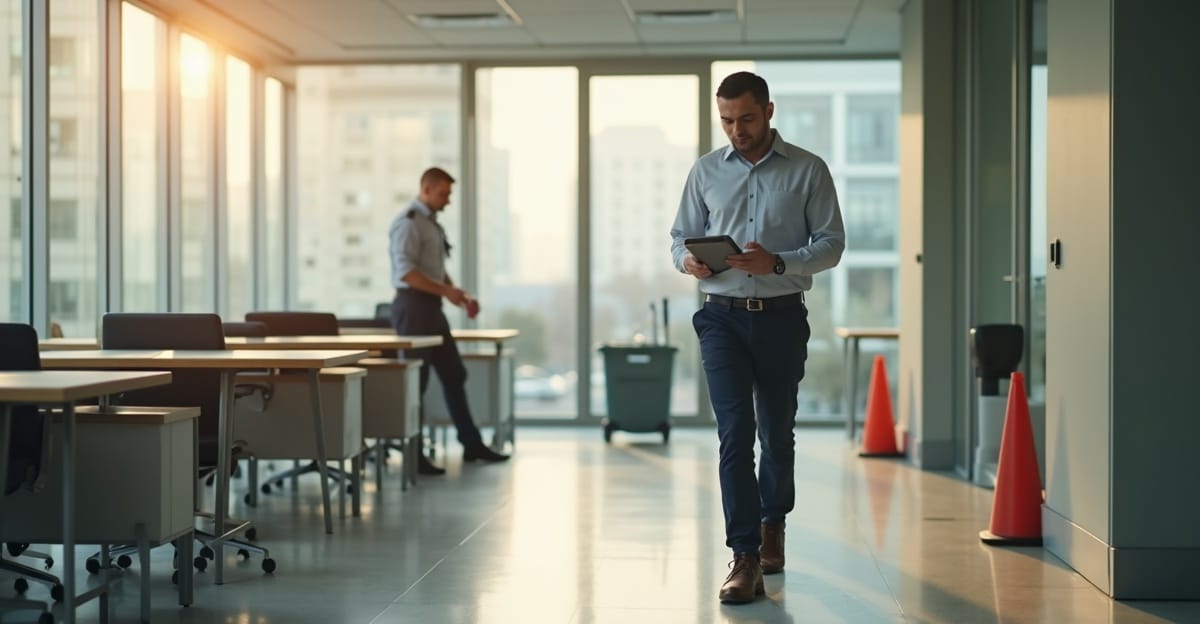
A commercial cleaning audit follows a structured commercial cleaning inspection process that measures cleaning quality, safety, and compliance against the agreed scope. We review site-specific risks, score performance objectively, document findings with clear evidence, and set corrective actions that protect standards over time. We focus on facts, consistency, and accountability across every area we assess.
Key Takeaways
- A commercial cleaning audit is a documented review of quality, compliance, and contract delivery—not a reaction to complaints.
- Preparation includes reviewing the cleaning inspection checklist, previous reports, site-specific risks, and compliance benchmarks.
- The walkthrough assesses high-touch surfaces, shared areas, bathrooms, kitchens, waste handling, and safe work practices using objective scoring and timestamped photos.
- Findings are compiled into a digital report with scores, evidence, and clearly assigned corrective actions with timelines.
- A strong audit process is proactive, measurable, and transparent, with structured reporting and follow-up built into ongoing service delivery.
What a Commercial Cleaning Audit Actually Covers
A commercial cleaning audit is a structured, documented review of cleaning quality, safety, and compliance across a site. The commercial cleaning inspection process is built to measure performance clearly and consistently.
This isn’t about catching cleaners out. It’s proactive cleaning quality control. The goal is to protect service standards, maintain facility cleaning compliance, and strengthen cleaning service accountability across the entire contract.
During a commercial cleaning audit, we assess whether the agreed scope is being delivered, whether site-specific risks are managed, and whether standards remain consistent over time. We document findings. We measure results. We report clearly.
Office managers, strata property managers, medical centre administrators, and operations managers all benefit from this structure. Each has different priorities. An office may focus on presentation and staff wellbeing. A strata property will prioritise shared zones. A medical facility requires strict alignment with healthcare protocols.
Audits shouldn’t be a one-off reaction to complaints. They belong inside ongoing janitorial services as part of continuous oversight. When inspections are routine, issues are prevented rather than chased.
Effective cleaning site inspections form the backbone of long-term cleaning quality control. They create clarity between both parties. They remove guesswork. They replace vague claims like “everything’s fine” with measurable evidence.
Why Regular Inspections Matter for Quality, Compliance, and Trust
Without structured inspections, cleaning standards tend to drift. Staff change. Priorities shift. Small oversights compound into visible problems.
Regular audits prevent common frustrations:
- Inconsistent cleaners
- No follow-up on requests
- Poor communication about recurring issues
Structured cleaning performance reporting addresses these issues directly. When inspection results are documented and shared, there’s full visibility on what’s working and what needs attention.
In office environments, routine reviews help maintain a professional appearance and safe workspace. In strata buildings, cleaning site inspections reduce complaints from residents by addressing shared areas like lifts and lobbies before they decline.
Medical environments carry higher risk. Here, inspections support documented compliance with infection control protocols outlined by the Centers for Disease Control and Prevention (CDC) and medical cleaning standards. For administrators, that documentation becomes part of broader governance requirements. Our approach to medical facility cleaning reflects this level of scrutiny.
Shared strata areas deserve the same attention. Lifts, entry doors, waste rooms, corridors, and car parks face constant use. Regular review keeps these high-traffic zones safe and presentable.
Accountability also works both ways. The cleaning provider must meet clear expectations. At the same time, the scope and standards must be agreed upfront. We align audits with documented scopes, similar to a detailed office cleaning checklist, so performance is measured fairly.
Over time, audits strengthen partnership. They shift conversations from complaints to continuous improvement.
What Happens Before the Inspection
Preparation defines the effectiveness of any commercial cleaning inspection process.
Scheduling usually follows a structured cycle. Inspections can be weekly, monthly, or quarterly depending on site size, traffic, and risk profile. Others align with contract milestones or service reviews.
Before walking the site, we review the cleaning inspection checklist against the agreed scope. That means checking inclusions, frequencies, and any special requirements. Aligning expectations prevents confusion later.
Site-specific priorities are confirmed at this point. For example:
- High-traffic corporate office floors may require closer scrutiny of reception areas and meeting rooms.
- Medical treatment rooms demand clinical-grade accuracy.
- Strata properties need attention across shared facilities and waste zones.
We also review previous reports and corrective action logs. If an issue was flagged last cycle, it must be verified as resolved. Patterns are tracked over time, not ignored.
Compliance benchmarks are identified where relevant. Healthcare sites require alignment with documented medical cleaning standards. Commercial buildings may have building management rules that shape presentation expectations.
Inspections are typically conducted by site supervisors or account managers. In some cases, third-party auditors may participate where additional oversight is required.
Expectations around documentation are clarified before the walkthrough begins. Digital reporting, time-stamped photos, and structured scoring systems ensure consistency. This preparation stage ensures the inspection runs efficiently and fairly.
What Happens During the Inspection Walkthrough
The walkthrough follows a structured cleaning inspection checklist. It’s systematic. Nothing is left to memory.
We typically assess:
- High-touch surfaces such as door handles, lift buttons, desks, and reception counters.
- Bathrooms, including fixtures, floors, mirrors, and consumable restocking.
- Kitchens and breakout areas, focusing on hygiene and presentation.
- Medical rooms and clinical areas where applicable.
- Shared strata spaces including lobbies, corridors, bin rooms, and car parks.
- Waste handling and overall presentation standards.
In some environments, high-touch points require detailed assessment, particularly in line with high-touch surface cleaning guidance from the CDC.
Each area is scored against defined criteria. Objective scoring prevents vague descriptions. A number or grade provides clarity where words fall short.
Photos are taken with timestamps. This protects both client and provider. The condition of the site at inspection time is clearly recorded.
We also spot-check consumables and review safe work practices. Chemical storage, equipment condition, and staff presentation may form part of the assessment, aligned with workplace hazardous chemical storage regulations.
Notes are recorded in real time. These feed directly into cleaning performance reporting. When standards relate to measurable thresholds—such as in healthcare settings—they’re cross-checked against facility cleaning compliance requirements set by national healthcare safety authorities.
By the end of the walkthrough, there’s a clear snapshot of cleaning performance at that moment.
Documentation, Reporting, and Corrective Actions
After the site inspection, findings are compiled into a digital report. That report is shared with the client within an agreed timeframe.
Reports generally include:
- A scoring summary with breakdown by area.
- Photographic evidence.
- Comments explaining observations.
Where standards are met, that’s documented. Where improvement is required, actions are clearly defined.
Each corrective action log outlines:
- What needs improvement.
- The responsible team member.
- A timeline for resolution.
Follow-up cleaning site inspections may occur to verify completion. Trends are tracked over multiple inspection cycles. If a specific issue repeats, it signals either scope adjustment or process improvement is needed.
This reporting framework strengthens transparency. It proves that cleaning quality control is systematic rather than reactive.
Clients often use these reports as part of wider operational reviews. Those reviewing whether it’s time to review a cleaning plan can rely on inspection data instead of assumptions.
Clear documentation strengthens cleaning service accountability. Both parties see the same data. Expectations remain aligned.
Red Flags to Watch for in a Cleaning Provider’s Audit Process
Some providers claim to conduct audits but offer little structure behind the term. That gap becomes visible quickly.
Warning signs include:
- No formal cleaning inspection checklist.
- No written cleaning performance reporting or photo evidence.
- Inspections only triggered after complaints.
- No corrective action logs or follow-up reviews.
- Vague language such as “standards are high” without measurable scoring.
- In medical or strata settings, no documented facility cleaning compliance records.
A strong commercial cleaning audit process should be proactive, documented, and measurable. If inspection outcomes can’t be shown clearly, there’s no true cleaning quality control in place.
Office and strata managers often first notice gaps through visible issues. Many of the common indicators are outlined in signs of a poorly cleaned office. Those symptoms usually reflect missing inspection structure behind the scenes.
Benchmarking a provider’s commercial cleaning inspection process against these standards protects service reliability. Clear scope. Structured inspections. Transparent reporting. Consistent follow-up. That’s how trust is built and maintained over time.
Frequently Asked Questions
A commercial cleaning inspection process includes reviewing cleaning quality, safety practices, and contract compliance across all agreed areas. Inspectors assess high-touch surfaces, restrooms, kitchens, shared spaces, and waste handling. They use a structured checklist, objective scoring, and photo evidence to document performance. The goal is to measure whether services meet the defined scope and standards.
The frequency of a commercial cleaning inspection depends on site size, traffic levels, and risk profile. High-traffic offices or medical facilities may require monthly or even weekly inspections, while lower-risk sites may be reviewed quarterly. Regular inspections prevent standards from slipping and allow issues to be corrected before they escalate into complaints.
A cleaning quality audit is typically conducted by a site supervisor, account manager, or an independent third-party auditor. The inspector should understand the contract scope, compliance requirements, and safety standards. Their role is to provide an objective assessment, document findings clearly, and assign corrective actions where necessary to maintain accountability.
Performance is measured using a structured cleaning inspection checklist with defined scoring criteria. Each area is graded based on cleanliness, presentation, and compliance with agreed standards. Inspectors often use timestamped photographs to support their findings. This evidence-based approach replaces subjective opinions with measurable results that can be tracked over time.
If issues are identified during a commercial cleaning inspection, they are recorded in a corrective action log. The report outlines what needs improvement, assigns responsibility, and sets a clear deadline for resolution. Follow-up inspections verify completion. Repeated issues may lead to process adjustments or scope changes to ensure consistent service delivery.