
What does commercial cleaning cover?
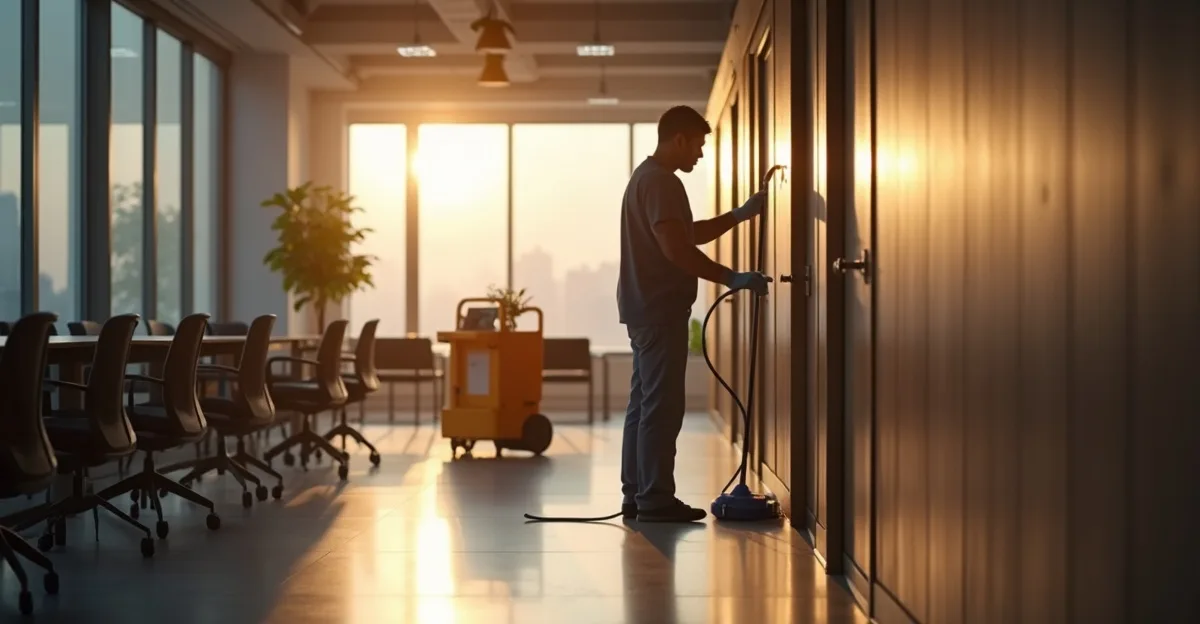
Commercial cleaning coverage goes beyond a simple checklist. We plan and deliver ongoing cleaning for shared workplaces like offices, strata buildings, and medical centres. We base the scope on how each site operates. Consistency, risk level, and site needs define the work. We include clear daily hygiene tasks and schedule specialist or periodic services separately.
Key Takeaways
- Commercial cleaning focuses on ongoing hygiene, safety, and presentation in non-residential spaces, not one-off cleans.
- The scope varies by environment, with offices, strata buildings, and medical facilities requiring different priorities and standards.
- Standard services usually include floors, waste removal, surface cleaning, amenities, and high-touch points.
- Add-on services like carpet cleaning, pressure washing, and deep cleans are typically scheduled separately.
- Clear, documented scopes prevent gaps, confusion, and unmet expectations.
What commercial cleaning actually means in practice
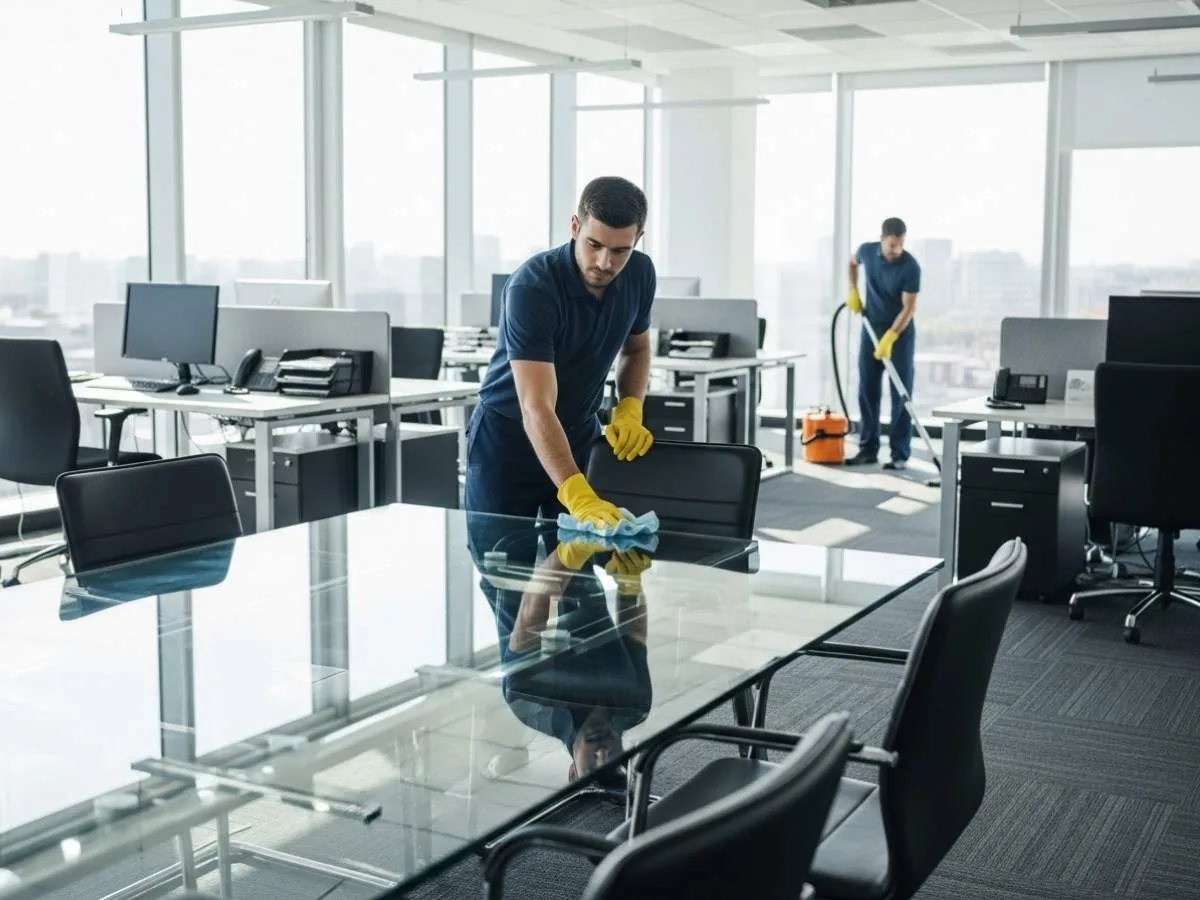
Commercial cleaning is the professional cleaning of shared workplaces and public-facing environments. That includes offices, strata buildings, medical facilities, and other non-residential spaces where people work, visit, or pass through every day.
The focus is consistency. These aren’t one-off, domestic-style cleans. Commercial cleaning supports hygiene and safety in line with Safe Work Australia’s workplace health and safety guidance, while maintaining presentation on an ongoing basis. Schedules are set based on how the space is used—daily, several times a week, or weekly—factoring in foot traffic, risk, and expectations.
The phrase “what does commercial cleaning cover” comes up a lot because it’s broad by nature. The exact commercial cleaning scope of work depends on the building type, who uses it, and what’s agreed upfront. That’s why a clear scope matters more than a generic promise of cleaning.
At its core, commercial cleaning services are about keeping shared environments functional and presentable without disruption. For offices, that means reliable, professional cleaning services for offices that staff can count on day after day.
For a deeper breakdown of categories, our guide on what commercial cleaning covers explains how these services differ across sites. We also clarify janitorial vs commercial cleaning for teams weighing their options.
Core services usually included in commercial cleaning
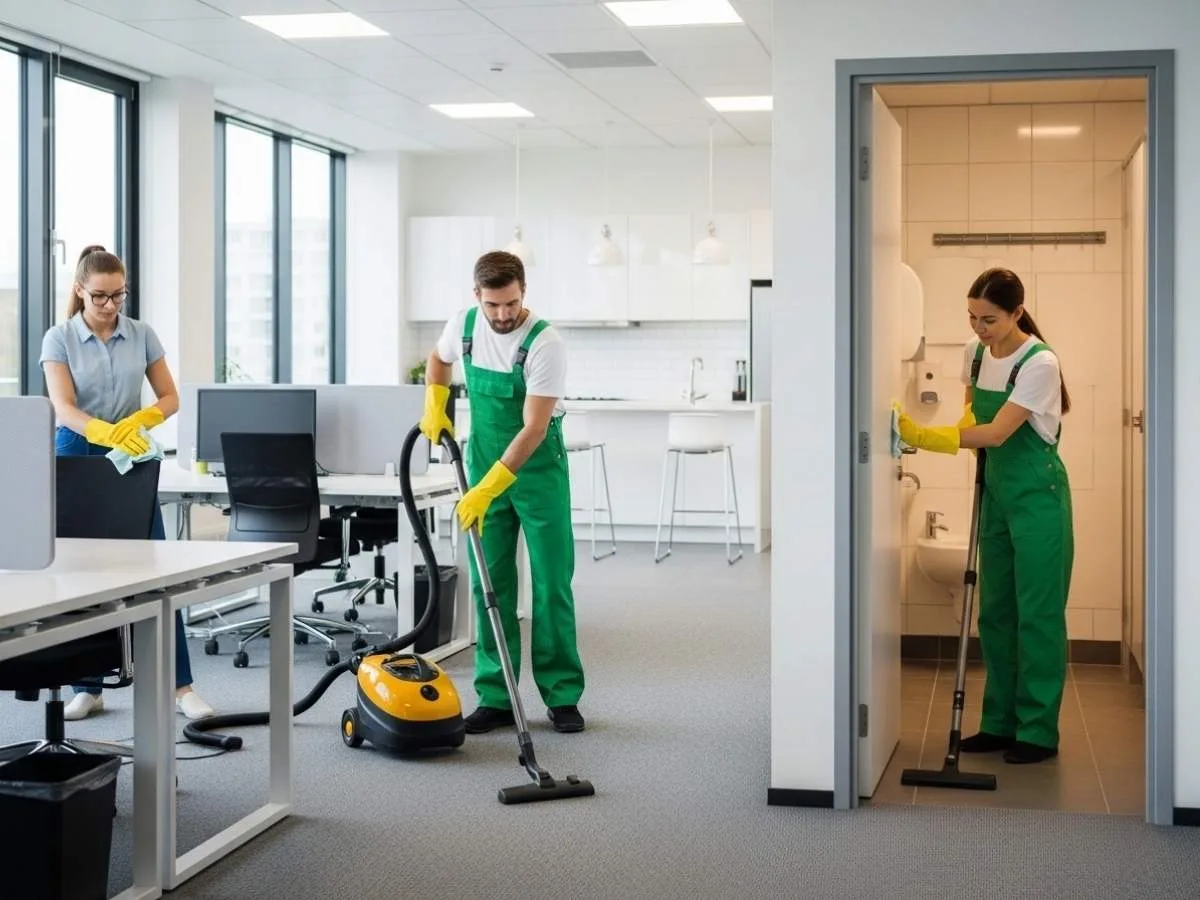
Most reliable providers include a set of standard tasks. These form the baseline of what is included in commercial cleaning for offices and similar spaces.
Typical inclusions cover floors, waste, surfaces, and amenities, including high-touch surface cleaning as recommended by the Australian Department of Health. That means vacuuming and mopping, emptying bins, cleaning accessible desks and workstations, wiping high-touch points, cleaning kitchens and break rooms, and full restroom cleaning with restocking.
These tasks matter because they protect health, keep complaints down, and shape first impressions. A clean space signals care and professionalism. A neglected one creates friction fast.
Frequency plays a huge role. Daily cleaning produces very different results to weekly visits, even with the same tasks listed. An office cleaned daily stays predictable. A weekly clean often turns reactive.
For teams who want a clear benchmark, our office cleaning checklist outlines what strong office cleaning services included should look like in practice. We also explain what office cleaning involves and how often offices need cleaning to match use and risk.
How the scope changes for offices, strata, and medical spaces
Commercial cleaning services don’t work as a one-size-fits-all solution. The environment sets the priorities.
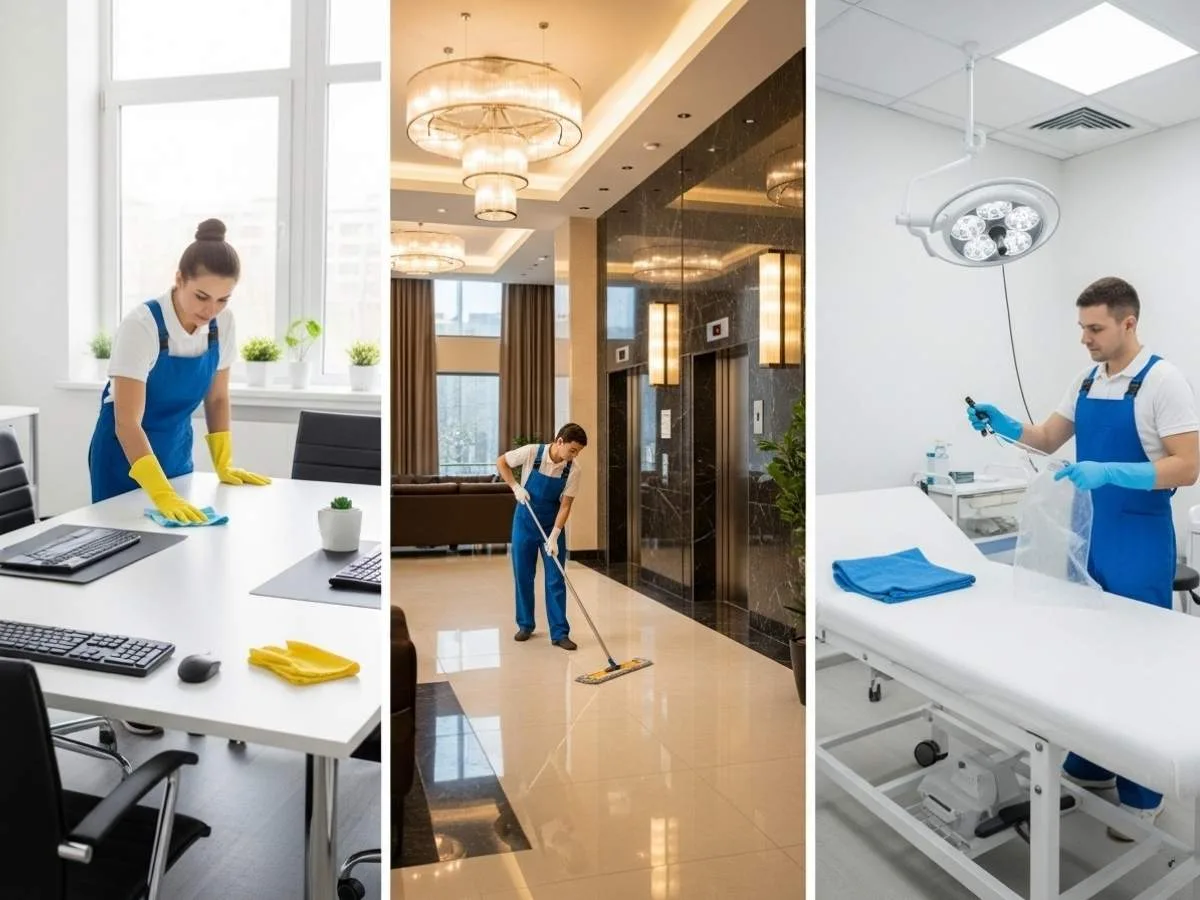
Offices focus on workstations, meeting rooms, kitchens, bathrooms, floors, and the shared touchpoints staff and visitors use all day. Presentation and comfort matter alongside hygiene.
Strata and building common areas require a different lens. Lobbies, lifts, stairwells, corridors, car parks, bin rooms, and shared amenities drive first impressions and safety. Strata cleaning services rely on consistent standards and visible results, especially in high-traffic zones.
Medical centres sit at the highest end of risk, operating under national infection prevention and control guidelines for healthcare settings.
Medical centres sit at the highest end of risk, operating under national infection prevention and control guidelines for healthcare settings.
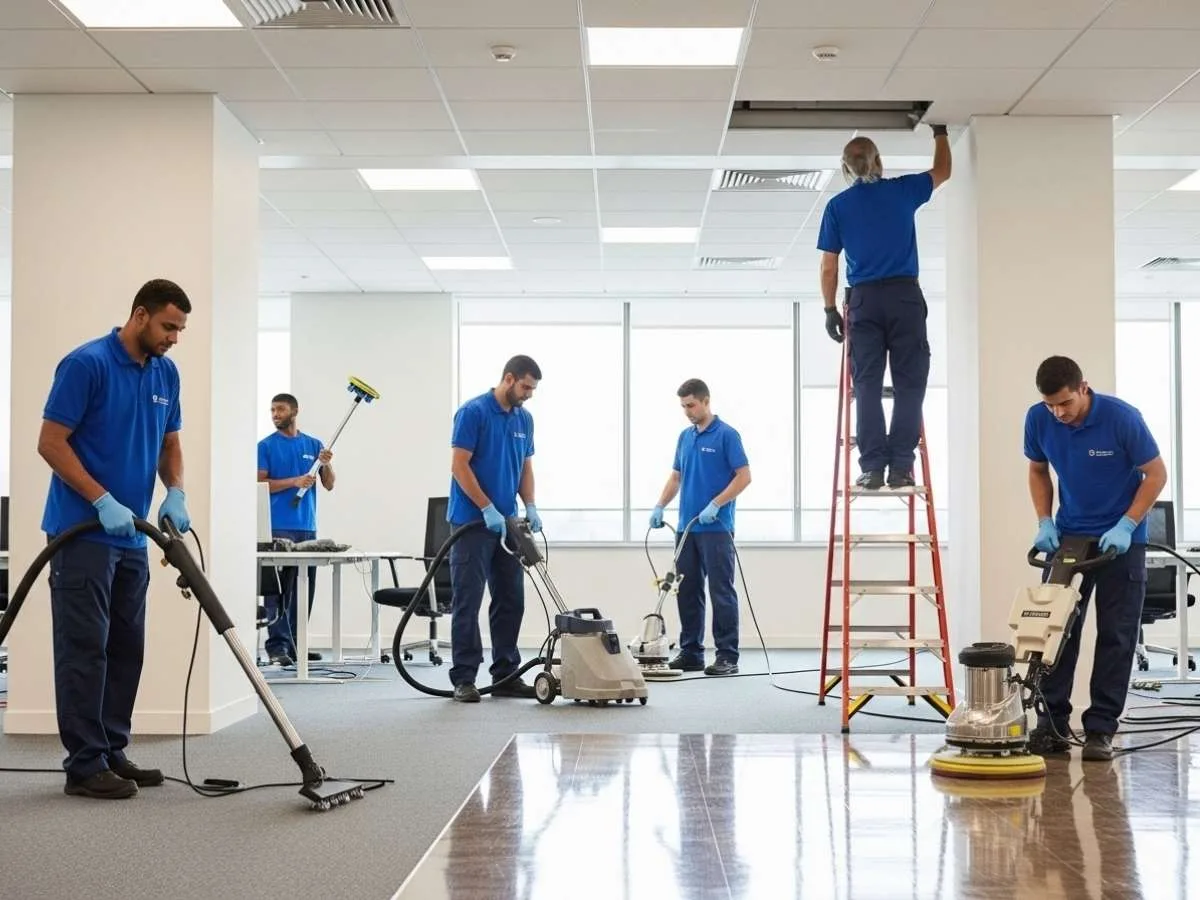
Medical centres sit at the highest end of risk, operating under national infection prevention and control guidelines for healthcare settings. Medical centre cleaning requirements prioritise touchpoints, treatment rooms, waiting areas, and waste handling. Infection control expectations shape the scope, and attention to detail isn’t optional. We adjust scopes across sites because the people using them, and the risks involved, are different. That’s the difference between ticking boxes and delivering reliable outcomes.
Services that are often optional or scheduled separately
Some tasks are commonly assumed to be included, but usually aren’t part of a standard commercial cleaning scope of work unless they’re listed.
These services are typically added on a quarterly, annual, or as-needed basis. They take more time, specialist equipment, or different scheduling, which is why they’re separate.
Common add-on services include:
The most frequent examples are:
- Carpet steam cleaning
- Hard floor strip and seal
- High-level dusting
- External window cleaning
- Pressure washing
- Periodic deep cleans
We often bundle these through services like carpet cleaning, floor cleaning, window cleaning, or deep cleaning when timing makes sense.
Vague scopes create confusion. Clear documentation avoids assumptions and makes it obvious what is included in commercial cleaning and what’s planned separately.
What good commercial cleaning looks like day to day
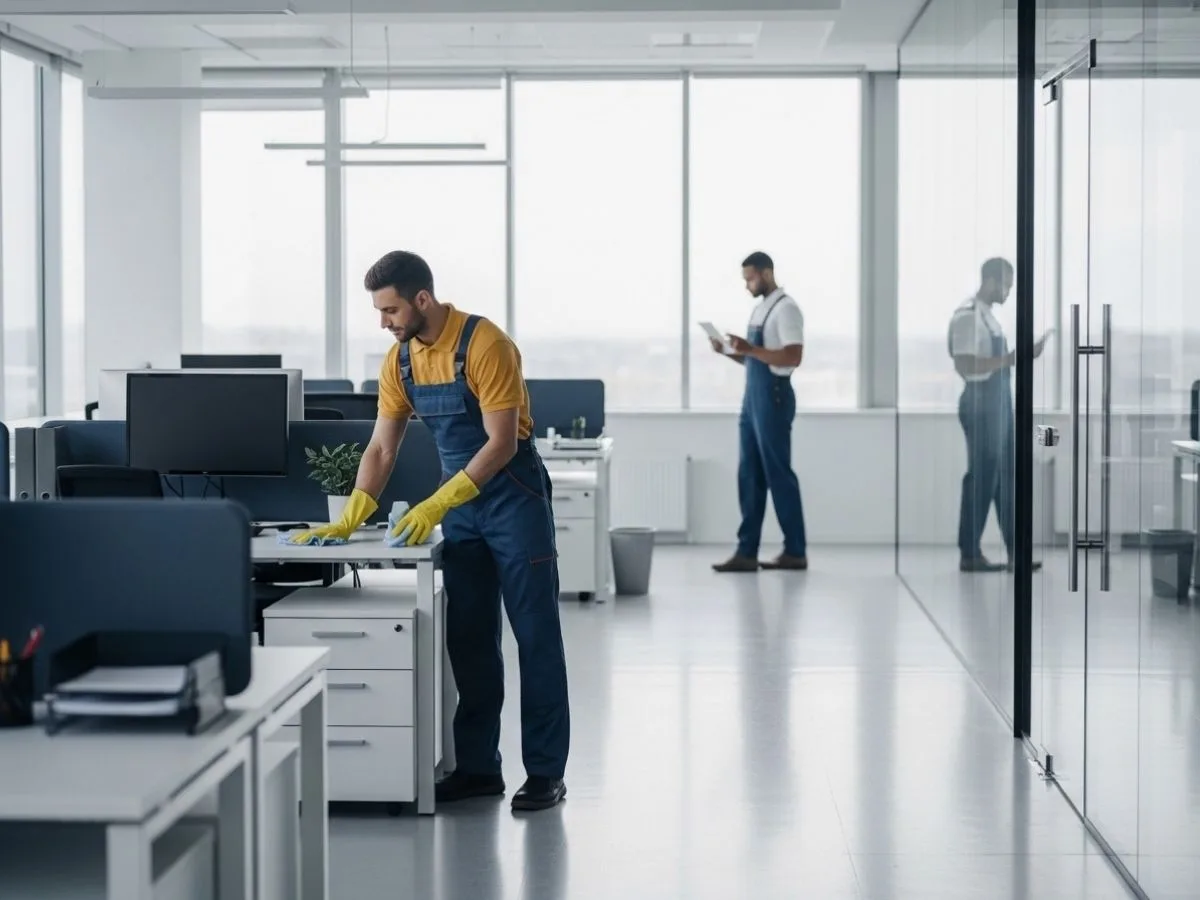
Quality shows up in consistency. It’s not about a perfect clean once. It’s about predictable standards every visit.
Strong commercial cleaning services rely on clear communication, documented scopes, and regular supervision. Cleaners know the site, the people using it, and any risks that matter. Issues get fixed without chasing.
In real terms, this means fewer complaints, stable presentation, and no visible decline between visits. Professional cleaning services for offices should fade into the background because everything works as expected.
That’s the standard we set across our commercial cleaning, janitorial services, and office cleaning work. Different sites. Same reliability.
Questions to ask and red flags to watch for
Good decisions don’t require cleaning expertise. They require clarity.
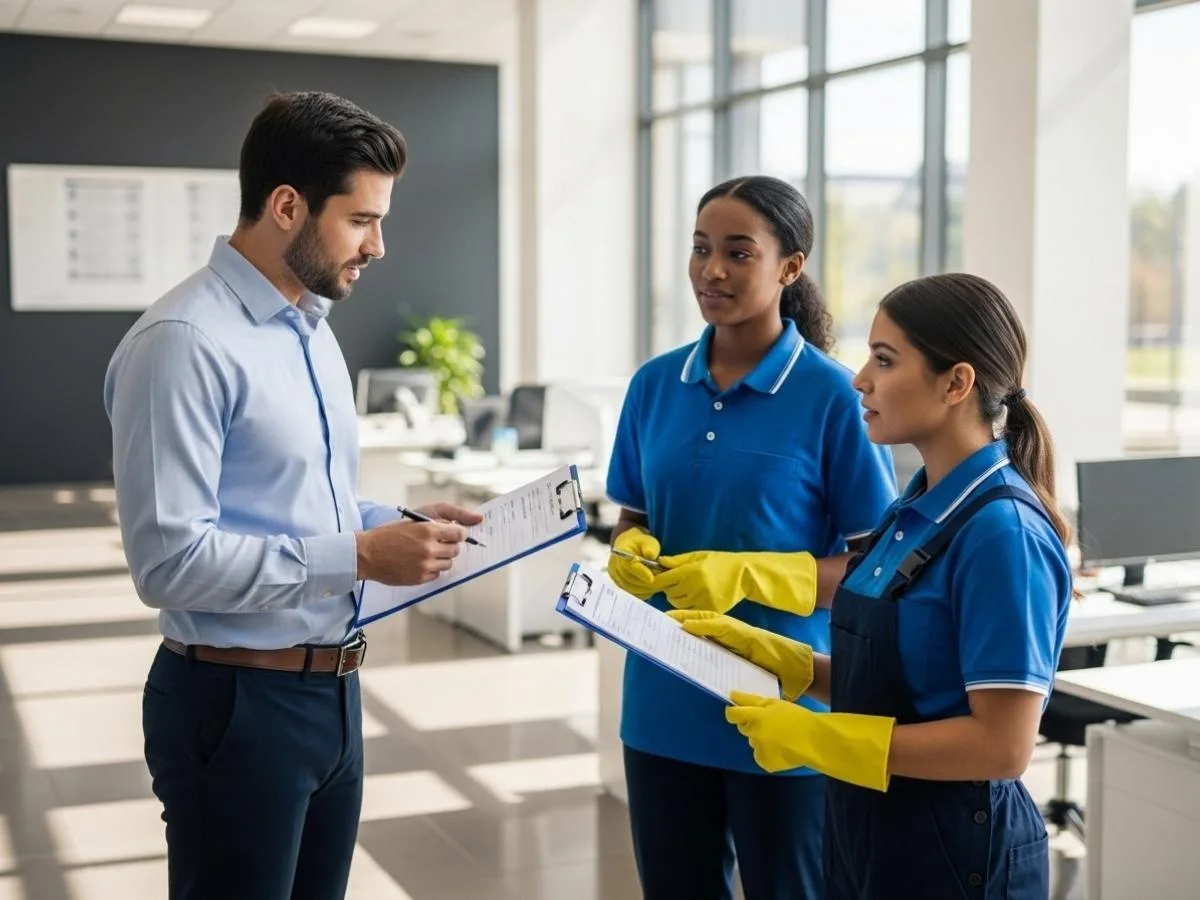
Useful questions include what’s included and excluded, how often tasks are done, who checks quality, and how issues are handled. Answers should be direct, not vague.
Watch for red flags. Generic quotes, recycled checklists with no site context, or promises that “everything is included” usually hide gaps. If expectations aren’t written down, they won’t be met.
If current arrangements feel reactive, inconsistent, or unclear, it’s time to review. Our article on commonly missed office areas helps spot gaps that often slip through.
We work across industries because different sites need different answers. Our industry coverage reflects that. To talk through scope, timing, or standards, reach us via our contact page or visit SJV Cleaning for more detail.
Frequently Asked Questions
Commercial cleaning usually includes routine tasks that maintain hygiene, safety, and presentation in shared workplaces. Standard services cover vacuuming and mopping floors, emptying bins, cleaning desks and surfaces, sanitising high-touch points, and fully cleaning restrooms and kitchens. The exact inclusions depend on the site’s use, foot traffic, and agreed cleaning schedule rather than a fixed checklist.
Commercial cleaning focuses on consistent, ongoing maintenance rather than occasional deep cleaning. It is designed for offices, buildings, and public spaces that are used daily by many people. Unlike domestic cleaning, commercial cleaning follows documented scopes, fixed schedules, and workplace hygiene standards to ensure predictable results and minimal disruption.
Deep cleaning is usually not included in standard commercial cleaning unless it is clearly listed in the scope. Services such as carpet steam cleaning, floor stripping and sealing, pressure washing, or high-level dusting are typically scheduled separately. These tasks require extra time, specialist equipment, or different frequencies, such as quarterly or annually.
The cleaning scope changes based on risk and usage. Offices prioritise workstations, meeting rooms, kitchens, and restrooms, with a balance between hygiene and presentation. Medical centres require stricter cleaning standards, focusing on infection control, treatment rooms, waiting areas, and clinical waste handling requirements set by state health authorities, with greater attention to detail and higher-frequency sanitising.
The right frequency depends on how the space is used. High-traffic offices and shared buildings often require daily cleaning to maintain hygiene and appearance. Lower-use spaces may only need several visits per week. Cleaning frequency should be matched to foot traffic, risk level, and expectations, consistent with commercial building maintenance best practice standards, to avoid reactive cleaning and visible decline between visits.