
What are the signs of a poorly cleaned office?
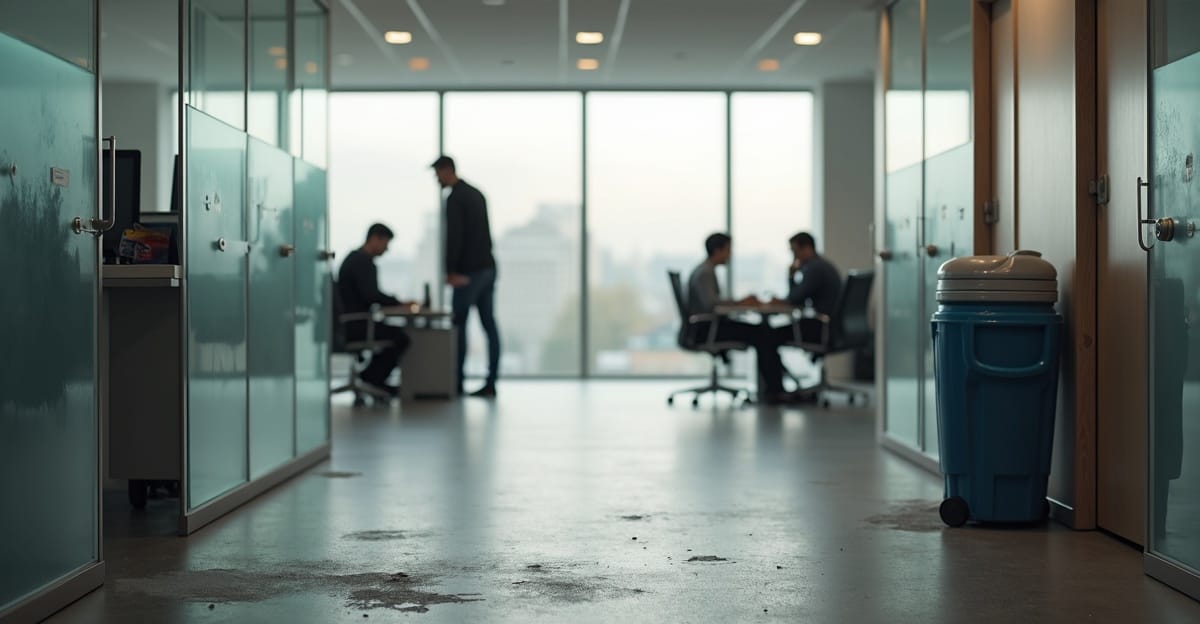
The signs of a poorly cleaned office become clear as soon as basic standards slip across visible areas, high-touch points, washrooms, floors, and shared spaces. We see ongoing dust, missed touchpoints, lingering smells, and uneven results as markers of rushed work, unclear scopes, or weak oversight rather than a single miss.
Key Takeaways
- Visible dirt, dust, full bins, and fingerprints give clear, objective proof of cleaning gaps
- High-touch surfaces left unchanged day after day signal weak hygiene control and raise cross-contamination risk
- Washrooms that smell, show scale, or run out of consumables point to surface-level cleaning
- Floors and carpets with buildup, stains, or dull finishes show long-term neglect
- Inconsistent results across days or areas usually reflect system issues, not individual effort
Visible cleanliness problems that stand out immediately
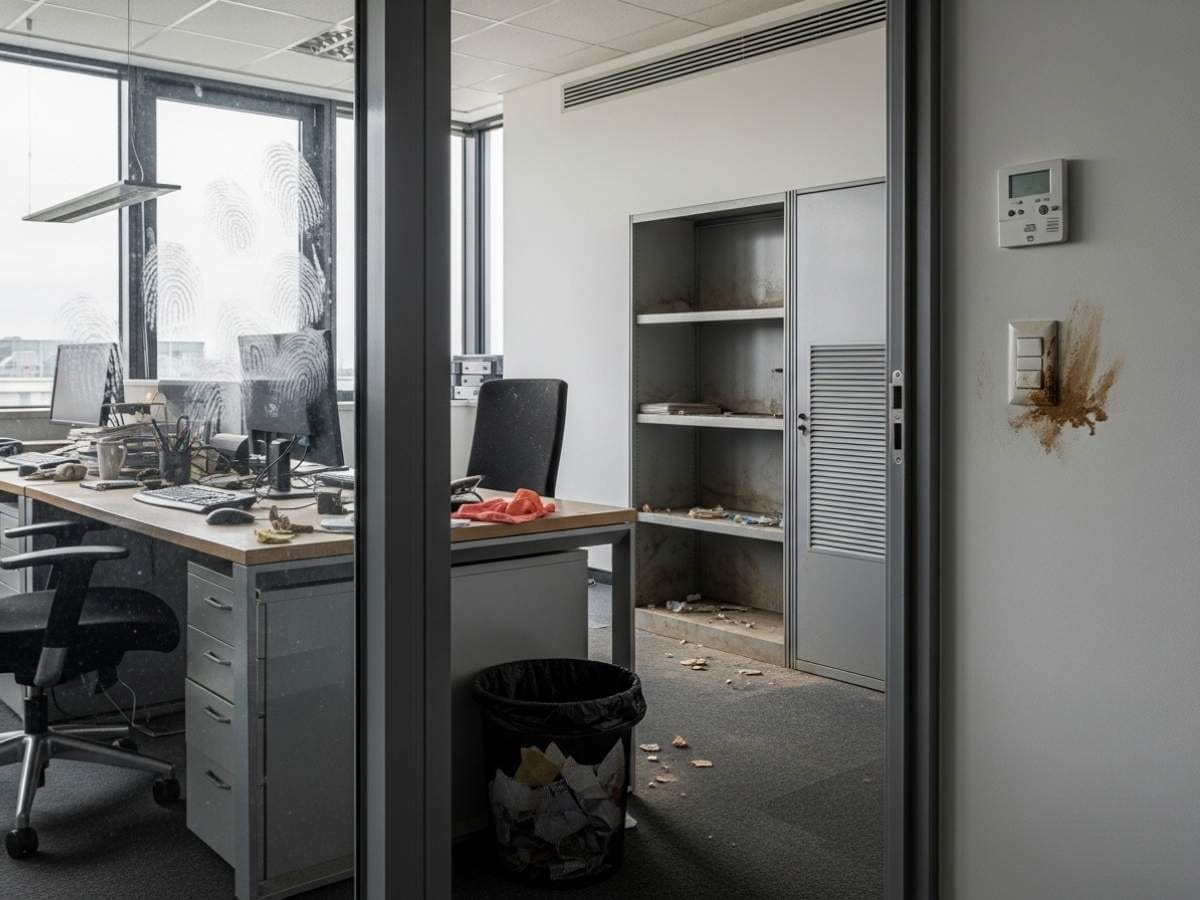
Obvious dirt is usually the first sign standards are slipping. Dust builds up on desks, skirting boards, vents, and shelves. Fingerprints linger on glass, doors, and light switches. Bins sit full or liners aren’t replaced. These aren’t subtle issues. They’re clear, physical proof that cleaning isn’t being completed properly.
What we see most often
These signs show up across many sites and point to the same problem:
- Surfaces look half-cleaned, with items moved but grime still in place
- Dust layers that return quickly because they were never removed fully
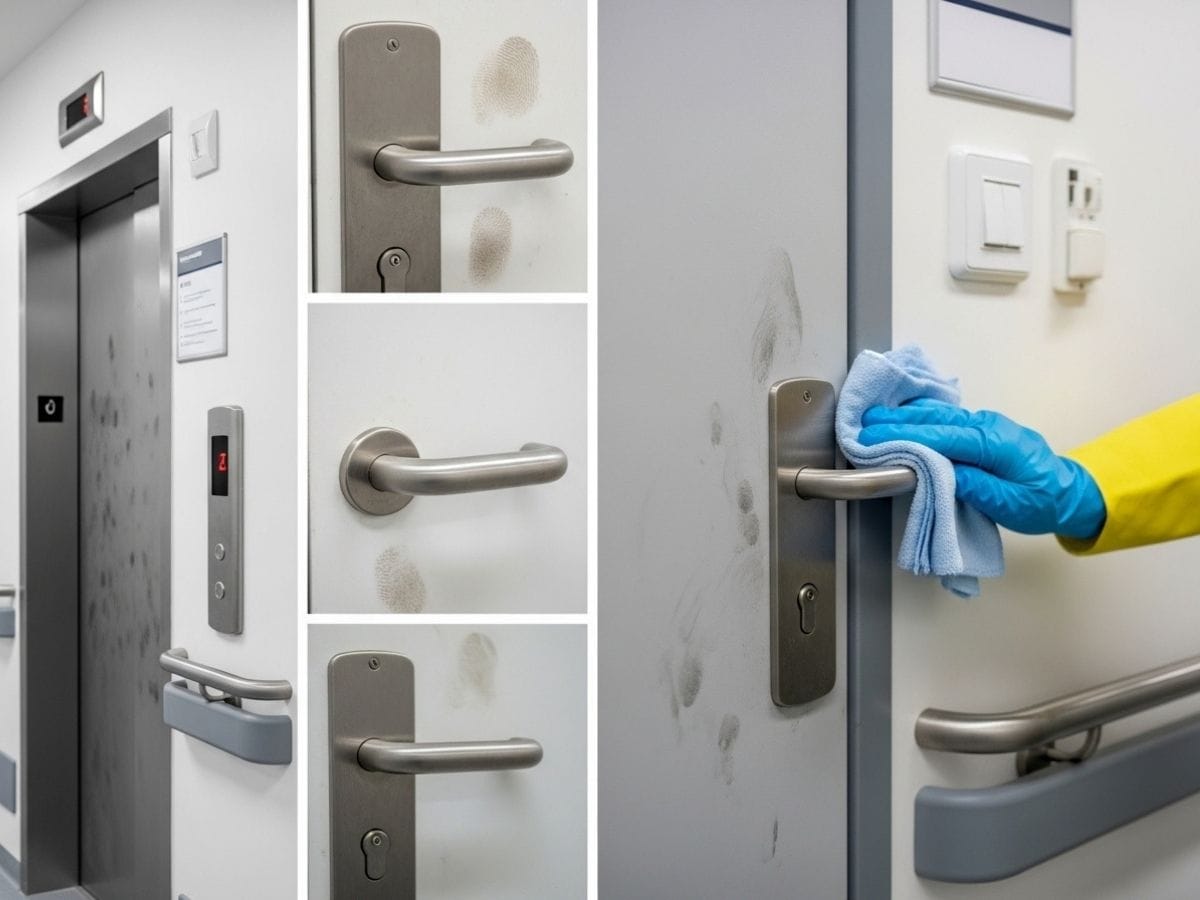
- Touchpoints left smeared despite daily use
None of this comes down to opinion or a “gut feeling.” These are objective poor office cleaning signs that suggest rushed work or an unclear scope. The impact is immediate. First impressions drop for staff, visitors, tenants, and patients. Confidence in hygiene drops with it. If those basics are missed, people assume deeper cleaning is too. A quick review of the signs of poor office cleaning helps confirm whether the issue is isolated or ongoing.
High-touch surfaces that are consistently missed
High‑touch surfaces tell a clear story about cleaning quality. Door handles, light switches, lift buttons, shared phones, keyboards, and handrails are often skipped when performance drops. A simple check is consistency. If fingerprints and grime look the same day after day, those surfaces aren’t being addressed.
This matters even more in medical centres and strata buildings. Foot traffic is higher and expectations are tighter. Missing these areas points to workplace hygiene issues and weak compliance. It doesn’t take alarmist claims to understand the risk. Regular contact without proper cleaning increases cross-contamination, as public health guidance on high-touch surface cleaning from the CDC explains.
. We often see improvement fast once high‑touch tasks are clearly defined and scheduled, or handled through focused high‑touch surface cleaning rather than being buried in a general routine.
Washrooms that look “clean” but fail practical checks
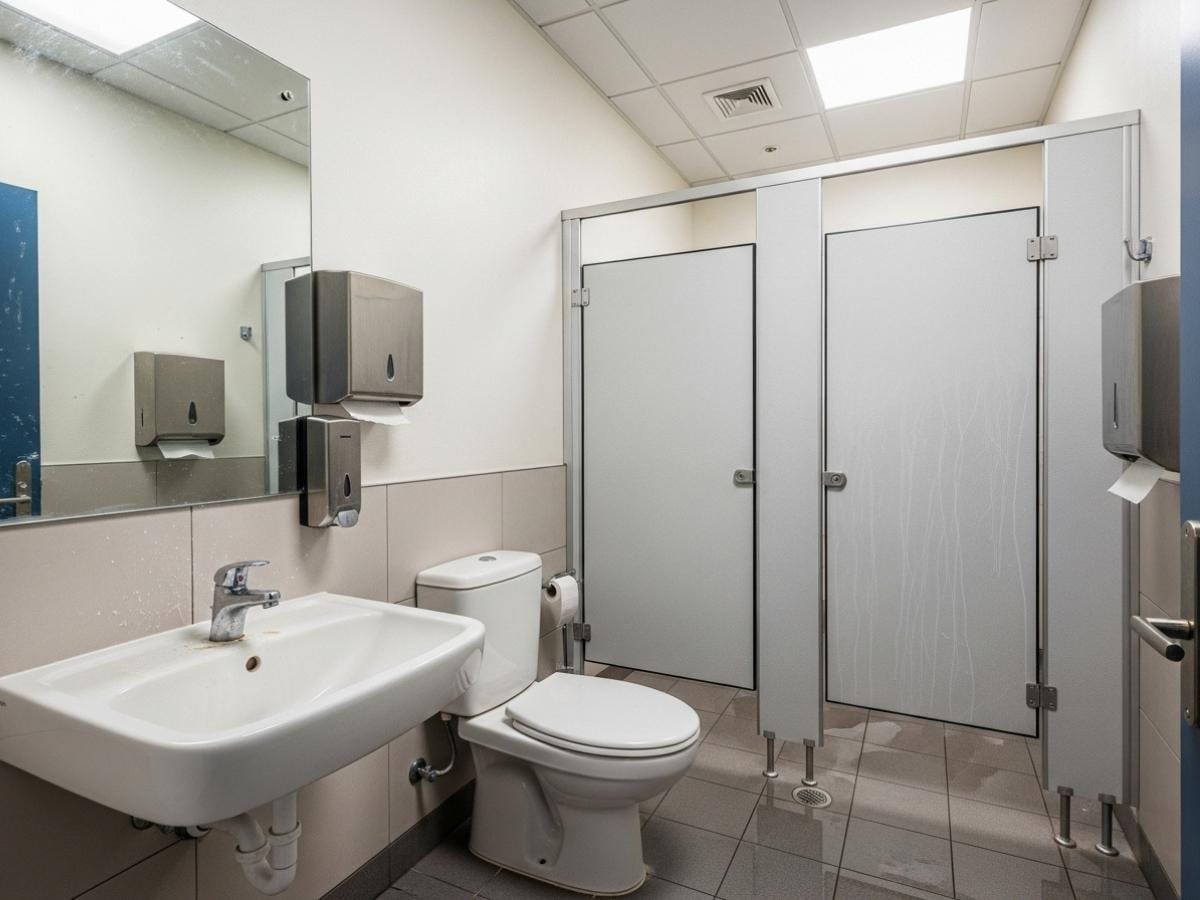
Washrooms expose cleaning quality faster than most areas. Toilets and sinks might be wiped down, yet smells linger. Scale builds up. Splash marks and residue appear around fixtures. Consumables tell the same story. Soap, paper towel, or toilet paper run out because restocking isn’t consistent.
Mirrors, partitions, and dispensers often give it away. Fingerprints and streaks mean detail work is being skipped. These aren’t high standards. They’re basic washroom cleaning standards aligned with OSHA’s workplace sanitation requirements.
. When they’re missed, it suggests the cleaning is surface‑level and rushed. That’s why washrooms are often the first place staff raise concerns about commercial office cleaning issues.
Floors and carpets showing long-term neglect
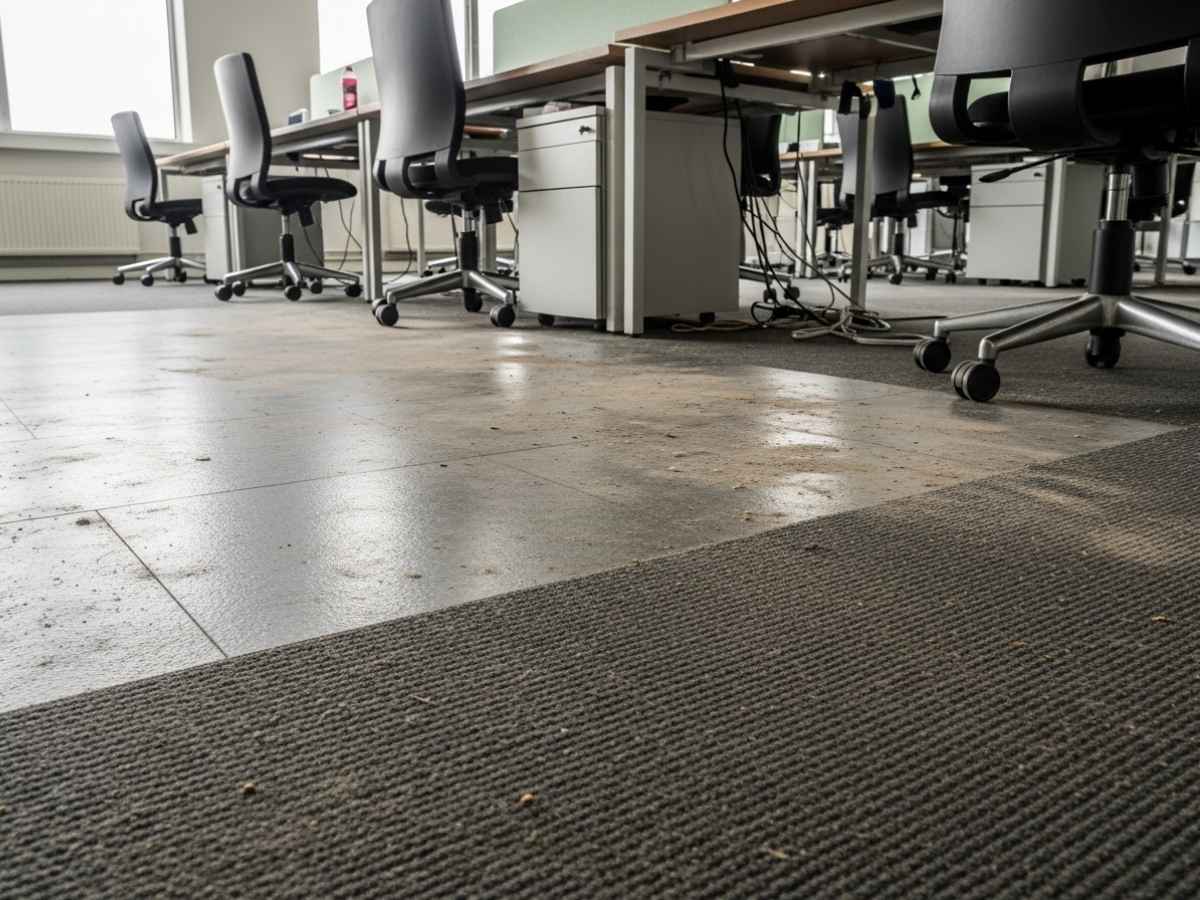
Floors cover the largest surface area in any office, so neglect shows quickly. Vacuuming becomes patchy. Debris collects in corners, under desks, and along edges. Hard floors lose their finish and start to feel dull or sticky because mopping is irregular or poorly done.
Carpets tell an even longer story. Stains aren’t treated. Spills are left to set. Over time, the space looks tired, even if desks are tidy. This points to inconsistent office cleaning rather than a one‑off miss. A clear plan that includes periodic carpet cleaning, consistent with IICRC commercial carpet maintenance guidelines, helps managers assess whether cleaning is routine and systematic or purely reactive.
Kitchens and breakout areas that feel unmanaged
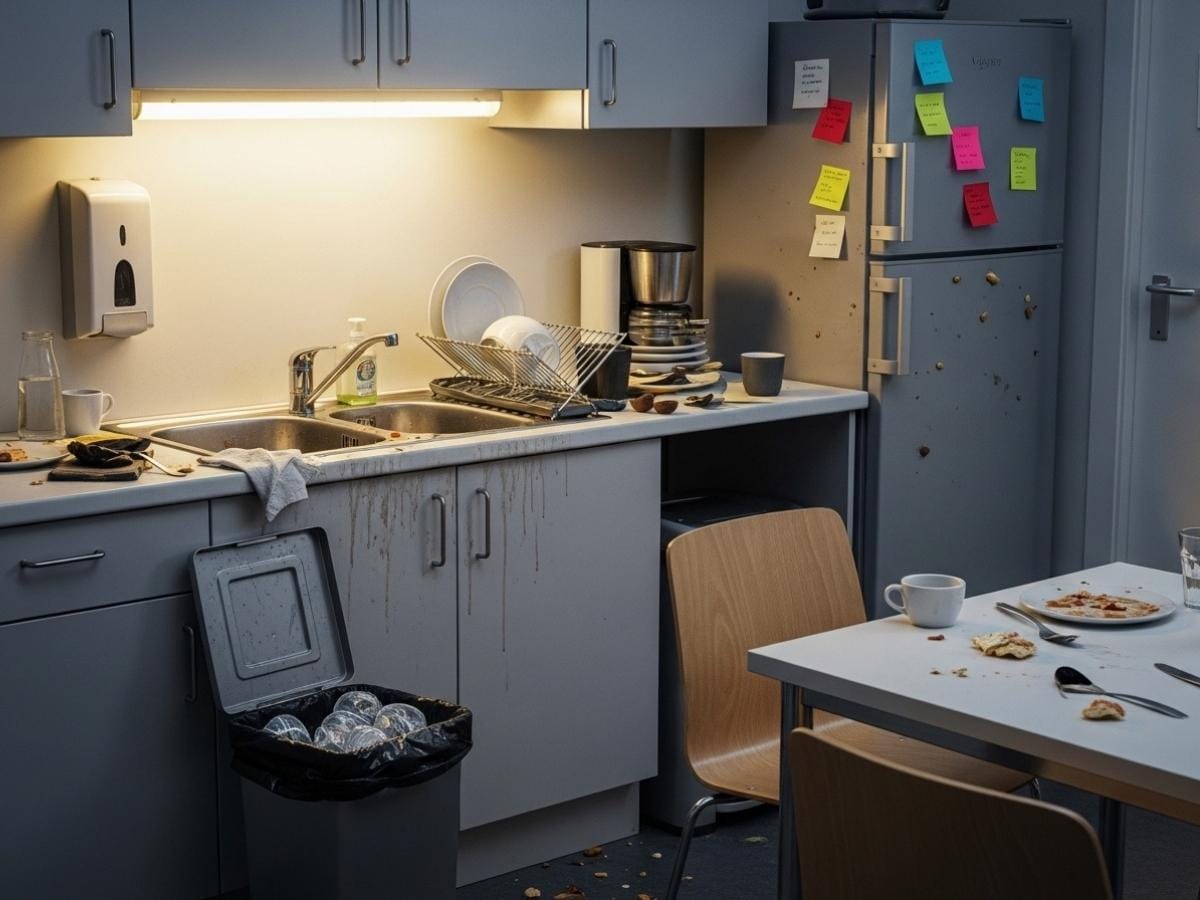
Shared spaces show problems early. Sinks develop residue. Dish racks smell. Fridges are ignored. Bins overflow or leak. Tables might get a quick wipe, but chairs, appliance handles, and cupboard fronts are skipped.
These areas also attract pests first. Crumbs, spills, and forgotten bins create conditions no workplace wants, particularly because environmental health guidance from the EPA notes that food residue attracts pests.
Staff notice, and morale takes a hit. Complaints usually start here, even if the rest of the office looks passable. Kitchens and breakout areas are a common source of workplace hygiene issues and a reliable indicator of poor office cleaning signs across the site.
Inconsistency across days, zones, and communication
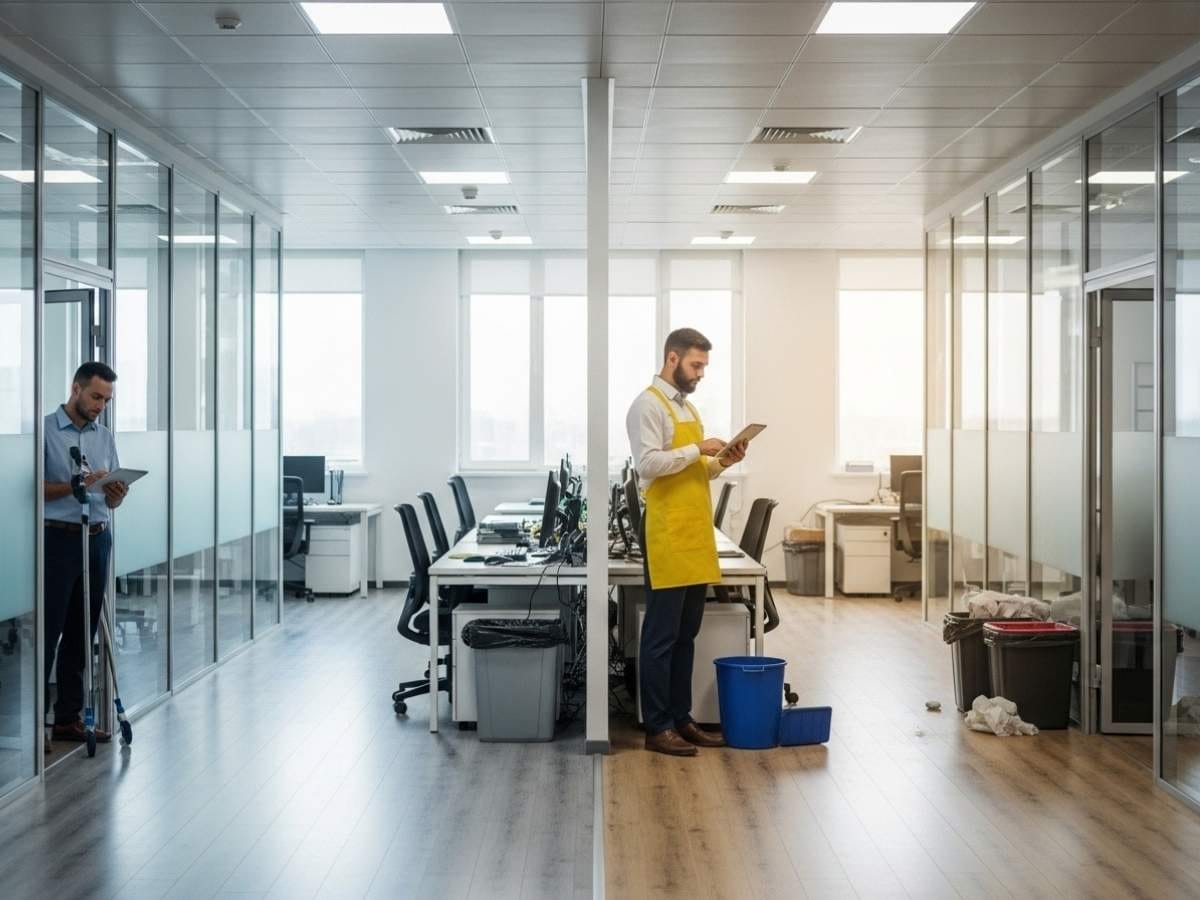
One of the strongest indicators of cleaning problems is inconsistency. Standards vary by day, by cleaner, or by part of the building. Some rooms are always handled. Others are routinely skipped. Issues get raised, yet nothing changes because there’s no clear reporting or follow‑up.
This usually points to system problems rather than individual effort. Unclear scopes, weak scheduling, or limited supervision all lead here. Without a documented process, it’s hard to assess office cleaning quality or hold anyone accountable, which is why facility management best practices from IFMA emphasize documented procedures.
Tools like an office cleaning checklist bring structure and clarity. When paired with a dependable office cleaning service, consistency stops being a guessing game and starts becoming standard.
Frequently Asked Questions
You can tell an office cleaning service is underperforming when visible dust, fingerprints, and full bins remain after scheduled cleaning. Inconsistent results across rooms or days also signal weak supervision. Repeated complaints about washrooms, kitchens, or high-touch surfaces often indicate that tasks are rushed or not clearly defined in the cleaning scope.
High-touch surfaces are key indicators because they carry the highest cross-contamination risk. Door handles, light switches, lift buttons, and shared equipment should show clear signs of regular sanitising. If grime and fingerprints remain unchanged day after day, it suggests poor hygiene control and gaps in routine disinfection procedures.
Poor office cleaning can lower morale, increase sick leave, and damage trust in workplace hygiene standards. Dust buildup may aggravate allergies, while neglected washrooms and kitchens create discomfort. Over time, visible dirt and unpleasant smells affect productivity and give staff the impression that health and safety are not being prioritised.
Most offices benefit from a professional deep clean every 3 to 6 months, depending on foot traffic and industry type. Deep cleaning includes carpet extraction, detailed washroom descaling, and hard floor restoration. Regular daily cleaning maintains appearance, but periodic deep cleaning prevents long-term buildup and preserves surfaces.
Yes, inconsistent cleaning schedules often lead to surface damage and higher maintenance costs. Missed vacuuming shortens carpet life, while irregular mopping can dull or stain hard floors. Without structured routines and checklists, minor cleaning gaps accumulate into visible deterioration that requires costly restoration rather than routine upkeep.