
Strata Cleaning vs. General Commercial Cleaning
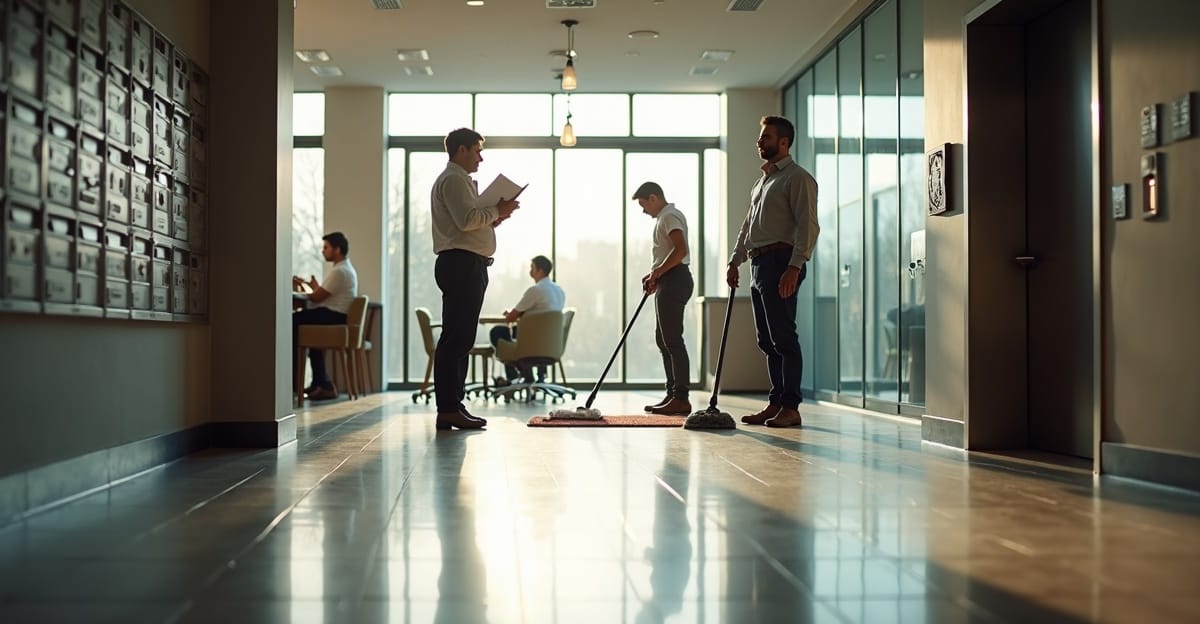
Strata vs commercial cleaning comes down to governance, accountability, and who holds the contract, not just the type of building involved. We approach each model differently because the responsibility structure drives how we deliver and report. Strata cleaning focuses on common property managed by an owners corporation, while commercial cleaning serves individual businesses that control their own leased or owned spaces.
Key Takeaways
- Strata cleaning is contracted by an owners corporation or strata manager and covers shared areas like lobbies, lifts, stairwells, and car parks.
- Commercial cleaning is contracted directly by a business and covers internal tenancy spaces such as offices, kitchens, workstations, and private amenities.
- Communication and reporting flow through a strata manager in strata settings, while commercial cleaning reports to a business owner or facilities lead.
- Compliance responsibilities differ: strata aligns with common property obligations, while commercial cleaning aligns with workplace health and safety laws for the business.
- Mixed-use buildings often require both models, with clear scope definitions to prevent gaps, disputes, and budget confusion.
Understanding the Core Difference: Governance, Responsibility, and Who the Client Is
Strata vs commercial cleaning often gets confused because both involve maintaining shared or professional spaces. The real difference sits in governance, responsibility, and who holds the contract.
Strata cleaning services are delivered to buildings governed by an owners corporation or strata scheme, as defined in Australian strata scheme legislation and governance guidance. This typically includes apartment complexes, mixed-use developments, and some commercial strata buildings. The responsibility for engaging contractors sits with the strata manager or body corporate. They act on behalf of owners and manage common property areas.
Strata manager cleaning responsibilities usually include:
- Overseeing shared spaces such as lobbies and lifts
- Coordinating cleaning contractors
- Managing cleaning budgets approved by the committee
- Handling resident feedback and complaints
- Ensuring compliance with strata legislation and safety standards
In this structure, the client is the owners corporation—not individual residents or tenants.
Commercial cleaning services work differently. Here, cleaning is provided directly to a private business, organisation, or tenant. That business may occupy part of a building or the entire site. The contract sits with the company operating in the space, not with a strata scheme.
For example, a company leasing three floors of a CBD building will engage its own commercial cleaning services provider for its internal areas. The building’s common spaces remain the responsibility of the strata or building manager.
In Adelaide and Sydney, governance structures differ slightly under state legislation, but the principle stays the same. Strata schemes operate under formal management frameworks with defined common property obligations. Businesses, on the other hand, manage their own tenancies under commercial lease agreements.
The key distinction isn’t the building type. It’s accountability. Strata cleaning reports to a committee or manager representing multiple owners. Commercial cleaning reports directly to a single business decision-maker.
What Gets Cleaned: Scope of Work and Areas Covered
The scope of work is where the differences become practical.
Strata common area cleaning focuses exclusively on shared spaces defined as common property within a strata scheme. These are areas collectively owned and maintained under strata legislation. That usually includes:
- Lobbies and reception foyers
- Lifts and lift lobbies
- Stairwells and shared hallways
- Shared bathrooms and amenities
- Bin rooms and waste areas
- Car parks and entry driveways
- External entrances and pathways
Common area maintenance cleaning may also cover waste management, basic consumables in shared amenities, and periodic deep cleans of high-traffic zones. In some buildings, services may extend to window cleaning services for shared glass or pressure washing of external hard surfaces.
Commercial cleaning services cover a different scope. They usually include everything within a leased tenancy or owned building. That can involve:
- Workstations and desks
- Meeting rooms and boardrooms
- Reception areas
- Internal kitchens and staff break rooms
- Private bathrooms
- Storage rooms and utility spaces
An example is office cleaning services in Adelaide, where after-hours vacuuming, workstation sanitising, kitchen hygiene, and rubbish removal are delivered inside a single tenancy.
Medical settings add another layer. Medical centre cleaning requirements often include infection control protocols, high-touch surface disinfection, documented cleaning schedules, and in some cases clinical waste handling. That falls firmly under commercial cleaning contracts because the tenancy operator carries operational responsibility.
In mixed-use buildings, boundaries must stay clear. Strata cleaners handle common areas only. Individual tenants arrange their own commercial cleaning services for their internal spaces. Confusion here leads to disputes, missed tasks, and budget tension.
For a deeper breakdown of inclusions, our guide on what commercial cleaning covers helps clarify typical service scopes.
Communication, Scheduling, and Reporting Structures
Communication structures differ just as much as scope.
In a strata model, instructions and feedback flow through the strata manager or building manager. Cleaners rarely take direction from individual residents. Reporting may include service logs, incident records, and notes on maintenance issues such as spills, broken lights, or safety hazards.
Scheduling in strata environments tends to follow routine maintenance cycles. Daily, weekly, or monthly schedules are set in advance. Timing considers residential occupancy, peak traffic hours, and noise restrictions.
Commercial cleaning works differently. Communication is usually direct with an office manager, operations lead, or facilities team. Adjustments happen quickly because decision-makers sit inside the business.
Scheduling often aligns with business operations:
- Evening cleans in corporate offices
- Early morning services for retail
- Multiple daily sanitisation rounds in medical centres
- Shift-based support in industrial settings
Inconsistent standards across multiple buildings are a common pain point in strata environments. Scope gaps also create friction. Clear documentation reduces disagreements and protects relationships.
Strong accountability structures improve long-term partnerships. Whether in strata or commercial settings, defined reporting lines and measurable service standards make performance easier to manage.
Compliance, WHS, and Risk Management in Australia
WHS compliance applies across both models, but responsibility attaches differently.
Commercial cleaning compliance in Australia requires adherence to Work Health and Safety obligations. This includes safe chemical handling, training records, contractor insurance documentation, and Safe Work Method Statements (SWMS).
In strata environments, the owners corporation must maintain safe common areas for residents and visitors. Slip hazards in lobbies, waste overflow in bin rooms, and poor lift hygiene can all create risk exposure through workplace slip and trip hazards in shared areas. Cleaning plays a critical role in reducing that risk.
Commercial tenants hold their own obligations. Employers must ensure workplaces are clean and safe for staff and visitors. In medical environments, documented infection control processes are essential. Medical centre cleaning requirements often demand audit-ready procedures and clear record-keeping.
Across Adelaide and Sydney, compliance expectations typically include:
- Public liability insurance
- Workers compensation coverage
- Chemical safety registers
- Risk assessments and SWMS documentation
The difference in strata vs commercial cleaning shows up again here. In strata, compliance aligns with common property obligations under the strata scheme. In commercial contracts, compliance aligns with workplace safety laws affecting the business itself.
Understanding this split protects all parties. It also ensures no responsibility falls through the cracks.
Side-by-Side Comparison: Contracts, Accountability, and Service Structure
Building cleaning contracts differ significantly between strata and commercial arrangements.
Here’s where they diverge:
Key structural differences
- Contract holder: Owners corporation (strata) vs private tenant or business (commercial)
- Defined areas: Common property only vs full tenancy or building
- Budget approval: Committee-managed vs business-managed
- Feedback and performance review: Strata manager or committee vs business owner or facilities lead
Cleaning service contract differences may also include frequency, consumables, equipment access, and detailed scope documents.
Accountability pathways are clearer in commercial environments with a single decision-maker. Strata arrangements can involve committees, voting processes, and multiple stakeholders.
Despite this, overlap exists. Both models may use similar equipment, trained staff, and quality control systems. Services like professional floor cleaning apply in both contexts. The distinction sits in structure, governance, and who is responsible.
Neither model is better. Each fits a specific governance framework.
For property managers who want to align terminology and expectations, reviewing cleaning terms every property manager should know can reduce confusion during contract discussions.
Which Service Structure Fits Your Building?
Clarity starts with structure.
Key decision points include:
- Is the building governed by an owners corporation?
- Are responsibilities limited to common areas?
- Does the site include multiple tenancies with separate cleaning needs?
- Are there sector-specific requirements such as medical centre cleaning standards?
In residential or mixed-use strata buildings, strata cleaning services are usually the right fit for shared areas.
In standalone offices, clinics, or corporate sites, commercial cleaning services align better with operational responsibility. Businesses benefit from direct oversight and flexible scheduling, often through structured corporate workplace cleaning programs.
Mixed commercial strata buildings often require both models. Common areas fall under strata common area cleaning, while each tenant holds its own commercial contract.
Reviewing existing building cleaning contracts is a practical first step. Confirm what’s included, who holds compliance responsibility, and how reporting flows. Clear scope and governance alignment prevent disputes and protect standards.
For tailored advice or a contract review, connect with our team through the contact page. We assess structure first, then recommend the service model that fits the building and its legal responsibilities.
Frequently Asked Questions
Strata cleaning focuses on maintaining shared areas in buildings managed by an owners corporation, such as lobbies, hallways, lifts, and car parks. Commercial cleaning, on the other hand, services spaces operated by a business, including offices, kitchens, workstations, and private amenities. The main difference lies in who holds the contract and manages the service—strata managers represent property owners, while commercial cleaning reports directly to the business or tenant.
Strata cleaning services are typically arranged by a strata manager or owners corporation on behalf of the property’s owners. Their role includes hiring contractors, managing cleaning budgets, coordinating schedules, and responding to resident feedback. Because strata cleaning focuses on common property, individual residents or tenants usually do not directly manage or instruct the cleaning provider.
Yes, many mixed-use buildings require both strata and commercial cleaning services. Strata cleaning maintains shared spaces like entrances, lifts, and corridors, while commercial cleaning is arranged by individual tenants to maintain their internal offices or business areas. Having separate contracts helps ensure responsibilities are clearly defined and prevents confusion over which areas should be cleaned.
Strata common area cleaning usually covers spaces shared by all residents or tenants. These areas often include building lobbies, stairwells, corridors, lift interiors, bin rooms, car parks, and entryways. The goal is to keep common property safe, hygienic, and presentable for everyone using the building while meeting the maintenance obligations set by the owners corporation.
Compliance responsibilities differ based on who controls the property space. Strata cleaning supports the owners corporation’s duty to maintain safe common areas for residents and visitors. Commercial cleaning, however, must align with workplace health and safety regulations that apply to the business operating within the space. This often includes documented cleaning procedures, chemical safety protocols, and risk management practices.