
Should Cleaners Provide Their Own Supplies?
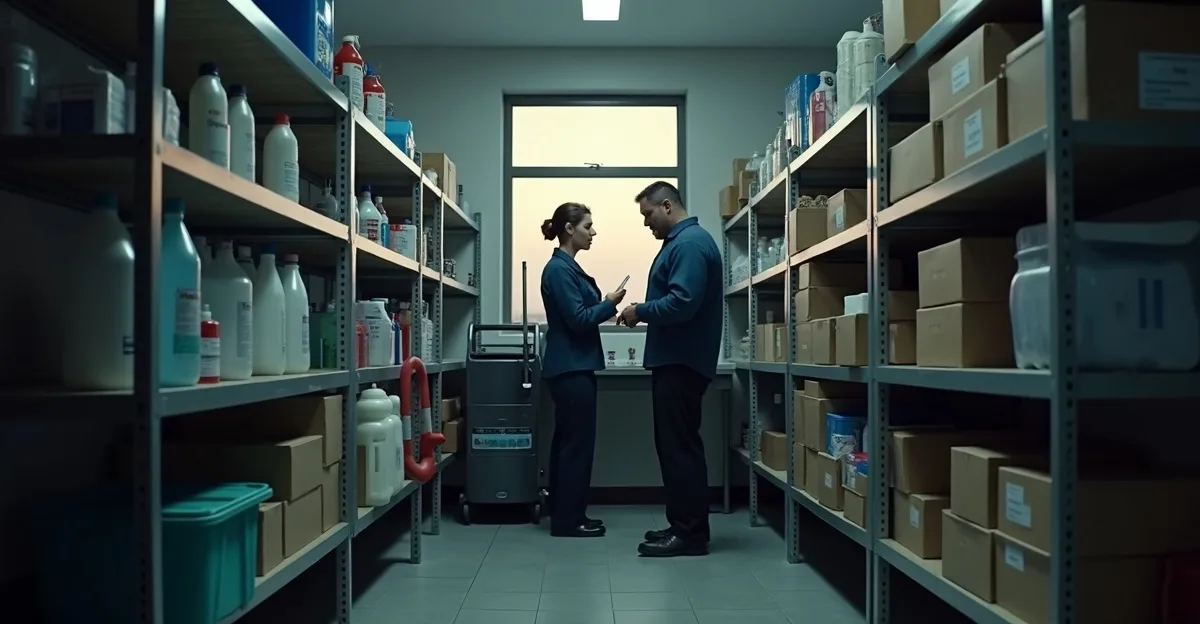
Many businesses ask whether cleaners should provide their own supplies, but the real priority is defining cleaning service supplies responsibility clearly in the contract. In commercial environments, we usually supply chemicals and equipment, while clients supply consumables. That split affects pricing, compliance, accountability, and day-to-day operations.
Key Takeaways
- In most commercial environments, we provide chemicals and equipment, while clients provide consumables such as toilet paper, soap, and bin liners.
- Cleaning service supplies responsibility shapes cost structure, internal workload, and who manages stock, reordering, and storage.
- Whoever supplies the products manages Safety Data Sheets (SDS), compliance, and safe storage requirements.
- Offices, strata buildings, and medical centres each face different operational and compliance pressures that influence supply arrangements.
- Clear cleaning contract terms prevent disputes by detailing who supplies, monitors, reorders, stores, and accepts responsibility for products.
Do not modify or enhance the wording; the text must remain identical except for the HTML markup.
What’s Actually Standard in Commercial Cleaning?
In most commercial settings, cleaners supply the chemicals and equipment, while clients supply consumables. That’s the typical model—but it always depends on the contract.
When people ask who provides cleaning supplies in commercial cleaning, the confusion usually sits between two categories:
Cleaning Chemicals and Equipment
- Vacuums, mops, and auto-scrubbers
- Disinfectants and detergents
- Glass cleaners and specialty surface products
Consumables
- Toilet paper
- Hand towels
- Soap
- Bin liners
Cleaning chemicals and equipment are tools of the trade. Consumables are ongoing supplies used by staff and visitors. They serve different purposes and involve different responsibilities.
There’s no one-size-fits-all answer. Supply responsibility depends on the facility type, its risk profile, and the cleaning contract responsibilities agreed upfront. A small office may operate differently from a medical centre or strata complex.
This matters for decision-makers. Supply clarity affects cost transparency, compliance, accountability, and daily operations. If products run out or the wrong chemical damages a surface, ownership becomes a serious issue.
The real question isn’t just who pays. It’s whether your cleaning service agreement terms clearly define who manages what.
Cleaner-Supplied vs Client-Supplied: Pros, Cons, and Operational Impact
Commercial cleaning supplies responsibility directly affects pricing, efficiency, and internal workload. Both models work. The key is choosing the one that matches your business structure.
Comparing the Two Models
When the cleaner provides cleaning products:
- Costs are often bundled into one service price.
- Product selection sits with the cleaning provider.
- The cleaner tracks usage and handles reordering.
- Accountability for product performance is generally clearer.
When the client provides cleaning products:
- Service pricing may appear lower at first glance.
- Someone internally must monitor stock and reorder supplies.
- Product consistency can vary if purchasing changes.
- Responsibility for shortages or incorrect products sits with the client.
Included supplies are not automatically more expensive. They shift responsibility and risk. If the cleaner manages stock, they track usage patterns, store products appropriately, and reorder before shortages occur. If the client manages it, someone inside the business must own that process.
Cleaning supplies and consumables management often looks simple but becomes time-consuming. Monitoring stock levels, coordinating ordering, receiving deliveries, and allocating storage space all require structure.
Quality control also plays a role. A professional cleaning company will standardise approved products across sites to ensure performance and surface protection. If products are client-supplied, results may vary depending on what’s purchased.
We often advise clients to review what commercial cleaning covers before making supply decisions. Understanding service scope helps clarify whether supply responsibility should sit internally or externally.
The right model depends on business size, internal administrative capacity, and tolerance for risk.
Compliance, Safety, and SDS Requirements
Compliance sits behind every supply decision. Whoever owns the cleaning service supplies responsibility also owns the compliance requirements.
Safety Data Sheets (SDS) must be accessible for chemicals used onsite. SDS requirements for cleaning products are straightforward but critical: every chemical must be documented, correctly labelled, and stored appropriately.
Improper storage or unapproved products can create hazards. The risks include:
- Surface damage
- Chemical reactions
- Allergic responses
- Workplace safety incidents
Healthcare infection prevention standards published by the Australian Commission on Safety and Quality in Health Care raise the bar further. Healthcare environments require approved disinfectants, infection control protocols, and clear documentation of products used. In medical centres, accountability for product selection and SDS documentation is essential.
Product choice isn’t just about performance. It’s about workplace safety and regulatory integrity. If the wrong chemical damages a floor or breaches surface protection standards outlined by Standards Australia, determining responsibility becomes serious.
That’s why clarity in cleaning contract responsibilities matters. Whoever supplies the product must also manage compliance documentation and safe storage.
How It Plays Out in Offices, Strata, and Medical Centres
Different facilities operate under different pressures.
In office environments, the most common arrangement is simple: the cleaner supplies chemicals and equipment; the client supplies consumables. Toilet paper and hand towels directly affect staff experience. Running out creates frustration quickly.
Clarity around what’s included can be supported by a clear office cleaning checklist. That ensures chemicals, equipment, and consumables are all accounted for.
NSW Fair Trading’s strata scheme management guidance highlights why strata buildings present extra complexity. Property managers, committees, and residents may all have a stake. Strata cleaning supply management can become unclear if commercial cleaning supplies responsibility isn’t documented properly. Storage space is often limited in shared buildings, which affects bulk ordering decisions.
Medical centres face the highest expectations. Infection control requirements and medical cleaning supply standards demand strict product approval and documentation. Here, product choice is linked directly to patient safety. Accountability must be clear.
Context determines whether the cleaner provides or the client provides cleaning products. Operational needs and compliance exposure should drive the decision—not assumptions.
What to Clarify in Your Cleaning Contract
Cleaning service agreement terms should remove all ambiguity around supply responsibility. Assumptions cause disputes.
Review your contract and confirm the following:
- Who supplies chemicals?
- Who supplies consumables?
- Who monitors stock levels?
- Who reorders and pays for consumables?
- Where are products stored onsite?
- Who maintains SDS documentation?
- What happens if products run out?
- Who is responsible if a product damages a surface?
Documenting commercial cleaning supplies responsibility in writing avoids grey areas. It protects both parties.
Many challenges associated with outsourced cleaning come back to expectations that were never clearly defined. We’ve covered some of these in disadvantages of contract cleaning, and supply ambiguity is often one of them.
We recommend reviewing existing contracts for unclear wording. Clarity is not micromanagement. It’s risk management.
What Professional Supply Management Should Look Like
Professional cleaning supplies and consumables management should be structured and transparent.
Best practice includes:
- A documented list of approved products
- Products aligned to site requirements and surface types
- A clear restocking system
- Transparent pricing if supplies are included
- Accessible SDS documentation onsite
We clean offices. Big ones, small ones, and everything in between. We believe supply responsibility should never be unclear or assumed.
A reliable provider communicates proactively. They report usage trends. They flag low stock early. They explain what’s included and what isn’t. If consumables are part of the service, pricing should reflect that clearly. If they’re client-managed, the boundaries should be written down.
Our commercial cleaning services and office cleaning services are structured around shared accountability. We document what we supply, what clients supply, and how stock is managed. That way, nothing becomes uncertain.
Supply responsibility shouldn’t create friction. It should support smooth operations. If teams in Adelaide or Sydney want a clear, documented approach to cleaning service supplies responsibility, we encourage reviewing current arrangements or reaching out through our contact page to discuss practical next steps.
Frequently Asked Questions
Cleaning service supplies responsibility depends on what is defined in the contract. In most commercial settings, cleaners supply chemicals and equipment, while clients provide consumables like toilet paper and soap. The agreement should clearly state who purchases, stores, monitors, and reorders each category to avoid confusion, compliance risks, or operational disruptions.
A business can outsource consumables management, but it must be clearly documented. When cleaners manage stock, they typically monitor usage, reorder supplies, and prevent shortages. This reduces internal workload but may increase the service fee. The decision should reflect administrative capacity, storage space, and cost transparency preferences.
Whoever supplies cleaning chemicals is responsible for maintaining Safety Data Sheets (SDS), correct labelling, and safe storage. Cleaning service supplies responsibility directly impacts workplace safety compliance. If chemicals are stored improperly or documentation is missing, the supplying party may be liable for regulatory breaches or safety incidents.
Client-supplied products can lower the visible service price, but overall costs may shift internally. Staff must track inventory, place orders, receive deliveries, and manage storage. Cleaning service supplies responsibility affects both direct pricing and hidden administrative time, so apparent savings should be evaluated against operational effort and risk.
A cleaning contract should specify who supplies chemicals and consumables, who monitors stock, who reorders products, and who maintains compliance documentation. It should also clarify storage arrangements and liability if products run out or cause damage. Clear documentation prevents disputes and supports consistent service delivery.