
How to Scale Cleaning for Multi-Level Buildings
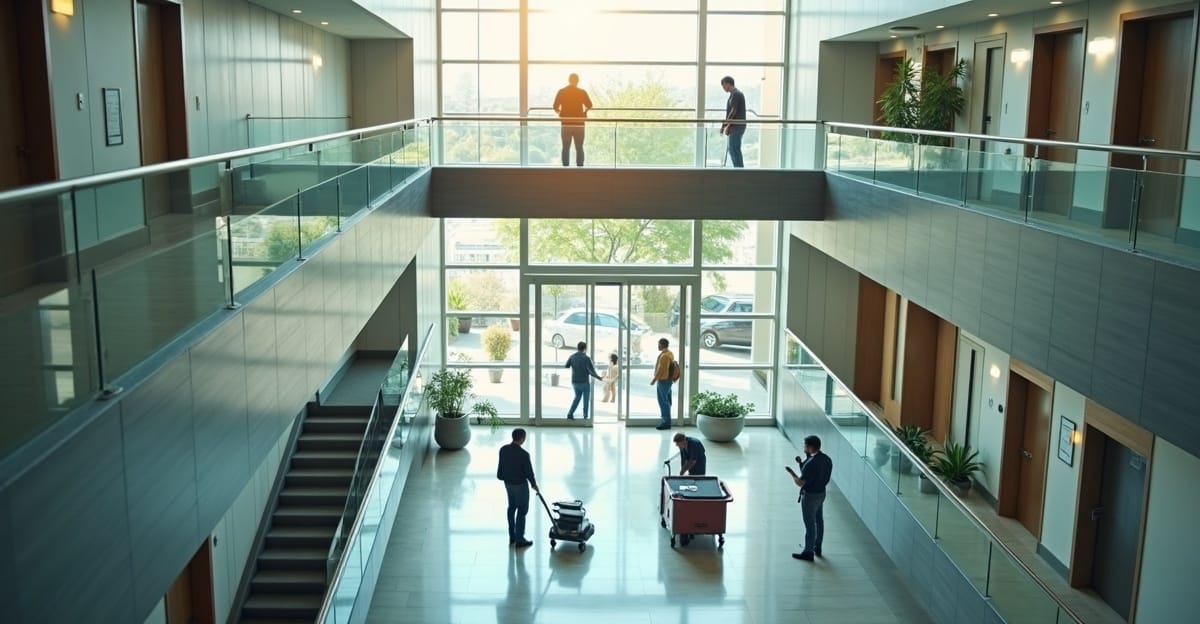
Scaling cleaning for multi-level buildings requires more than adding extra staff; it demands structured systems, defined supervision, and documented processes that keep every floor consistent. We treat scalable commercial cleaning as an operational framework that keeps lobbies, offices, amenities, and high-traffic zones aligned through clear reporting, floor-by-floor coordination, and the capacity to expand without disrupting tenants or compliance standards.
Key Takeaways
- Scalable cleaning in multi-storey buildings relies on clear supervision structures, documented quality control, and direct communication across all levels.
- Floor-by-floor scheduling must reflect tenant hours, security access requirements, lift availability, and traffic patterns in peak areas.
- Consistency depends on routine inspections, digital reporting tools, and formal escalation procedures that resolve issues quickly.
- Staffing models should use zoning strategies, cross-trained backups, and site-specific onboarding to protect service continuity.
- Difficulty adjusting rosters, uneven results between floors, and weak reporting systems clearly indicate a provider lacks true scalability.
What Scalable Commercial Cleaning Really Means in a Multi-Level Building
Scalable commercial cleaning in a multi-level building means building systems that hold up as the site grows. It’s about structure, supervision, documentation, and clear communication across every floor.
True cleaning service scalability is not achieved by adding more cleaners to the roster. It requires a defined commercial cleaning supervision structure, documented quality control in commercial cleaning, and tight facility management cleaning coordination. Without those layers, standards slip as complexity increases.
Commercial cleaning for multi-level buildings must stay consistent across:
- Office cleaning across multiple floors
- Shared amenities and bathrooms
- Lobbies and lift foyers
- Stairwells and corridors
- High-traffic zones and breakout areas
Each of these spaces has different traffic levels and cleaning needs. A ground-floor lobby that sees hundreds of people daily cannot be serviced the same way as a quiet executive floor. Multi-storey building cleaning services must account for those differences without creating gaps.
Scalability also protects daily operations. As new tenants move in or additional floors are activated, cleaning expands without disrupting business hours or creating compliance risks under the National Construction Code (Australia). That’s the outcome we aim for with structured commercial cleaning services operating within City of Adelaide commercial property guidelines and Sydney regulatory frameworks.
The Operational Challenges Behind Multi-Storey Building Cleaning Services
Growing vertically adds layers of logistical pressure. Multi-storey building cleaning services demand planning at a floor-by-floor level.
Different tenants operate on different schedules. Some require after-hours access. Others need daytime cleaning for shared zones. Floor-by-floor scheduling must account for security access, tenant sensitivity, and service frequency. We’ve outlined broader timing strategies in our guide on how to schedule cleaning with minimal disruption, and those principles become critical in high-rise environments.
Lift and equipment coordination presents another challenge. Cleaning teams must move trolleys, machinery, and waste through lifts without blocking peak-hour traffic. Building access protocols often restrict freight lift use to certain windows. Without coordination, services become inefficient and visible disruptions increase.
High-traffic zones require tighter monitoring. Lobbies, lift foyers, bathrooms, and shared kitchens need increased frequency and documented checks. High-touch points such as buttons, handrails, and shared surfaces demand structured cleaning aligned with Australian Department of Health infection prevention guidelines and clear accountability.
Mixed-use buildings add further pressure. Strata cleaning services often run alongside commercial offices, retail, or medical suites. In medical settings, compliance must align with Australian Commission on Safety and Quality in Health Care standards requiring strict protocols, documentation, and adherence to hygiene controls. These sites cannot rely on informal practices.
In Adelaide and Sydney, many commercial cleaners work in dense office towers and multi-tenanted strata buildings. Commercial cleaners Adelaide and commercial cleaners Sydney must manage shared loading docks, strict access controls, and layered stakeholder expectations under City of Sydney commercial building compliance requirements. Multi-level work demands coordination, not guesswork.
The Systems and Supervision Structure That Keep Standards Consistent
Consistency across multiple floors starts with leadership. A defined commercial cleaning supervision structure keeps standards aligned at every level.
We structure teams with on-site team leaders where required, supported by site supervisors and area managers overseeing multiple buildings. Cleaners report to supervisors. Supervisors provide structured updates to facility or property managers. That chain reduces confusion and speeds up issue resolution.
Quality control in commercial cleaning must be documented. We implement:
- Routine inspections with recorded outcomes
- Floor-specific checklists
- Digital sign-offs after service completion
- Scheduled audits across all levels
Commercial cleaning reporting systems ensure transparency. Facility managers receive clear updates instead of vague promises. Facility management cleaning coordination becomes simpler when data is visible.
Escalation processes also matter. If an issue arises on Level 12, it shouldn’t be passed around informally. Formal pathways define who responds, how quickly, and how resolution is confirmed. This protects both tenants and property managers.
When buildings expand, we don’t simply extend rosters. We use staged onboarding and ramp-up plans to integrate new floors. The same systems apply. That discipline keeps scalable commercial cleaning stable as portfolios grow.
Staffing Models That Support Growth Across Multiple Floors
Staffing decisions should reflect site usage, not just square metres. Cleaning service scalability depends on understanding foot traffic, tenant type, and service scope.
Office cleaning across multiple floors benefits from zoning. Teams are assigned to specific floors or functional areas. That creates ownership. Cleaners become familiar with tenant expectations and site nuances instead of rotating randomly.
Overlap coverage protects continuity. Sick leave, peak demand, and seasonal increases shouldn’t cause visible service drops. Backup staffing plans prevent last-minute gaps.
Training remains central. Sites with medical tenancies require staff trained in medical centre cleaning compliance. Strata cleaning services carry shared area obligations and resident expectations. Teams need clear instruction aligned with site-specific risks.
Flexibility also matters. As new tenancies move in or trading hours extend, commercial cleaning for multi-level buildings must scale without disrupting operations. Structured communication between cleaners, supervisors, and property managers prevents blind spots.
For standard office environments, clearly defined scopes help align expectations. We break this down further in our office cleaning checklist, which shows how tasks can be structured consistently across levels.
Signs Your Current Cleaning Provider Is Not Truly Scalable
Not every provider claiming to offer scalable commercial cleaning has the systems to support it.
Inconsistent results between floors are often the first red flag. One level looks sharp. Another feels overlooked. That usually signals weak supervision.
A lack of a dedicated supervisor also creates confusion. If there’s no clear point of contact, issues drift without resolution. Repeated complaints without documented follow-up indicate missing quality control in commercial cleaning.
Missing or vague commercial cleaning reporting systems add to the risk. Without inspection records or digital logs, accountability weakens. Reactive responses replace structured planning.
Difficulty adjusting rosters when your building expands or tenant hours shift shows limited cleaning service scalability. Statements like “we scale with you” should be backed by explanation. Ask how supervision works. Ask how audits are handled. Ask how new floors are onboarded.
Questions to Ask Before Partnering With Commercial Cleaners in Adelaide or Sydney
Clear questions lead to clear expectations. Before engaging commercial cleaners Adelaide or commercial cleaners Sydney for a multi-level site, it helps to address structure and process directly.
Consider asking:
- How is your commercial cleaning supervision structure set up for multi-storey buildings?
- What documented quality control in commercial cleaning processes do you use?
- How do you manage floor-by-floor scheduling and lift or access coordination?
- What reporting systems will we receive, such as digital reports or inspection logs?
- How do you manage compliance in medical centres and strata properties?
- What is your ramp-up process if we add more levels or sites?
These questions separate general janitorial support from structured janitorial services and broader commercial programs. Understanding the difference between janitorial and commercial cleaning also helps clarify expectations in complex buildings.
Multi-storey assets demand discipline, oversight, and documentation. We clean offices. Big ones, small ones, and buildings that stretch skyward. For property managers and facility teams reviewing their current setup, we’re ready to assess gaps and outline a clear plan for scalable commercial cleaning that fits Adelaide or Sydney sites. A direct conversation through our contact page is often the most practical first step.
Frequently Asked Questions
Scalable commercial cleaning is a structured approach that allows cleaning services to expand across multiple floors without losing consistency or control. In high-rise buildings, it relies on supervision layers, documented procedures, and digital reporting systems. This ensures every level follows the same standards while adjusting frequency and staffing based on traffic, tenant needs, and operational hours.
Cleaning across multiple floors is scheduled around tenant hours, lift access windows, and peak traffic periods. Floor-by-floor planning helps reduce disruption by separating high-traffic zones from quieter areas. After-hours cleaning, staggered shifts, and clear access coordination ensure services remain efficient while maintaining compliance and minimizing interference with daily business operations.
A scalable cleaning model uses zoning strategies, cross-trained staff, and backup coverage to maintain service continuity. Teams are assigned to specific floors or functional areas to build familiarity and accountability. Supervisors oversee performance across levels, while flexible rostering allows the service to expand as new tenants move in or additional floors are activated.
Quality control in multi-storey commercial cleaning depends on documented inspections, digital reporting tools, and formal escalation procedures. Floor-specific checklists and routine audits help ensure consistent standards across all levels. Clear supervision structures allow issues to be identified quickly, assigned to the right person, and resolved with confirmed follow-up.
Warning signs include inconsistent results between floors, weak supervision, and limited reporting transparency. If a provider struggles to adjust rosters when occupancy changes or cannot explain their inspection process, scalability may be lacking. True scalable commercial cleaning should demonstrate structured systems, defined accountability, and the ability to expand without service disruption.