
How Often Should Shared Kitchens Be Cleaned?
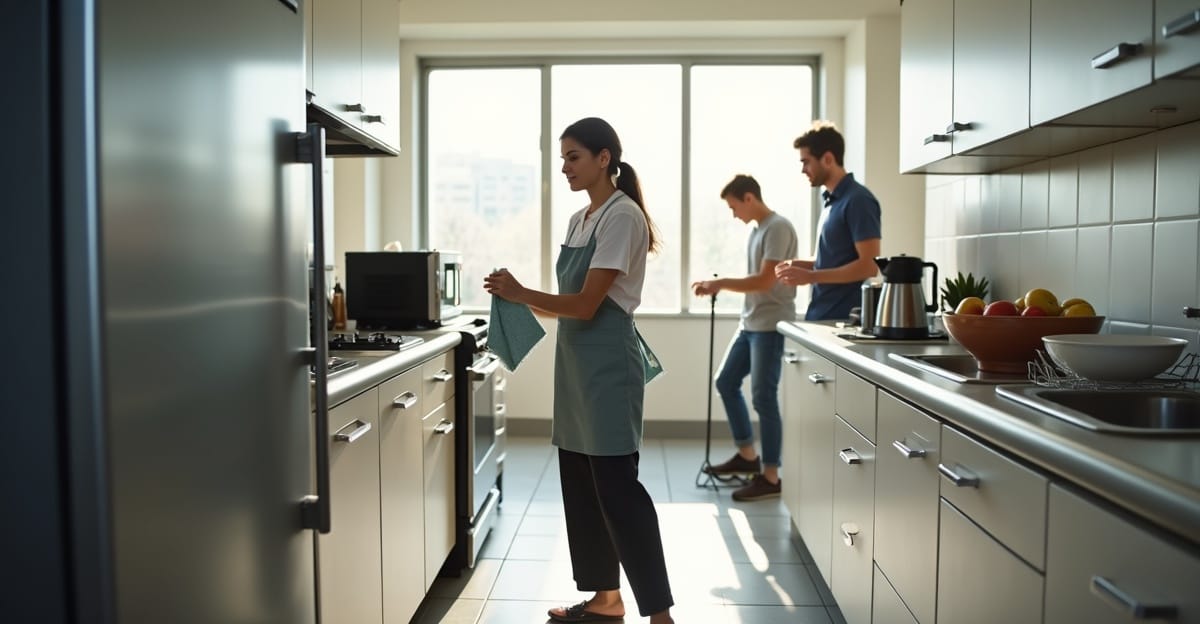
A shared office kitchen needs a structured cleaning frequency based on daily use, staff numbers, and risk level. We don’t rely on vague instructions like “clean regularly.” In most workplaces, we schedule shared kitchen cleaning at least daily. We also disinfect high-touch surfaces more than once a day to protect hygiene, safety, and compliance.
Key Takeaways
- We clean shared office kitchens daily at minimum. We disinfect high-touch points daily or multiple times per day based on usage.
- We avoid relying on weekly cleaning alone. It rarely works, especially in offices with 10 or more staff using the space regularly.
- We set cleaning frequency based on traffic, food preparation levels, hours of operation, and workplace type, including medical or multi-tenant sites.
- We document a clear cleaning schedule with daily, weekly, monthly, and quarterly tasks. This prevents missed duties and inconsistent results.
- We treat odours, overflowing bins, sticky floors, and staff complaints as warning signs. These signals show the current cleaning schedule falls short.
What’s the Right Cleaning Frequency for a Shared Office Kitchen?
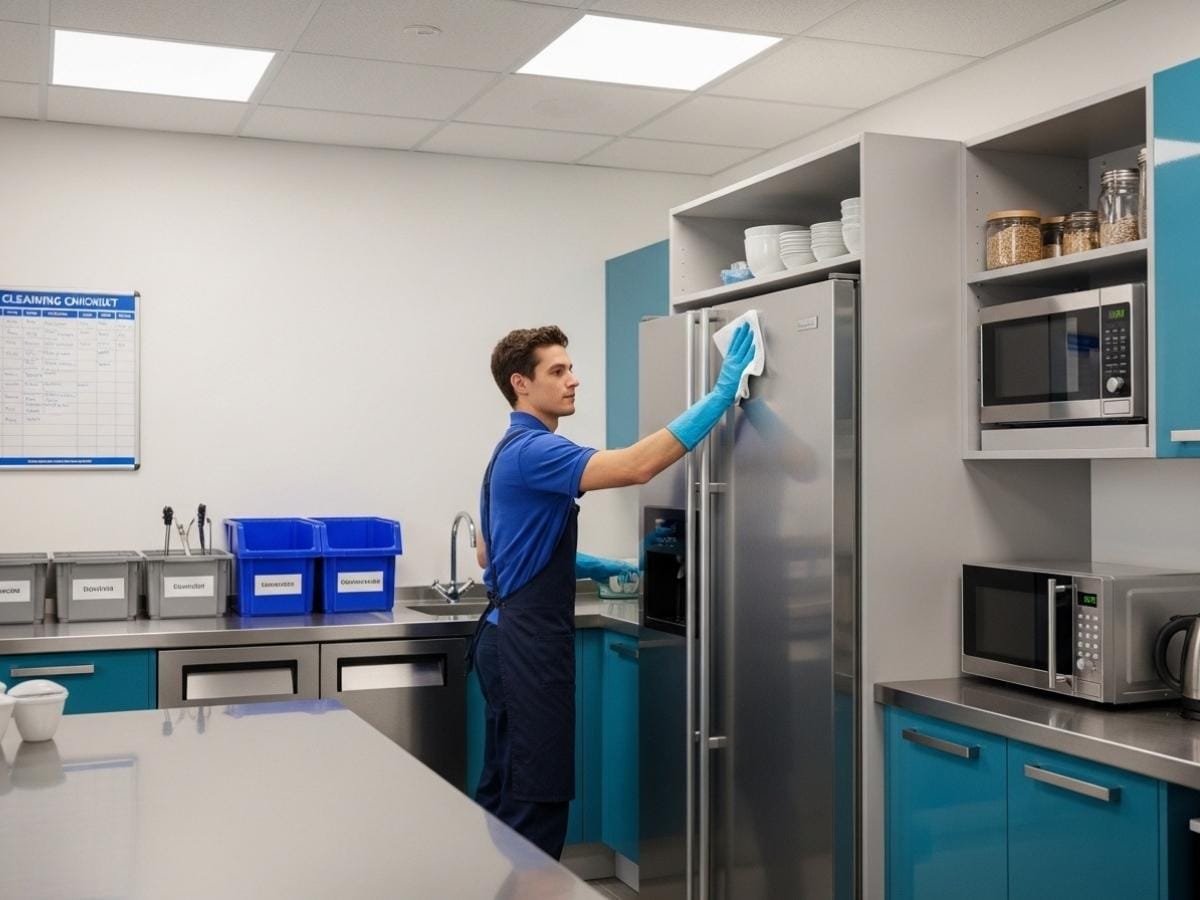
Cleaning frequency for a shared office kitchen should be clear, measurable, and suited to how the space is actually used. In most workplaces, shared kitchens should be cleaned daily at a minimum, with high-touch points cleaned daily or multiple times per day depending on usage.
That’s the direct answer to how often office kitchens should be cleaned in a commercial setting. A weekly clean alone is rarely enough, particularly in shared facilities where NSW Health environmental cleaning guidance emphasises routine daily hygiene controls.
Cleaning frequency must reflect practical factors:
- Number of staff and visitors
- Type of workplace (standard office vs medical centre)
- Hours of operation
- Level of food preparation (basic reheating vs regular food prep)
If 10 or more staff use the kitchen daily, a once-weekly clean is not sufficient. Traffic drives bacteria, spills, waste volume, and touchpoint contamination. The higher the use, the tighter the schedule needs to be.
Vague guidance like “clean regularly” creates risk and confusion. It leads to missed tasks, unclear expectations, and inconsistent results. A defined schedule removes guesswork. It also aligns your kitchen standards with broader cleaning plans, such as those outlined in how often offices should be professionally cleaned.
Shared kitchens sit at the intersection of staff health, presentation, and compliance. The cleaning frequency should reflect that reality.
Daily Cleaning Tasks That Should Never Be Skipped
Daily Office Kitchen Cleaning Tasks
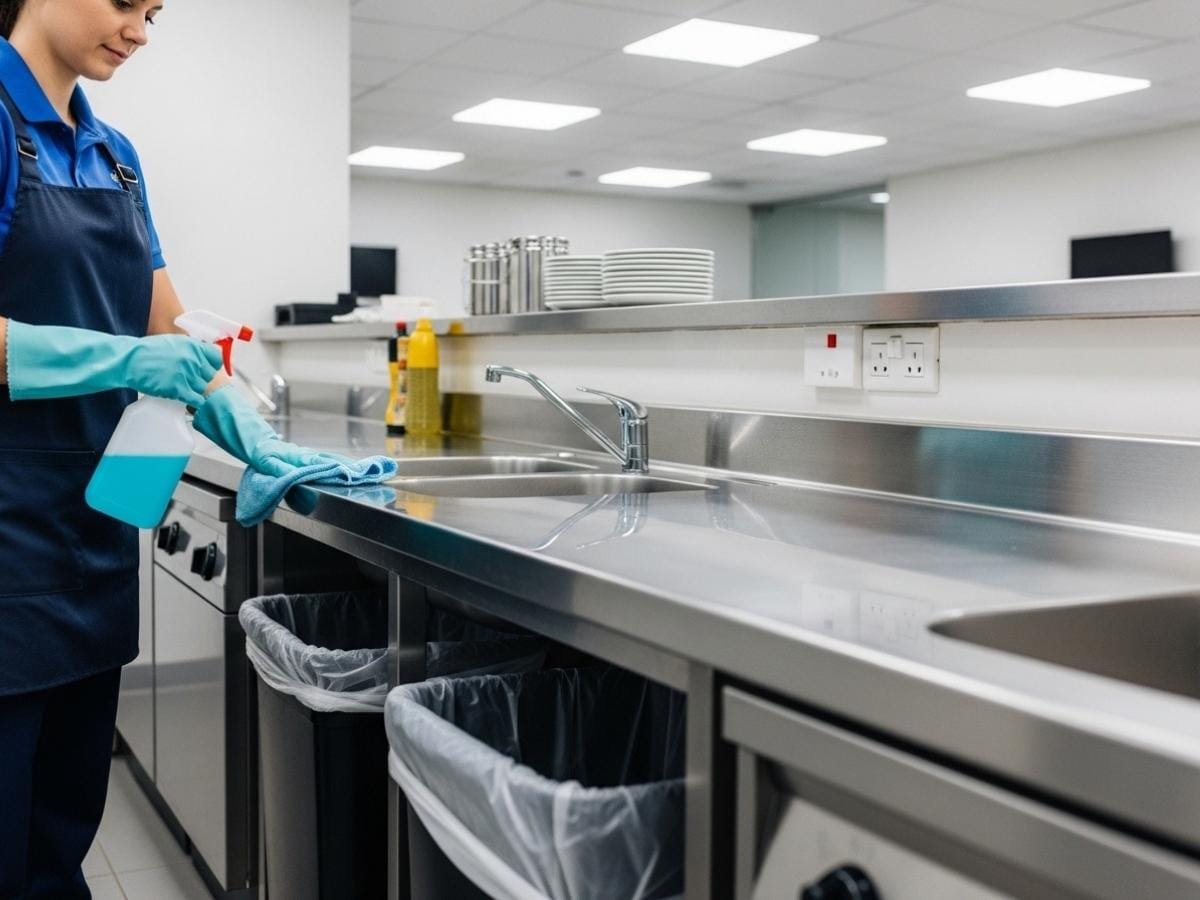
Every shared kitchen needs a minimum daily standard. These daily office kitchen cleaning tasks should never be optional in a commercial environment:
- Empty bins and replace liners
- Wipe and disinfect benchtops
- Clean sinks and tapware
- Sanitise fridge handles, microwave buttons, and cupboard handles
- Wipe the exterior of appliances
- Spot mop floors in food prep areas
In larger offices or corporate hubs with 30–50+ staff onsite, high-touch surfaces often require attention twice a day. Morning and late afternoon cleans help maintain hygiene during peak usage.
Under-cleaning creates direct risks. Odours build quickly. Food residue attracts pests. Spills lead to slip hazards, which are recognised workplace risks under Safe Work Australia guidance on slips, trips and falls. Cross-contamination becomes more likely, particularly where cleaning does not meet Food Standards Australia New Zealand sanitising guidelines. Staff notice. So do building managers and tenants.
Poorly maintained kitchens often generate complaints long before management realises there’s a gap in the scope of works. In shared buildings, this can affect reputation and leasing relationships.
We focus on measurable standards. “Benches disinfected daily” is clear. “Kitchen cleaned regularly” is not. A defined schedule creates accountability and consistency.
For environments with high foot traffic and shared amenities across floors, structured corporate workplace cleaning programs should always include kitchen touchpoint control as part of the daily scope.
Weekly and Periodic Tasks That Support Workplace Kitchen Hygiene Standards Australia
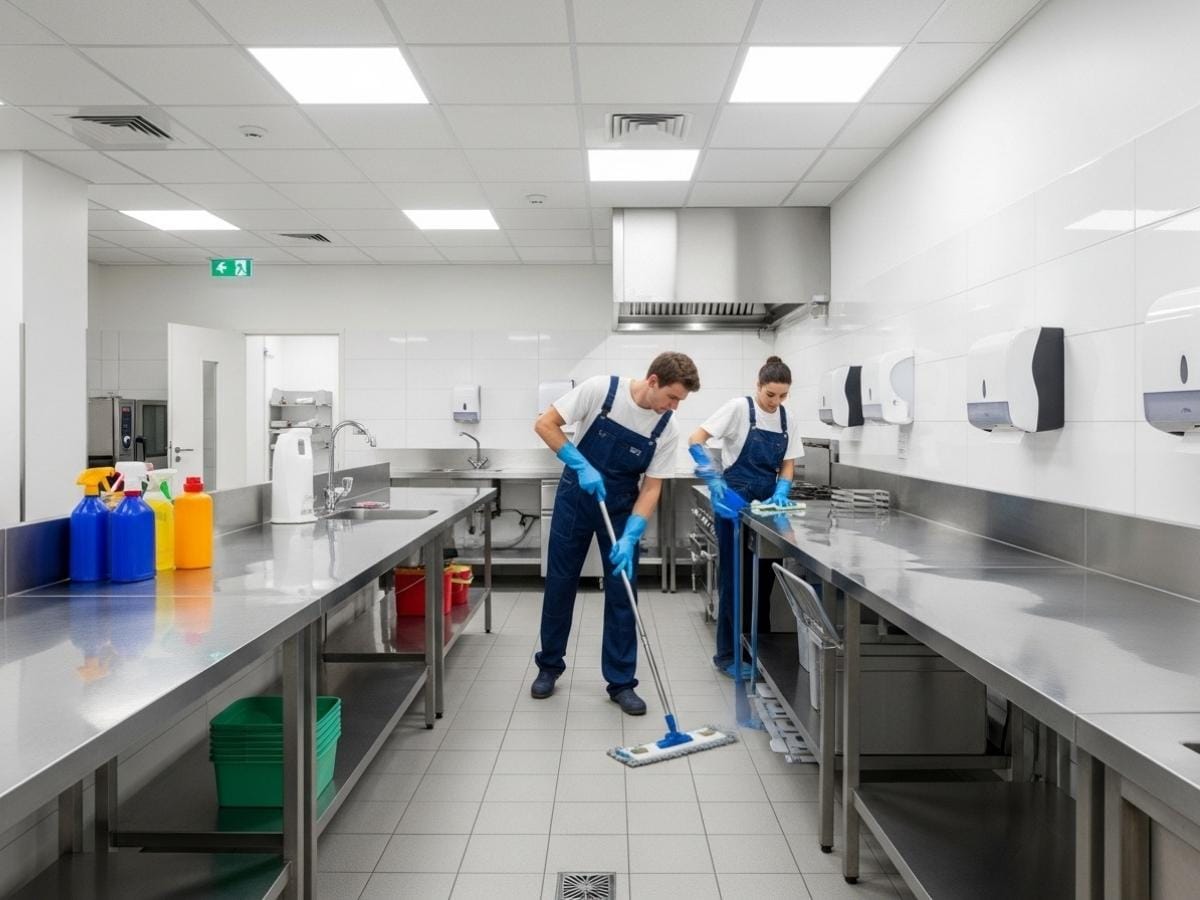
Daily cleaning maintains surface hygiene. Weekly and periodic tasks protect the space long term and support workplace kitchen hygiene standards Australia businesses are expected to maintain.
Weekly tasks typically include:
- Mop the entire floor with disinfectant
- Clean inside microwaves thoroughly
- Wipe splashbacks and tiled surfaces
- Clean fridge exterior and check for spills
- Polish stainless steel surfaces
Fortnightly or monthly, depending on usage, add:
- Clean inside fridges (with staff coordination)
- Deep clean bins
- Descale kettles and sinks
- Detail-clean cabinetry fronts and kickboards
Quarterly or bi-annual tasks may include:
- Steam cleaning hard floors where applicable
- Detailed appliance cleaning
These scheduled items help maintain commercial cleaning compliance Australia businesses rely on, particularly in multi-tenant buildings and health-related workplaces, in line with guidance from Safe Work Australia workplace health and safety standards.
Expectations do vary. A standard office kitchen differs from common-area kitchens in strata properties. A medical facility will operate under higher hygiene scrutiny than a small professional office. The structure stays similar, but the frequency and level of disinfection can increase.
If the kitchen is part of a broader facility program, these tasks should sit within a defined janitorial services schedule rather than being treated as occasional extras.
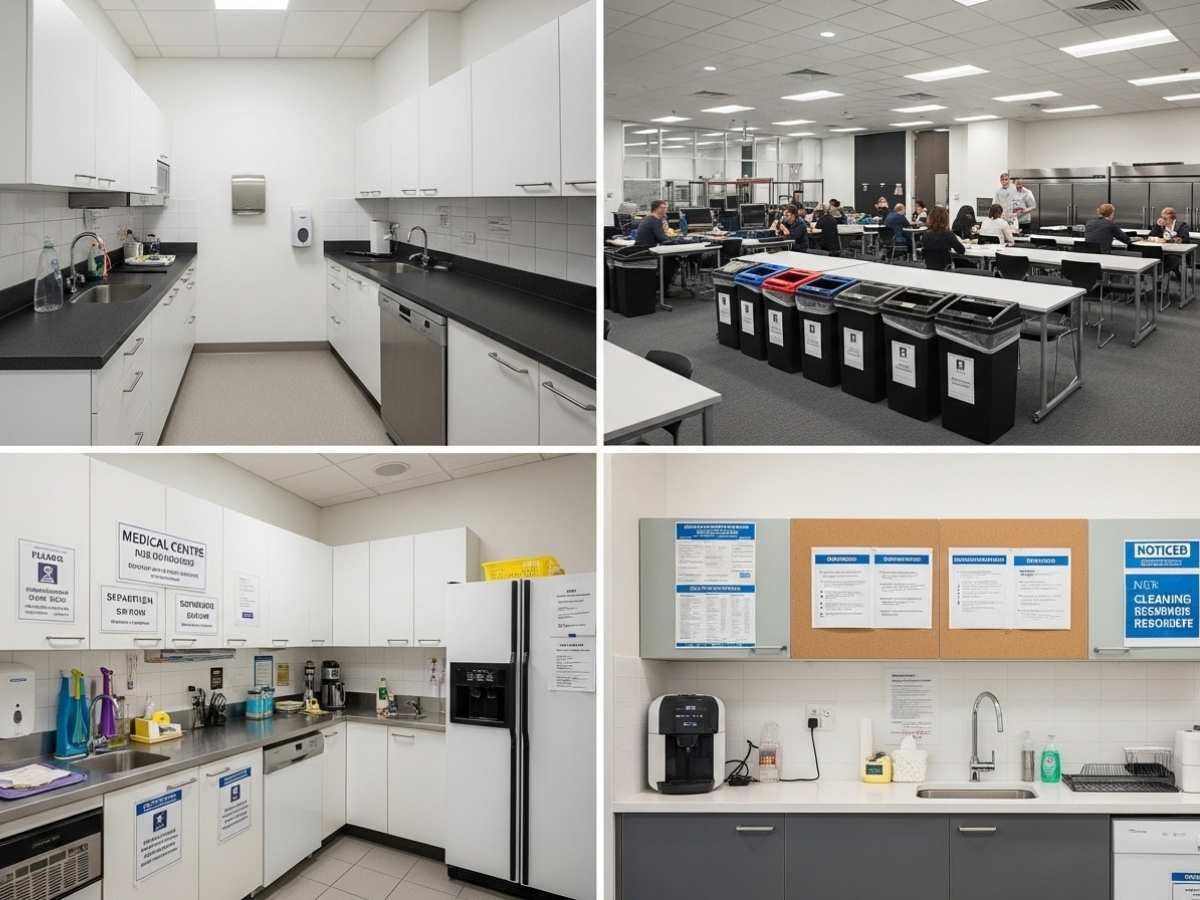
Adjusting Commercial Kitchen Cleaning Frequency Based on Environment
Commercial kitchen cleaning frequency should reflect risk and traffic. Applying the same standard across every workplace leads to overservicing in some areas and under-cleaning in others.
Low-Traffic Office
Under 10 staff with limited use:
- Daily light clean
- Weekly detail tasks
- Daily sanitising of high-touch surfaces
Even smaller teams require consistent daily sanitising of shared contact points.
Large Corporate Hub
Multiple teams, shared floors:
- Daily full kitchen clean
- Additional touchpoint checks during the week
- More frequent bin and fridge monitoring
Spills, waste, and surface contact increase rapidly in busy environments. Without frequent checks, hygiene drops fast.
Medical Centre Environment
Medical centre kitchen cleaning requirements are higher due to infection control expectations, as outlined in Australian infection prevention and control guidelines for healthcare settings. More frequent disinfection of touchpoints is standard practice. Clinical and non-clinical areas must remain clearly separated, with no cross-use of cleaning equipment.
Strata and Shared Tenancy Spaces
Strata cleaning common areas require clearly defined responsibility between cleaners and tenants. Ambiguity creates gaps. The cleaning contract must clearly outline who handles daily cleaning and who manages periodic tasks.
There’s no need to apply medical-grade standards where they aren’t required. At the same time, underestimating risk in busy offices leads to complaints and compliance problems. The key is aligning frequency with actual use and documented expectations.
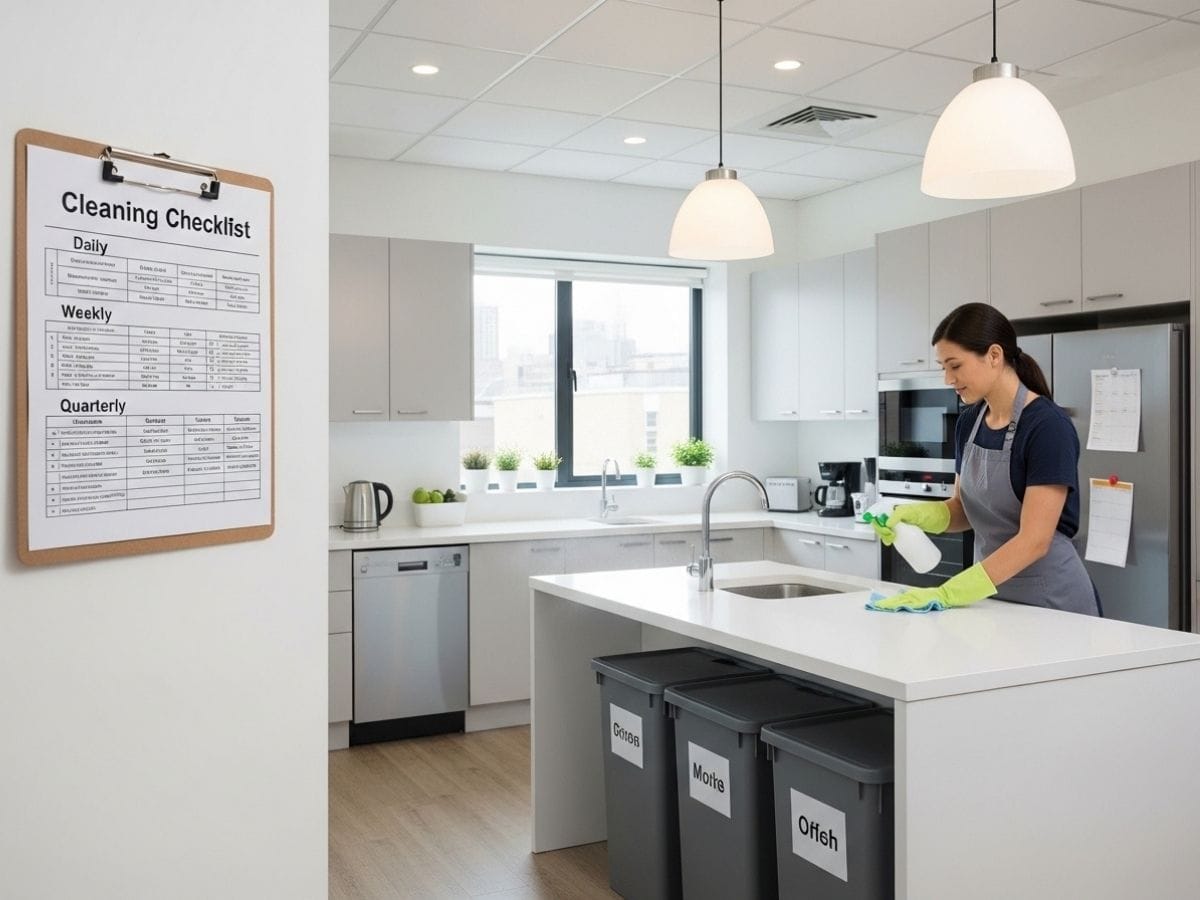
A Practical Shared Staff Kitchen Cleaning Checklist You Can Use
Clarity improves results. A shared staff kitchen cleaning checklist turns general expectations into a measurable office kitchen cleaning schedule.
Daily
- Empty bins and replace liners
- Wipe and disinfect benches
- Clean sink and tapware
- Sanitise appliance handles and cupboard fronts
- Spot mop food prep areas
Weekly
- Full disinfectant mop of entire floor
- Deep clean microwave interior
- Wipe splashbacks and wall tiles
Monthly
- Clean fridge interior
- Sanitise bins thoroughly
- Detail-clean cabinetry fronts and kickboards
Quarterly
- Machine scrub or steam clean hard floors
Managers should compare this checklist against their current scope of works and understand janitorial vs commercial cleaning differences when aligning it with a standard office cleaning checklist to ensure all responsibilities are clearly defined. Many businesses assume tasks are included without verifying what is included in an office clean. That assumption often leads to inconsistent results.
A clear checklist also helps clarify what’s covered in broader cleaning programs, such as those outlined in what’s included in an office cleaning checklist. When everyone understands what “good” looks like, performance becomes easier to measure.
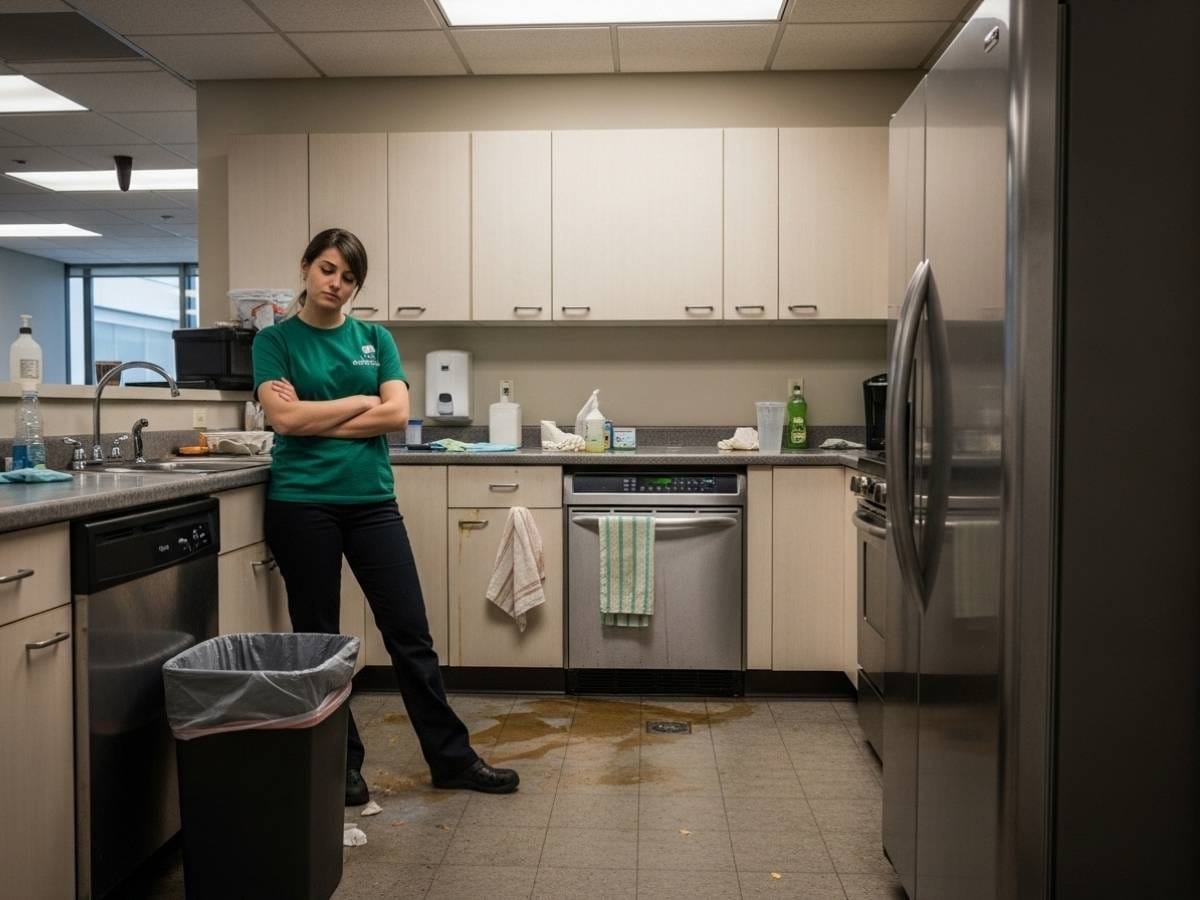
Signs Your Current Cleaning Schedule Isn’t Enough
Cleaning issues show up quickly in shared kitchens. Ignoring them leads to frustration and risk.
Common warning signs include:
- Persistent smells by mid-week
- Overflowing bins or sticky floors
- Staff complaints about hygiene
- Visible grime on appliances
- Signs of pest activity
These indicators often point to gaps in commercial cleaning compliance Australia expectations and highlight what are the signs of a poorly cleaned office when hygiene standards start slipping. In strata properties, they can quickly affect tenant satisfaction.
If any of these issues are happening, it’s time to review the office kitchen cleaning schedule. Regular reassessment should be part of responsible facility management, especially as headcount or usage changes.
For businesses in Adelaide and Sydney, a practical next step is arranging a walkthrough to assess shared office kitchen cleaning needs. We clean offices — big ones, small ones, and everything in between. Our focus stays simple: clear scope, realistic schedules, and consistent results.
If the current plan isn’t delivering, we’re ready to review it and provide straightforward recommendations. Reach out through our contact page to organise an assessment and bring your shared kitchen back to a clear, reliable standard.
Frequently Asked Questions
A shared office kitchen should be professionally cleaned at least once per day in most workplaces. High-touch surfaces such as fridge handles, microwaves, and benchtops may require multiple disinfecting rounds depending on staff numbers and usage. Professional cleaning ensures consistent hygiene standards, reduces contamination risk, and supports compliance in multi-tenant or regulated environments.
Weekly cleaning alone is usually not sufficient for a shared office kitchen. In offices with regular daily use, waste, spills, and bacteria build up quickly. Without daily cleaning and sanitising of high-contact areas, hygiene declines and complaints increase. Weekly tasks should support a daily cleaning frequency, not replace it.
The correct cleaning frequency depends on staff numbers, food preparation levels, hours of operation, and workplace type. High-traffic offices or medical settings require more frequent disinfection than low-use environments. The more people using the kitchen and the longer it operates each day, the more structured and frequent the cleaning schedule must be.
High-touch surfaces require the most frequent cleaning in a shared kitchen. These include fridge handles, microwave buttons, cupboard doors, sinks, tapware, and benchtops. Floors in food preparation zones and rubbish bins also need daily attention. Frequent sanitising reduces cross-contamination and helps maintain workplace hygiene standards.
Signs your cleaning schedule is inadequate include persistent odours, overflowing bins, sticky floors, visible grime, or staff complaints. These indicators suggest the current cleaning frequency does not match usage levels. Reviewing the cleaning plan and increasing daily or touchpoint cleaning often resolves hygiene gaps and improves overall kitchen standards.