
How Long Should a Standard Office Clean Take?
Office cleaning time depends on square metres, staff numbers, amenities, and daily use. We see small offices take 1.5–3 hours, medium offices 3–6 hours, and large sites 6+ hours per clean. Frequency, compliance demands, and team size directly affect the final schedule.
Key Takeaways
- Small offices under 200m² usually require 1.5–3 hours, medium offices 3–6 hours, and large offices 6+ hours per visit.
- Cleaning time per square metre often sits between 0.05–0.15 hours, depending on traffic levels, scope of work, and visit frequency.
- Amenities, high-touch surfaces, floor finishes, and regulatory standards add noticeable labour time.
- Daily services run shorter per visit, while weekly services take longer due to built-up dust, waste, and restroom use.
- We allocate realistic timeframes and the right staffing levels to protect quality, hygiene, and consistency.
What’s the Average Office Cleaning Time? Real-World Benchmarks by Size
The average office cleaning time depends on size, layout, and scope of work. Square metres matter, but so do staff numbers, bathrooms, and how the space is used.
Here are practical benchmarks we use when preparing a commercial cleaning time estimate:
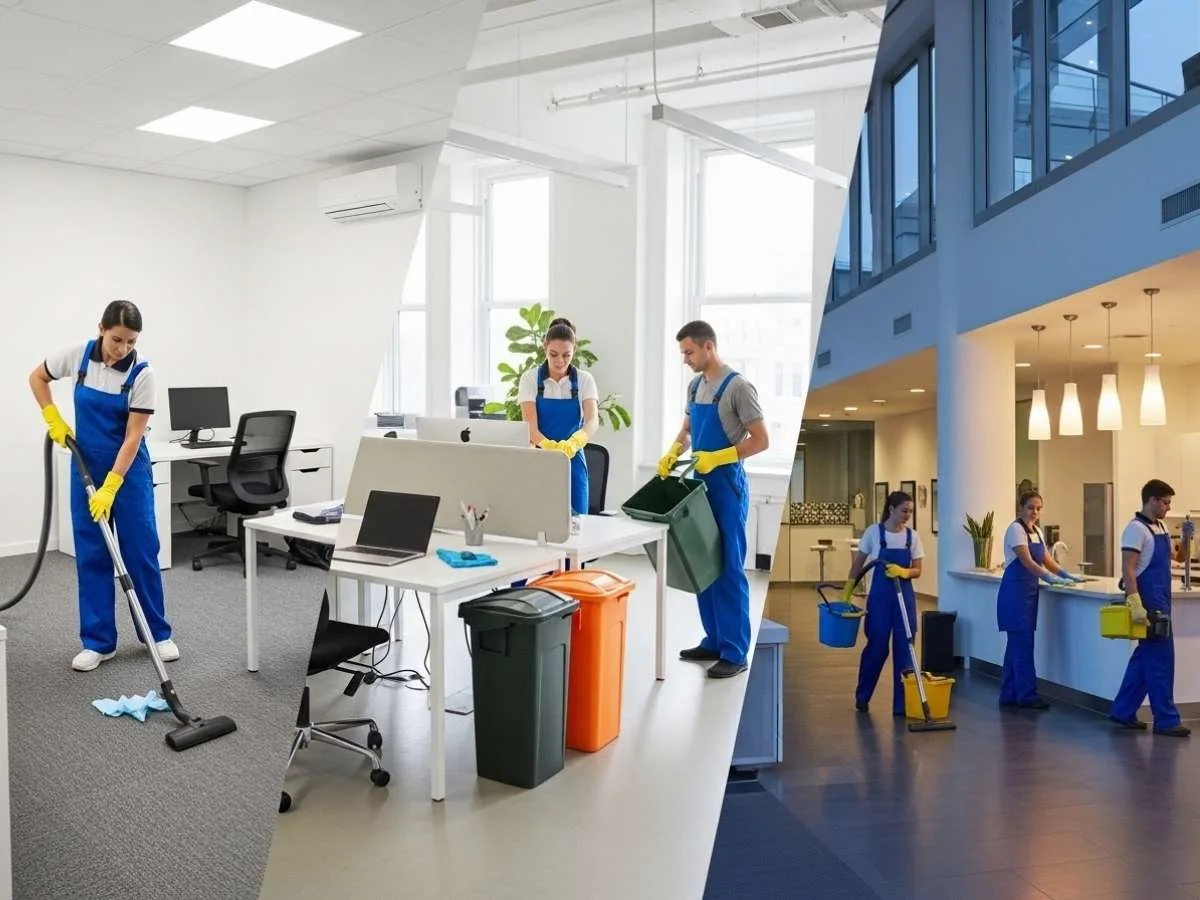
- Small office (under 200m², 5–15 staff, 1–2 bathrooms, small kitchenette): typically 1.5–3 hours per clean.
- Medium office (200–500m², 15–40 staff, multiple bathrooms, larger kitchen or breakout areas): typically 3–6 hours per clean.
- Large office (500m²+, 40+ staff, meeting rooms, amenities, reception areas): 6+ hours, often shared across multiple cleaners.
These ranges help answer the common question: how long does it take to clean an office? They aren’t fixed promises. They’re starting points for planning rosters and budgets.
As a general guide, office cleaning productivity benchmarks show that office cleaning time per square metre in commercial environments often falls between 0.05–0.15 hours per square metre, depending on scope and frequency. A lightly used corporate suite cleaned daily will sit at the lower end. A busy office with heavy amenities cleaned weekly will sit at the higher end.
Scope changes the equation quickly. A site that includes interior glass, detailed kitchen cleaning, or frequent disinfecting of high-touch points will take longer than a basic vacuum-and-bins service. If there’s uncertainty around inclusions, this breakdown of what is included in an office clean helps clarify the baseline before estimating time.
The key takeaway: the average office cleaning time is a planning guide. The true duration depends on the details.
The Main Factors That Affect Office Cleaning Time
Several clear, measurable factors affect office cleaning time. Each one increases or reduces the labour required on site.
Total square metreage is the starting point. A larger footprint means more floor space to vacuum or mop. Layout matters just as much. Open-plan offices are usually faster to service than highly segmented spaces with multiple small offices, corridors, and glass partitions.
Staff numbers and daily foot traffic also drive time. More people means:
- More bins to empty.
- More bathroom and kitchen use.
- More fingerprints on doors, desks, and shared surfaces.
Amenities are often the biggest time driver. Each additional bathroom adds cleaning steps: disinfecting bowls, scrubbing basins, polishing mirrors, mopping floors, and restocking consumables. Showers extend dwell time for disinfectants and require more detailed scrubbing. Larger kitchens and breakout areas mean more benches, appliances, and spill management.
High-touch points make a difference as well. Regular disinfecting of door handles, lift buttons, reception counters, and shared desks adds labour, particularly because public health guidance identifies these as high-touch workplace surfaces requiring frequent cleaning, especially in environments where hygiene standards remain elevated.
Flooring types influence speed. Hard floors are generally faster to maintain than heavily soiled carpet. Glass partitions increase detailing time. Stairwells slow movement between levels. All of this adds up.
Compliance cleaning standards in Australia can significantly increase time per square metre. Medical centres and allied health clinics require stricter disinfecting protocols, as outlined in Australian healthcare environmental cleaning and infection control guidelines, including set dwell times for chemicals, and documented checklists. Medical centre cleaning time requirements are often well above general office rates because each surface must be cleaned and recorded according to health guidelines.
Strata building cleaning time brings another layer. Shared lobbies, lifts, corridors, waste rooms, and car parks extend durations beyond the tenancy itself, particularly in strata buildings where common property maintenance responsibilities apply. Cleaning in these settings includes public access areas and high-traffic zones throughout the day.
These aren’t vague variables. Each additional feature translates into more steps, more materials, and more minutes on site.
Daily vs Weekly Cleaning: How Frequency Changes Time Per Visit
Daily vs weekly office cleaning duration shifts the time per visit in clear ways.
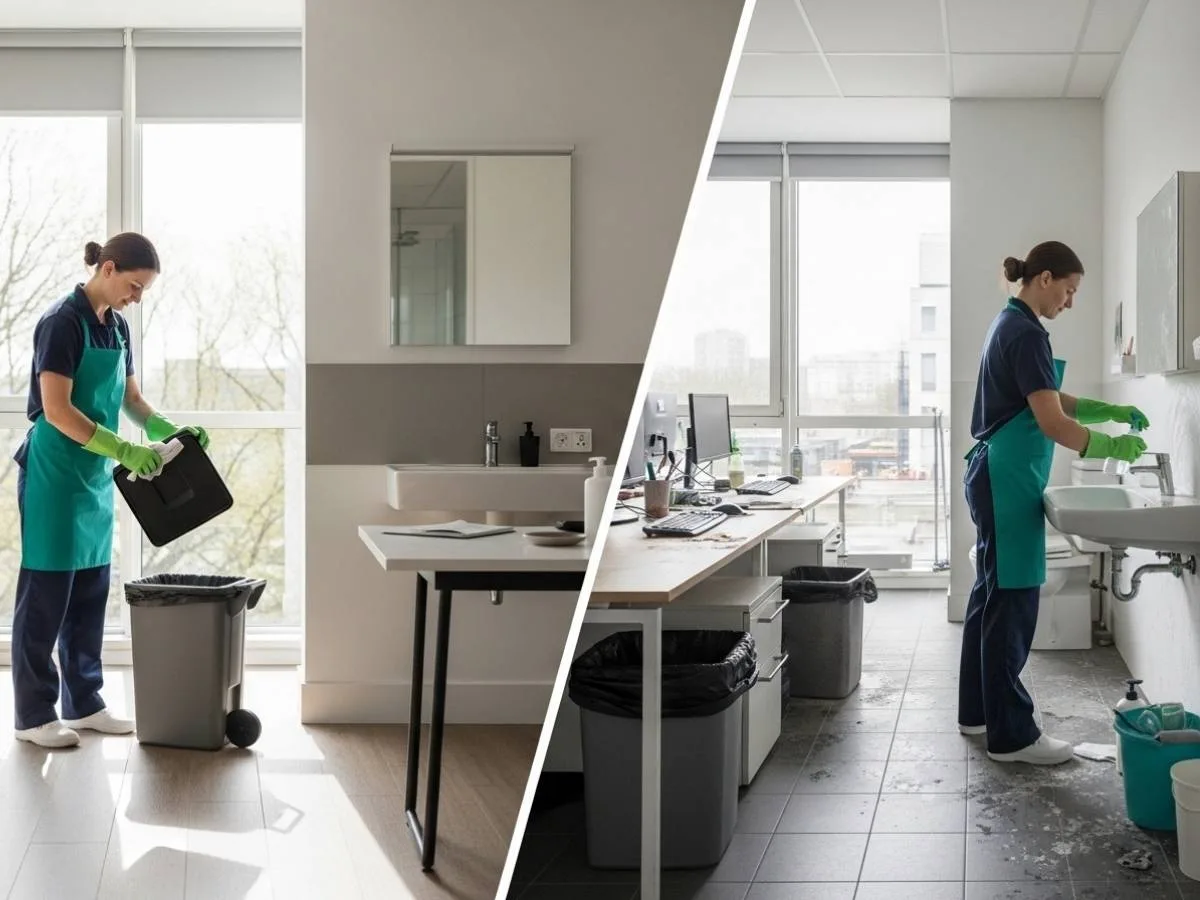
Daily cleans are usually shorter. Mess is lighter. Bins aren’t overflowing. Dust hasn’t settled into corners. Bathrooms and kitchens are easier to maintain because grime doesn’t build up.
Weekly cleans take longer. By the end of seven days, rubbish volume is higher, coffee spills have dried, and bathroom scale is harder to remove. Each task simply takes more effort.
For example, a 300m² office cleaned daily may take 2.5–3.5 hours per visit. The same 300m² office cleaned once per week may take 4–6 hours because of accumulated work.
Frequency also affects planning and cost. An office cleaning schedule with fewer attendance days may reduce invoice frequency. Yet total monthly labour hours can be similar, or sometimes higher, if each visit takes significantly longer.
There’s also a quality difference. Regular attendance supports consistent presentation and hygiene. Occasional large cleans can feel rushed if time isn’t adjusted properly. For a detailed comparison, this explanation of deep and regular cleaning helps separate the two.
Frequency should match the building’s use, not just the budget target, which is explained in this office cleaning frequency guide.
Staffing Levels and Team Size: One Cleaner vs a Crew
Office cleaning staffing levels directly impact duration and workflow.
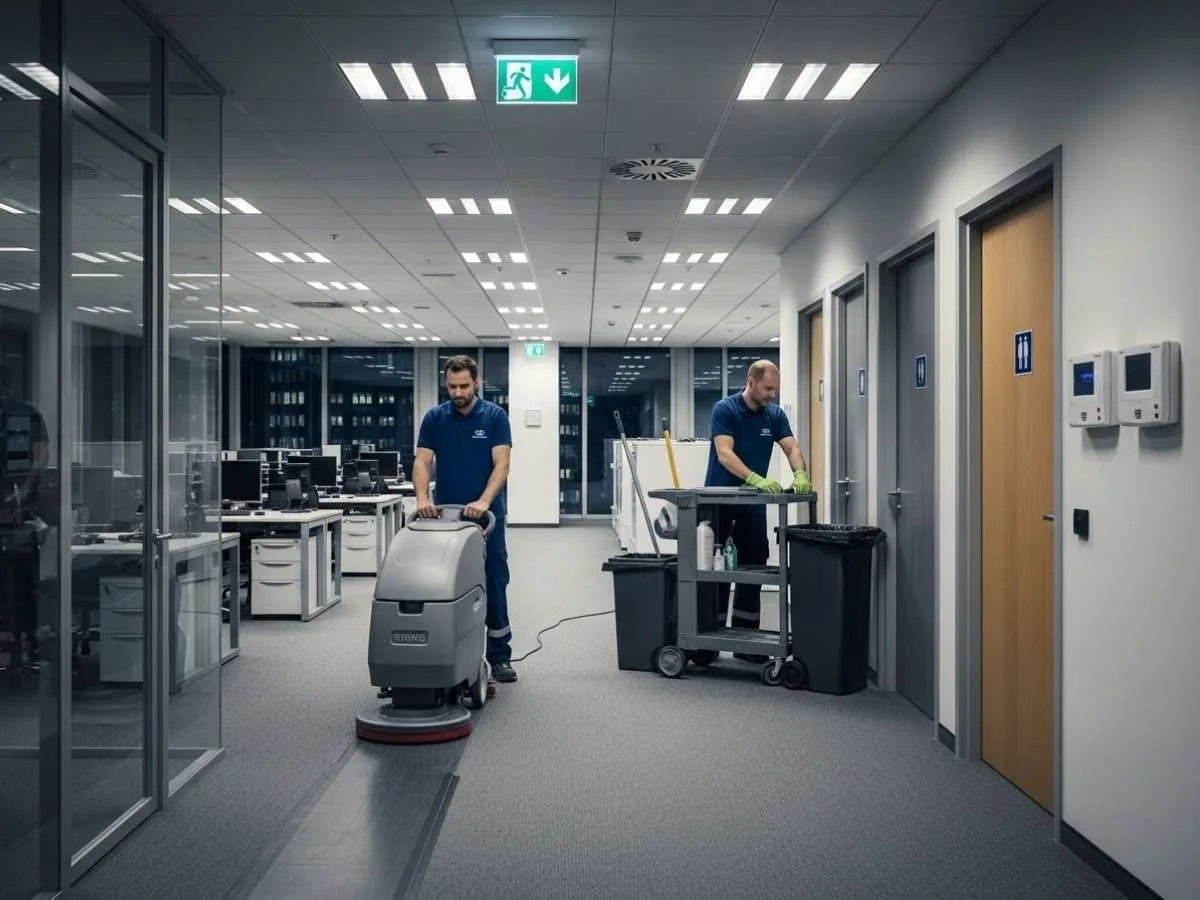
Two cleaners working three hours each generate six labour hours. One cleaner working six hours produces the same labour total. On paper, the output looks identical. In practice, timing and outcomes differ.
Team cleaning shortens on-site duration. That matters where access windows are limited, especially for offices relying on after-hours commercial cleaning. Many buildings require after-hours access, alarm codes, and strict lock-up procedures. A six-hour solo shift may run late and increase risk. A small crew can complete the same work faster and leave the site secure.
Larger offices often require multiple cleaners for safety and efficiency. Tasks like rubbish removal from upper floors, machine scrubbing, or servicing multiple amenities areas are better managed collaboratively.
Short quoted timeframes can be a warning sign. If a 400m² office with several bathrooms is allocated under an hour, it’s unlikely the scope is realistic. Either tasks will be skipped, or cleaners will rush critical hygiene areas.
For further perspective, this discussion on one cleaner handling a large office outlines when solo staffing is appropriate and when it isn’t.
The right staffing model balances efficiency, quality, and security.
Red Flags and Green Flags: Is Your Current Cleaning Time Appropriate?
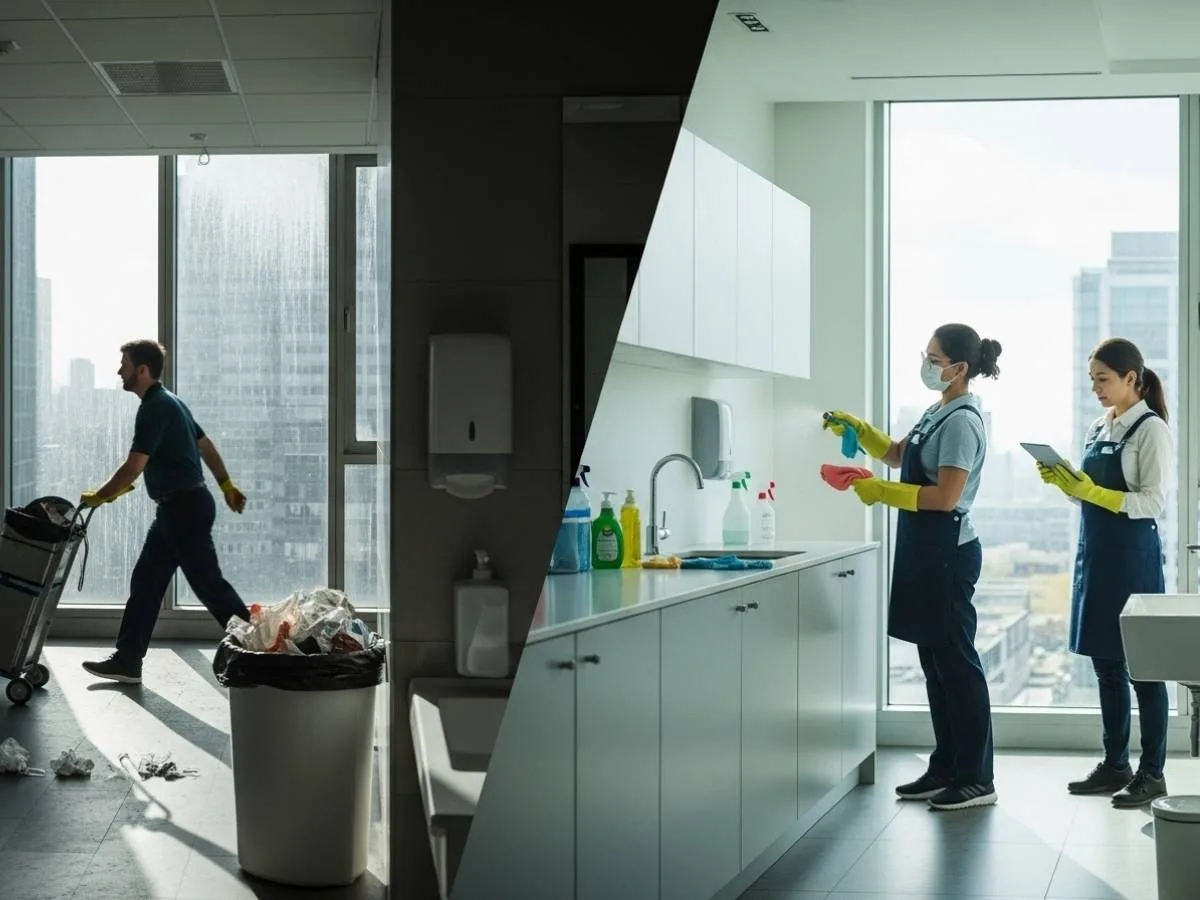
A commercial cleaning time estimate should align with visible results on site.
Here are clear red flags:
- A cleaner onsite for 45 minutes in a 400m² office with multiple bathrooms.
- Repeated complaints about missed bins, streaky glass, or empty soap dispensers.
- Highly inconsistent attendance times with no communication.
These point to unrealistic time allocations or stretched staffing.
Green flags look different. The scope of work is clearly defined and matched to allocated hours. Kitchens and bathrooms show consistent care. High-touch areas are visibly maintained. Supervisors check in. In medical or regulated settings, compliance tasks are documented rather than assumed.
Speed alone isn’t a measure of value. Quality, consistency, and scope alignment matter far more than shaving thirty minutes off the schedule.
If uncertainty remains about coverage, this overview of what office cleaning involves outlines expectations tied to professional standards.
Getting a Tailored Cleaning Time Estimate for Your Facility
The most accurate way to determine the average office cleaning time for a site is to assess it properly.
A tailored commercial cleaning time estimate should consider:
- Total square metres.
- Number of staff and daily occupancy.
- Business type—corporate office, medical practice, or strata property.
- Required compliance level.
- Preferred cleaning frequency.
We provide professional office cleaning services across Adelaide and Sydney, from agile corporate suites to regulated medical environments.
Decision-makers managing properties in South Australia can explore our office cleaning in Adelaide. Those managing larger facilities in New South Wales can review our office cleaning in Sydney. Each site receives realistic timeframes, clear scopes, and reliable scheduling.
If the goal is to understand how long it takes to clean an office without guesswork, the next step is simple: review the site, clarify the scope, and align staffing with real labour needs. From there, cleaning runs on time and without surprises.
Frequently Asked Questions
Cleaning a 1,000 square metre office typically takes 6 to 12 labour hours, depending on layout, amenities, and frequency. An open-plan corporate space cleaned daily may sit at the lower end, while a multi-level office with several bathrooms, kitchens, and meeting rooms will take longer. Team size also affects duration, as multiple cleaners can complete the same total labour hours in a shorter onsite window.
Cleaning a 1,000 square metre office typically takes 6 to 12 labour hours, depending on layout, amenities, and frequency. An open-plan corporate space cleaned daily may sit at the lower end, while a multi-level office with several bathrooms, kitchens, and meeting rooms will take longer. Team size also affects duration, as multiple cleaners can complete the same total labour hours in a shorter onsite window.
Cleaning a 1,000 square metre office typically takes 6 to 12 labour hours, depending on layout, amenities, and frequency. An open-plan corporate space cleaned daily may sit at the lower end, while a multi-level office with several bathrooms, kitchens, and meeting rooms will take longer. Team size also affects duration, as multiple cleaners can complete the same total labour hours in a shorter onsite window.
Cleaning a 1,000 square metre office typically takes 6 to 12 labour hours, depending on layout, amenities, and frequency. An open-plan corporate space cleaned daily may sit at the lower end, while a multi-level office with several bathrooms, kitchens, and meeting rooms will take longer. Team size also affects duration, as multiple cleaners can complete the same total labour hours in a shorter onsite window.