
How Commercial Cleaners Protect Office Health
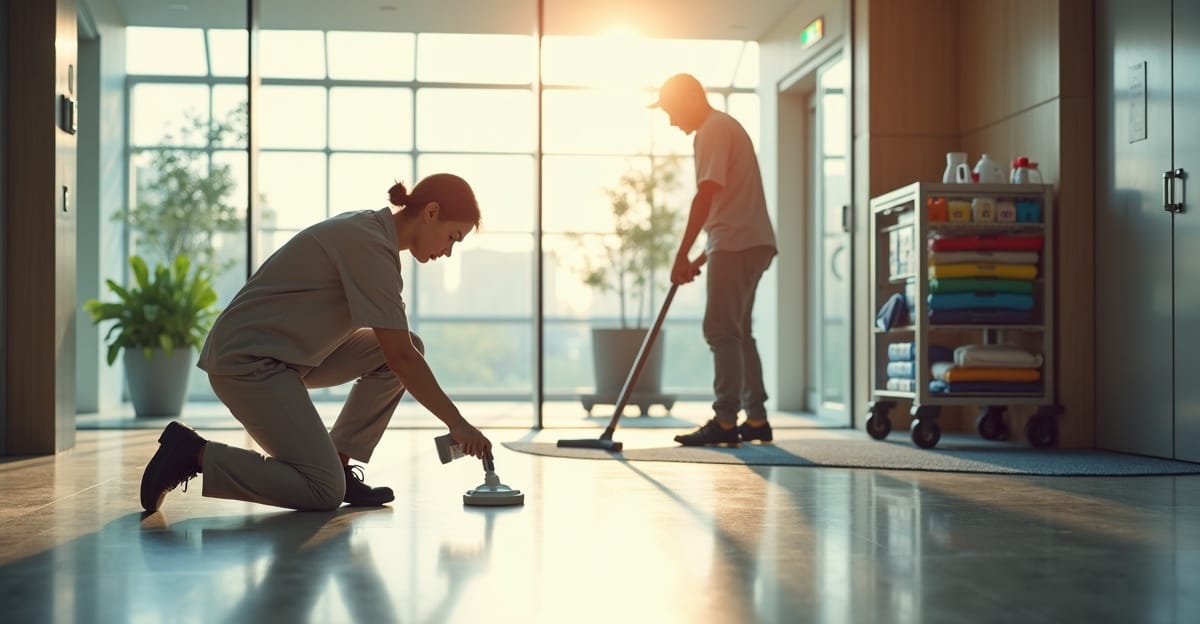
Commercial cleaners protect workplace wellbeing by delivering measurable health benefits through structured office cleaning programs. We reduce sick days, strengthen indoor air quality, and limit cross-contamination with proven systems. Our teams follow clear protocols such as high-touch surface disinfection, HEPA vacuuming, correct chemical dwell times, and documented supervision. These processes support infection control, compliance, and consistent results across offices, medical centres, and strata properties.
Key Takeaways
- Effective office cleaning focuses on systems, not appearances, and we rely on scheduled high-touch disinfection and documented checklists to maintain standards.
- Proper disinfectant dwell time, accurate dilution, and colour-coded equipment help us reduce cross-contamination and limit the spread of illness.
- HEPA vacuum cleaning and routine deep cleaning improve indoor air quality because we capture fine dust and airborne allergens before they circulate.
- High-traffic areas like kitchens, washrooms, lifts, and meeting rooms demand increased frequency, and we verify sanitisation through clear reporting.
- Compliance in medical and strata environments depends on traceable records, active supervision, and consistent cleaning standards that we enforce every visit.
Why Office Health Goes Beyond Surface Cleanliness
Clean desks and vacuumed floors look good. Healthy offices go much deeper.
The real health benefits of office cleaning show up in measurable outcomes: fewer sick days, stronger indoor air quality in office environments, and improved commercial cleaning compliance. A tidy space means little if high-touch surfaces are carrying bacteria or dust is circulating through the air.
Professional office cleaning focuses on systems. That includes structured high-touch surface disinfection, correct chemical usage, HEPA filtration, and documented cleaning protocols followed every shift. Cleaning isn’t guesswork. It’s repeatable, trackable, and consistent.
Workplace hygiene also impacts operations. When infection control in offices is handled properly, businesses see fewer complaints about odours, dust, or illness spreading through teams. That means fewer disruptions and steadier productivity. Effective cleaning helps reduce workplace absenteeism and supports overall performance.
Cleaning supports broader workplace health policies such as sick leave guidance and hygiene awareness. It doesn’t replace them. Instead, it strengthens them by reducing environmental risk factors that contribute to illness in the first place.
For a full breakdown of what structured services include, we explain it clearly in our guide on what commercial cleaning covers.
How Professional Cleaning Reduces Workplace Illness
Infection control in offices starts with understanding how germs spread. Most transmission happens through contact with shared surfaces. That’s why high-touch surface cleaning is central to any effective plan.
Door handles, lift buttons, shared desks, kitchen appliances, tap handles, and washroom fixtures all require frequent office sanitisation. These aren’t “once a day and forget” areas in busy workplaces. They require structured, scheduled attention.
Consistency matters more than intensity. We rely on documented checklists and scheduled task rotations rather than reactive, complaint-driven cleaning. That approach ensures no space is missed during busy periods.
Two technical factors make the difference:
- Correct disinfectant dwell time. Wiping a surface and immediately drying it may remove dirt, but it doesn’t always neutralise pathogens. Cleaning teams must allow chemicals to sit for the manufacturer recommended time, as required under U.S. Environmental Protection Agency disinfectant label guidelines.
- Safe chemical handling and dilution. Using the wrong ratios can reduce effectiveness or leave residues that irritate staff.
To prevent cross-contamination, colour-coded cloth and mop systems separate washrooms, kitchens, and workstations. Equipment used in a toilet area is never reused in a staff kitchen. This physical separation strengthens infection control and reduces bacterial spread between zones.
These practices connect directly to outcomes. Fewer cross-contamination risks mean fewer team-wide illness spikes. Stronger infection control supports measurable efforts to reduce workplace absenteeism.
Learn more about targeted high-touch surface cleaning and detailed office disinfection services delivered as part of broader commercial cleaning programs.
We provide structured commercial cleaning services across multiple sectors, including corporate cleaning services Adelaide and commercial cleaners Sydney, with supervision and reporting embedded into every program.
Protecting Indoor Air Quality Through Proper Techniques
Indoor air quality in office settings affects health and focus every day. Poor air can lead to headaches, irritation, coughing, and reduced concentration, as outlined by Safe Work Australia. Staff often blame fatigue on workload when stale or dusty air is a contributing factor.
HEPA vacuum cleaning plays a central role. Standard vacuums can recirculate fine dust particles into the air. HEPA filtration captures fine dust, allergens, and microscopic particulate matter instead of releasing them back into the environment, according to standards outlined by the U.S. Environmental Protection Agency.
This is critical in high-traffic offices where carpets and soft furnishings trap particles. Regular extraction and detailed vacuuming reduce airborne irritants and support stronger workplace hygiene.
Air quality improvement also requires attention to ventilation-sensitive areas and dust build-up around equipment, vents, and high surfaces. These areas are often overlooked in basic cleans but gradually affect indoor air quality.
Clean carpets, maintained upholstery, and dust-free vents create noticeable improvements. Staff report fewer issues with “stuffy” rooms, and respiratory irritation decreases when dust levels are consistently controlled.
Structured commercial cleaning services combine HEPA vacuum cleaning with scheduled deep cleaning cycles. Understanding the difference between deep and regular cleaning clarifies why both are essential for lasting air quality results.
Managing High-Traffic Areas and Shared Spaces Safely
Reception areas, meeting rooms, shared kitchens, and washrooms carry higher exposure risk due to constant movement and contact.
Office cleaning protocols must reflect usage levels. High-traffic zones require increased frequency, especially for multi-touch surfaces. Lift lobbies and boardrooms may require multiple touch-point wipes daily during peak occupancy.
Shared kitchens demand heightened attention. Appliances, fridge handles, microwaves, taps, and benchtops are cross-contact points between teams. Clear schedules and structured sanitisation reduce contamination risks. For detailed frequency guidance, read our article on how often shared kitchens should be cleaned.
Washroom sanitisation must remain consistent and documented. That includes restocking supplies, managing waste, and disinfecting surfaces thoroughly. Skipping a cleaning cycle creates immediate hygiene gaps.
Supervision and verification keep standards steady. On-site reviews, checklist sign-offs, and communication processes prevent tasks from being overlooked. Reliable commercial cleaning services build these controls into operations rather than reacting after complaints.
These structured office sanitisation practices apply to both corporate offices and residential strata environments. Strata cleaning services face similar high-traffic challenges in lifts, foyers, and shared amenities, where consistent standards protect health and long-term property value.
Cleaning for Compliance in Medical and Strata Environments
Some environments require elevated accountability. Medical clinics, healthcare facilities, and multi-tenant properties operate under strict commercial cleaning compliance expectations.
Medical centre cleaning demands documentation, communication with site managers, and audit readiness in alignment with standards set by the Australian Commission on Safety and Quality in Health Care. Cleaning teams must follow defined schedules and maintain traceable records of completed tasks. This protects patients, staff, and operators.
Structured schedules and documented protocols also reduce liability exposure. During inspections, there should be clear evidence of what was cleaned, when, and how.
Strata cleaning services require similar consistency. Property managers must balance resident safety, shared space hygiene, and reliable reporting. Inconsistent service can affect both reputation and long-term asset value.
We align our commercial cleaning services and corporate workplace cleaning solutions with documented supervision processes that support inspections and operational transparency.
Signs Your Current Cleaning Program May Be Falling Short
Visual cleanliness does not always equal effective cleaning. There are clear indicators that reveal whether a provider is delivering genuine health protection.
Red flags to look for
- High-touch areas are not cleaned daily in busy offices.
- Disinfectants are wiped away without allowing proper dwell time.
- No documented checklists or clear supervision process exists.
- Persistent dust remains around vents, desks, or equipment.
- Staff frequently report recurring illness clusters.
- The service is reactive, responding only after complaints.
Ask practical questions. Is HEPA vacuum cleaning included? Are cleaning schedules adjusted as occupancy changes? Is there clear communication and reporting from management?
If uncertainty exists, it may be time to reassess expectations. Our article on signs of a poorly cleaned office outlines what to monitor.
Strong commercial cleaning services act as long-term partners. They adapt to operational pressures, adjust programs as teams grow, and consistently maintain infection control through documented, supervised systems.
If results are falling short, we invite you to review your current program and request a consultation to strengthen workplace hygiene, improve infection control in offices, and maximise the full health benefits office cleaning can deliver.
Frequently Asked Questions
The health benefits of office cleaning include fewer sick days, improved indoor air quality, and reduced exposure to bacteria and allergens. Structured cleaning programs focus on disinfecting high-touch surfaces, removing dust with HEPA filtration, and preventing cross-contamination. These measures lower the risk of illness spreading through shared spaces and support a healthier, more productive work environment.
Regular office cleaning reduces workplace absenteeism by limiting the spread of germs on shared surfaces. Consistent disinfection of desks, door handles, kitchens, and washrooms decreases cross-contact transmission. When pathogens are controlled through proper dwell times and safe chemical use, fewer employees experience preventable illnesses, resulting in more stable attendance and fewer productivity disruptions.
Yes, professional office cleaning can significantly improve indoor air quality. HEPA-filter vacuums capture fine dust, allergens, and microscopic particles that standard vacuums may recirculate. Routine deep cleaning of carpets, upholstery, and ventilation areas reduces airborne irritants, helping to minimise headaches, respiratory irritation, and fatigue linked to poor air conditions.
High-touch surfaces should be disinfected daily in most offices and more frequently in high-traffic environments. Areas like lift buttons, door handles, shared desks, and kitchen appliances require scheduled sanitisation based on occupancy levels. Increased cleaning frequency during busy periods helps maintain consistent hygiene standards and strengthens infection control efforts.
Regular cleaning maintains day-to-day hygiene through surface wiping, vacuuming, and waste removal. Deep cleaning goes further by targeting built-up grime, detailed dust removal, and hard-to-reach areas. Both are essential for maximising the health benefits of office cleaning, as routine service controls daily contamination while deep cleaning improves long-term air quality and sanitation.