
How Cleaners Access Locked Office Buildings
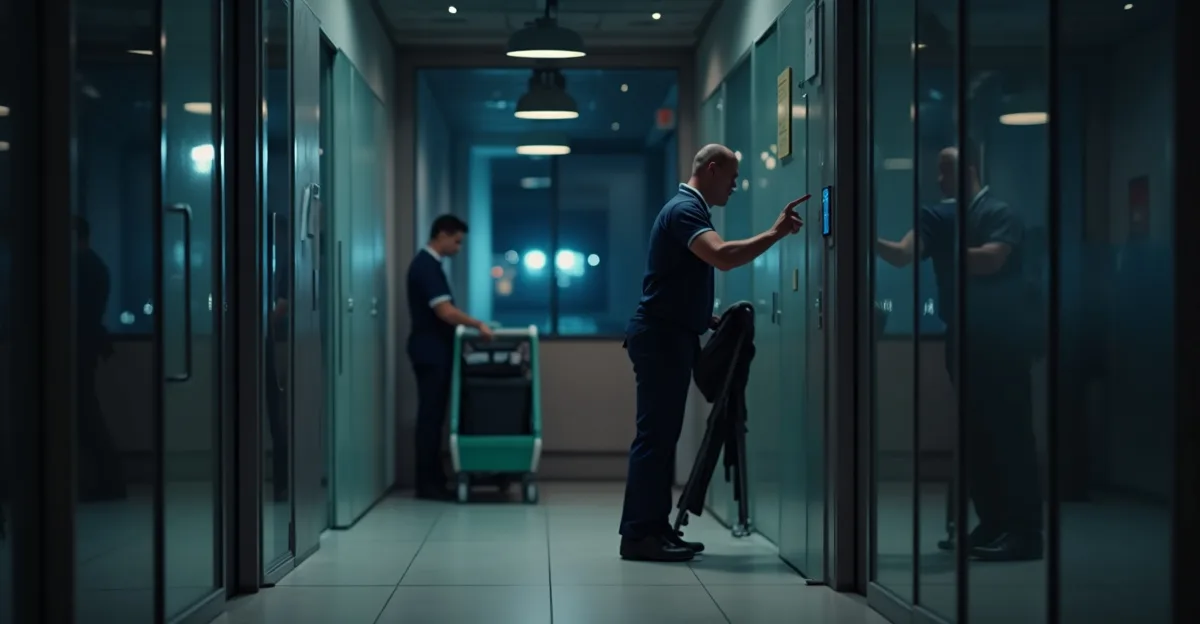
How cleaners access locked office buildings is a security decision, not a casual key handover. We treat access control for office cleaners as a structured process that aligns with building systems, insurance requirements, and compliance standards. Our team uses documented key management, role-based swipe credentials, controlled alarm permissions, and clear reporting processes. These measures protect tenant assets, sensitive information, and overall building security during after-hours cleaning.
Key Takeaways
- After-hours access affects building security, compliance, insurance validity, and tenant trust.
- Professional cleaners use controlled methods such as key registers, time-restricted swipe cards, lockboxes, and security sign-in processes.
- Alarm codes and disarm procedures are restricted to authorised staff and supported by clear escalation and reporting protocols.
- Strong safeguards include access logs, role-based permissions, background checks, confidentiality agreements, and formal incident reporting.
- Medical centres and strata buildings require tighter, well-documented access controls due to patient confidentiality, shared spaces, and layered entry systems.
Why After-Hours Access Is a Serious Responsibility in Any Office Building
After-hours access isn’t a small detail. It’s a serious responsibility that affects security, compliance, and tenant trust.
If cleaners are inside a locked building at night, access control for office cleaners must be managed clearly and accountably. Office managers, strata property managers, and medical administrators are right to expect structured systems. Door keys, swipe cards, and alarm permissions aren’t casual tools. They are part of the building’s overall risk profile.
Security concerns go beyond theft. Sensitive documents, unsecured IT equipment, financial records, and medical files are often left on desks or in treatment rooms. Shared strata facilities such as meeting rooms, mailrooms, and storage areas add another layer of exposure. Without formal office cleaning security procedures, even a small oversight can create a major issue.
Office building access systems must align with insurance conditions and compliance requirements. Many policies require documented key control. Strata and healthcare facilities often have stricter documentation standards. Weak access control can invalidate coverage or create liability disputes, particularly where policies require documented risk controls as outlined by the Australian Securities and Investments Commission (ASIC) on insurance disclosure obligations.
Strong providers treat this as part of commercial cleaning risk management. Structured access systems reduce risk. They don’t increase it. Secure cleaning services rely on clear processes, limited permissions, and traceability so building managers can see who was on site and when.
Most businesses schedule cleaning outside operating hours for good reason. After-hours work limits disruption and supports productivity, as explained in the benefits of after-hours cleaning. That advantage only works when access is managed properly.
Common Ways Cleaners Access Locked Office Buildings
Professional cleaners don’t simply “hold a key.” Reputable providers follow defined commercial cleaning key management procedures that fit within the building’s office building access systems.
Structured Access Methods Used by Professional Providers
Access methods vary by site, but structured models usually include:
- Managed keys and a documented key register for cleaners. Keys are issued through a controlled process, signed in and out, and returned to secure storage. Duplication is limited and monitored.
- Swipe cards or programmed credentials. Access is time-restricted and role-based. Staff can enter approved zones during scheduled cleaning windows only.
- Lockbox access for cleaners. On-site lockboxes are used in some sites, with controlled code distribution. Codes are changed whenever staff changes occur.
- Coordination with on-site security or concierge. Cleaners sign in and out, creating a clear attendance record.
Each of these systems supports after-hours office cleaning access without giving unrestricted building entry. Role-based permissions are especially effective in larger buildings where cleaners may service only specific floors or tenancies.
Where buildings operate with layered office building access systems, we align our procedures with the property manager’s expectations. If shifts change, the access profile changes with them. No blanket permissions. No shared credentials. No informal arrangements.
Cleaning schedules also influence how access is structured. Some sites operate weeknights only. Others prefer Saturdays or a mix of both. We often coordinate access planning alongside timing decisions, similar to the approach outlined in best time for office cleaning discussions.
Alarm Systems and After-Hours Protocols (High-Level and Controlled)
Alarm management is handled carefully and with limited distribution of information.
Cleaners and alarm codes are tightly controlled. Only authorised staff receive access, and permissions are restricted to the sites and times they are rostered to attend. Alarm procedures are documented internally, but detailed instructions aren’t shared publicly. That’s intentional. Public materials should never provide building-specific security workflows.
Office cleaning security procedures typically include:
- Defined activation and deactivation steps for authorised personnel.
- Immediate notification processes if an alarm is triggered.
- Clear escalation contacts for property managers.
If an accidental trigger occurs, it’s reported straight away. Transparency reduces risk. Silence increases it.
After-hours office cleaning access must align with each building’s alarm structure. That might mean staggered entry times, separate partition disarms, or coordination with on-site security. The exact details stay controlled, but the accountability is clear.
For managers evaluating providers, broader trust considerations often arise. Issues of access and accountability are discussed further in after-hours access trust considerations. The underlying principle is simple: limit permissions, document everything, and maintain traceability.
Safeguards That Reduce Risk and Create Accountability
Strong commercial cleaning risk management combines access control, staff screening, and oversight. Each element supports the other.
Key Safeguards in Place
Well-managed secure cleaning services rely on practical safeguards such as:
- Access logs and traceability. Digital swipe records or manual logs confirm who entered, at what time, and for how long. This documentation supports compliance reviews and insurance audits, consistent with principles outlined in ISO 31000 risk management standards.
- Limited and role-based access. Staff enter only the sites they are rostered to clean. No cross-site access without documented approval.
- Background checks for cleaning staff where appropriate. Many environments require screening before granting building access.
- Signed confidentiality agreements. Staff acknowledge their responsibility around sensitive information.
- Site-specific inductions. Training covers handling of IT rooms, executives’ offices, and medical treatment suites.
- Supervisor oversight. Random audits, quality inspections, and communication protocols support accountability.
- Formal incident reporting. Any irregular event is recorded and communicated promptly.
- Clear communication with property management. Lost keys, access changes, and roster updates are handled through documented channels.
These systems protect the client and the cleaning team. If questions arise, there’s a clear record. That traceability is central to commercial cleaning risk management.
For larger facilities needing consistent oversight, structured janitorial services often include integrated reporting systems that align access logs with cleaning checklists and supervisor sign-offs.
Special Considerations for Medical Centres and Strata Buildings
Medical centres and strata properties require tighter controls than many standalone offices.
In medical environments, patient confidentiality is critical. Treatment rooms, storage areas, and records must remain secure. Cleaners working in these spaces follow medical cleaning compliance standards aligned with the Office of the Australian Information Commissioner’s guidance on handling health information. Access is often restricted to certain time windows, with clear documentation on who entered and which areas were serviced.
Strata buildings present a different challenge under governance frameworks administered by NSW Fair Trading for strata scheme management. Multiple tenants, shared amenities, basement car parks, and secure lift access create layered office building access systems. A cleaner may need separate permissions for entry doors, lifts, and tenancy suites.
Coordination with building management is essential. Access profiles must reflect the tenancy mix and any changes in occupants. Shared facilities like gyms or end-of-trip rooms require careful scheduling to avoid disrupting residents or office staff.
In both cases, structured access control for office cleaners supports two priorities at once: hygiene standards and building security. Well-managed systems allow cleaning to happen thoroughly while maintaining compliance and occupant confidence.
For environments such as multi-tenant offices and executive suites, we apply structured processes similar to those used in corporate workplace cleaning, where controlled access and clear documentation are standard practice.
What to Ask Your Cleaning Provider About Access Control
Clear questions reveal whether a provider treats access casually or professionally.
When reviewing a current or potential cleaner, we recommend asking:
- Do you maintain a key register for cleaners?
- How is commercial cleaning key management handled if a staff member leaves?
- Who has access to alarm codes, and how is that controlled?
- Are access logs or swipe records reviewed regularly?
- Do you conduct background checks for cleaning staff where required?
- How do you manage incident reporting and communication after hours?
Answers should be specific. General statements about “trusted staff” aren’t enough. Structured documentation, defined processes, and limited permissions are what good looks like.
If service inconsistencies or trust concerns have surfaced, it’s worth reviewing access control immediately. Even small gaps can expose a building to unnecessary risk.
We clean offices. Big ones, small ones, and everything in between. And we manage access the right way. If structured, accountable access control for office cleaners matters to your team, speak with us about our approach to commercial cleaning in Adelaide and Sydney.
Frequently Asked Questions
Access control for office cleaners refers to the structured systems used to manage how cleaning staff enter and move within a building. This includes key registers, swipe cards, alarm permissions, and entry logs. The goal is to limit access to authorised areas, during approved times, while maintaining traceability for security, compliance, and insurance purposes.
Companies use role-based permissions and time-restricted credentials to limit where cleaners can enter. Swipe cards can be programmed for certain floors or tenancies, and keys are assigned only to required zones. This prevents unrestricted movement and ensures cleaning staff access only the areas they are rostered to service.
No, alarm codes should only be provided to authorised personnel who are scheduled for that site. Access is typically restricted to specific times and locations. Limiting alarm permissions reduces security risks and ensures that any activation or deactivation event can be traced to a responsible individual.
Many commercial insurance policies require documented key control procedures. A formal key register, secure storage, and sign-in/sign-out tracking help demonstrate compliance. Without documented access control for office cleaners, businesses may face disputes or reduced coverage if a security incident occurs after hours.
Effective safeguards include digital access logs, background checks, confidentiality agreements, and structured incident reporting. Time-based credentials and supervisor audits add oversight. These measures reduce risk by creating accountability, ensuring that every entry is authorised, recorded, and aligned with building security protocols.