
How Clean Is “Clean Enough” for Offices?
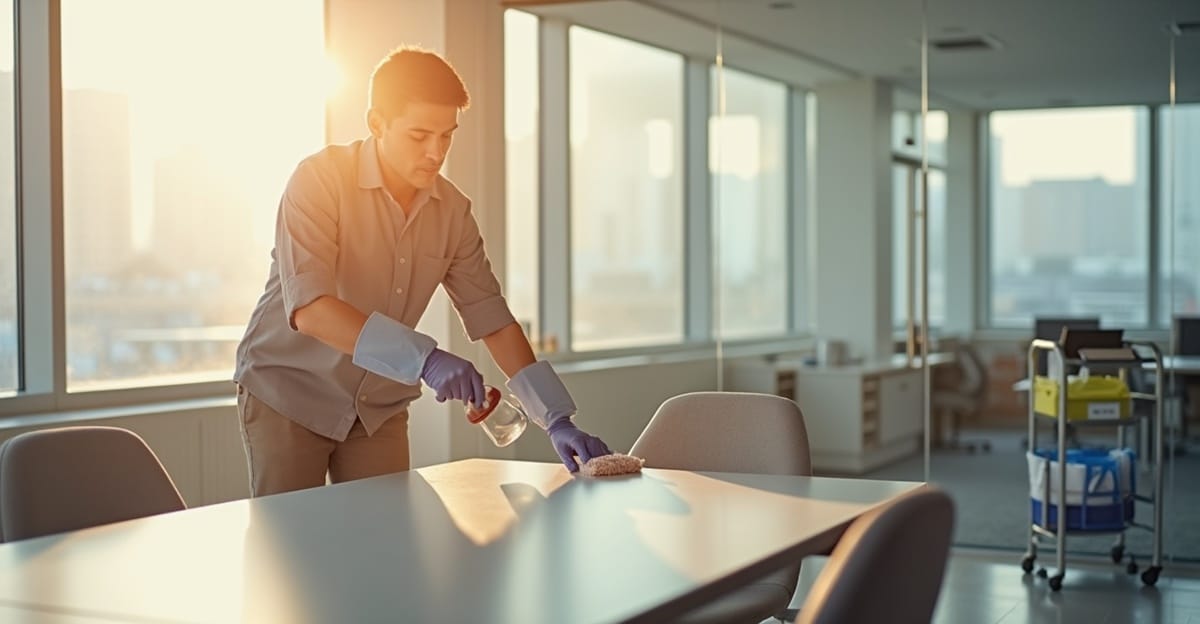
Acceptable office hygiene levels go beyond a tidy appearance. We focus on consistent sanitation of high-touch surfaces, documented cleaning routines, and clear alignment with workplace hygiene requirements. Clean enough depends on building type, foot traffic, and risk exposure. For that reason, we define clear scopes, set practical frequencies, and apply measurable standards to determine how clean an office should be.
Key Takeaways
- Acceptable office hygiene levels combine visual cleanliness with proper disinfection of high-touch and high-risk areas.
- Cleaning standards must reflect building type, industry obligations, and daily foot traffic rather than personal preference.
- Clear, documented scopes with defined tasks, frequencies, and response times create measurable and repeatable results.
- Different environments—corporate, strata, and medical—require specific cleaning intensities and structured protocols.
- Inconsistent results, recurring complaints, and vague scopes signal that current standards fail to meet expectations.
What “Acceptable Office Hygiene Levels” Actually Mean in Practice
Acceptable office hygiene levels mean more than a tidy space. They refer to a workplace that is visibly clean, hygienic on high-risk surfaces, compliant with workplace hygiene requirements, and maintained consistently.
We separate appearance from hygiene. Aesthetic cleanliness covers dust-free desks, streak-free glass, and tidy common areas. Hygienic sanitation focuses on reducing bacteria and viruses on high-touch surfaces such as door handles, lift buttons, and shared desks. A space can look clean but still fall short on sanitation.
“Clean enough” depends on the building type, foot traffic, and industry obligations. It should never be based on personal preference alone. A 15-person consultancy office will have different needs than a busy CBD tower or medical suite. Office cleanliness standards must reflect usage levels and risk exposure.
In Australia, employers have obligations under Safe Work Australia’s guidance on providing a safe and healthy workplace to provide a work environment without risks to health and safety, which includes clean facilities. We don’t give legal advice, but we align cleaning scopes with these workplace hygiene requirements so businesses can demonstrate reasonable care.
Acceptable standards must be measurable and repeatable. A once-off deep scrub doesn’t fix inconsistent routines. Facility management cleaning standards work best when tasks, frequencies, and responsibilities are documented and checked regularly. That’s what turns “looks fine” into a reliable system.
The Core Components That Define Office Cleaning Standards
Strong office cleaning standards rest on clear, consistent tasks across key areas.
Operational cleaning benchmarks by area
Below are practical benchmarks we apply across many commercial sites. These vary depending on traffic and industry, but they form a solid baseline.
- High-touch surface cleaning: Door handles, lift buttons, reception counters, light switches, shared desks, and keyboards in hot-desking setups disinfected daily at minimum in standard offices. High-traffic or medical environments require multiple services per day. Wiping removes dirt. Disinfecting requires the correct product and dwell time to actually kill germs, as outlined in Australian Department of Health surface disinfection guidance.
- Washrooms: Serviced daily at minimum in most offices. High-traffic buildings often need checks multiple times per day. Basins and fixtures must be visibly clean, touchpoints sanitised, bins emptied, and soap and paper supplies fully stocked. This directly supports workplace hygiene requirements.
- Kitchens and breakout areas: Benchtops, sinks, appliance handles, and fridge handles sanitised daily. Microwaves and fridges checked and cleaned internally on a scheduled basis where in scope. Clear boundaries matter. Staff manage personal dishes. Cleaning teams handle surfaces and shared hygiene.
- Waste management: Bins emptied daily in standard offices and more frequently where volume demands it. No overflow. No odours. In healthcare settings, disposal processes follow stricter medical centre cleaning standards with separation protocols.
- Floors and carpets: Hard floors mopped based on traffic. Carpets vacuumed daily in busy offices and at least 2–3 times per week in lower-traffic areas. Periodic deep carpet extraction scheduled quarterly or biannually depending on use.
- Air quality and ventilation awareness: Accessible vents and high ledges kept dust-free. Dust control improves perceived cleanliness and indoor air comfort, consistent with Australian Government guidance on indoor air quality in workplaces. Cleaning supports HVAC systems, but it doesn’t replace mechanical servicing.
- Visual presentation: Reception areas, lifts, and boardrooms set the tone. Streak-free glass and dust-free ledges reinforce overall office cleanliness standards.
For a clearer breakdown of task expectations, we often recommend reviewing a structured commercial cleaning checklist and aligning it to the building’s risk level and layout.
How Hygiene Expectations Change by Environment
Cleaning frequency and intensity should always match the environment.
Corporate offices focus on consistency, presentation, and high-touch sanitation. Staff numbers and hot-desking policies drive frequency. In most CBD offices, cleaning runs five days per week at minimum, with adjustments for traffic and after-hours events. Our corporate workplace cleaning programs centre on steady routines that staff can rely on.
Strata and common areas follow different expectations. Lifts, foyers, corridors, and shared amenities experience unpredictable foot traffic. Clear schedules should be displayed or documented for transparency. Spill response must be fast, especially in managed buildings. Strata cleaning standards rely on visibility and accountability.
Medical and allied health settings operate at a higher benchmark under Australian infection prevention and control guidelines for healthcare settings. Disinfection protocols must be documented. Cleaning tools are often separated between general and clinical zones. High-touch sanitisation occurs more frequently. At the same time, we avoid applying hospital-level requirements to every workplace. General office sanitation guidelines differ for a reason.
For a practical look at service structures across industries, our commercial cleaning services reflect these variations in scope and frequency.
Measurable Benchmarks: Turning “Clean Enough” Into Clear Standards
Clarity removes guesswork. Defined benchmarks make expectations fair and enforceable.
Frequency guidelines provide a starting point. High-touch surfaces should be disinfected daily in standard offices and multiple times per day in high-traffic or healthcare settings. Washrooms require at least daily service, with additional checks in larger buildings. Bins should be emptied daily. Floors in busy areas should be vacuumed or mopped daily, with 2–3 services per week in low-traffic zones.
Response times matter. Spills or hygiene incidents should be attended within agreed timeframes. In managed buildings, that may mean the same day or within two to four hours.
Documented scopes are essential. Clear zone-based task lists covering reception, workstations, kitchens, and washrooms form the backbone of office sanitation guidelines. Weekly or fortnightly supervisor inspections keep standards steady. Sign-off sheets or digital reports provide transparency.
A simple internal audit framework strengthens results. Many facility managers run a monthly walk-through. Random spot checks on high-touch surface cleaning confirm execution. Staff feedback is logged and actioned, not ignored.
This approach aligns with practical office cleaning best practices and broader facility management cleaning standards. It also avoids confusion about what’s included. Where uncertainty exists, reviewing what cleaning involves in detail can help, such as in this guide on what office cleaning involves.
Signs Your Current Office Cleanliness Standards May Not Be Acceptable
Some issues are easy to spot. Others show up in patterns.
Inconsistent results week to week often signal weak supervision. Odours in washrooms or kitchens suggest missed tasks. Visible dust on vents, skirting boards, and ledges points to surface-only routines.
Repeating staff complaints should never be dismissed. Empty soap or paper towel dispensers during business hours indicate reactive, not proactive, service.
A missing or vague scope of works makes accountability impossible. If there’s no documented cleaning plan aligned with Australia’s Work Health and Safety Act employer obligations, standards will drift. Cleaning that focuses only on what’s visible and ignores hygiene-critical areas creates silent risk.
For a deeper look at warning signs, reviewing the signs of a poorly cleaned office can highlight red flags many teams overlook.
Setting Clear, Realistic Expectations With Your Cleaning Provider
Strong results start with a written scope aligned to the building type. Corporate, strata, and medical environments all require different approaches. Frequencies and service times should reflect traffic levels and risk profiles, not guesswork.
We define what acceptable office hygiene levels look like in plain language. That means agreeing on tasks, service days, response times, and reporting methods before service begins.
Communication channels need to be clear. A dedicated contact, documented escalation process, and scheduled review meetings prevent small issues from growing. Regular site walkthroughs keep everyone aligned.
Deep cleaning also needs context. It supports routine maintenance but doesn’t replace it. Understanding the difference between deep and regular cleaning helps businesses invest where it actually counts.
Practical cleaning works best when clarity comes first. We encourage every facility manager to review the current cleaning scope and assess whether it matches the building’s usage, risk level, and compliance environment. Consistency beats hype every time.
Frequently Asked Questions
Acceptable office hygiene levels in Australia combine visible cleanliness with proper sanitation of high-touch surfaces. Offices must be free from excessive dust, waste overflow, and unsanitary washrooms, while frequently touched areas are disinfected consistently. Standards should align with workplace health and safety obligations, building usage, and daily foot traffic rather than relying on appearance alone.
High-touch surfaces should be disinfected at least once daily in standard offices and multiple times per day in high-traffic or medical environments. Items like door handles, lift buttons, shared desks, and light switches require routine sanitisation. Frequency should increase when occupancy, shared equipment use, or illness risk rises to maintain acceptable office hygiene levels.
Office cleaning removes visible dirt, dust, and debris, while office sanitation reduces bacteria and viruses on surfaces. Cleaning improves appearance, but sanitation targets hygiene risks. Both are necessary to meet acceptable office hygiene levels. A workplace may look tidy but still fall short if high-touch surfaces are not properly disinfected using suitable products and correct contact times.
Small offices do not require the same cleaning intensity as large commercial towers, but they must still meet acceptable office hygiene levels. Standards should reflect staff numbers, shared facilities, and risk exposure. While service frequency may be lower in smaller workplaces, high-touch areas, washrooms, and kitchens still require consistent sanitation and documented cleaning routines.
Facility managers can measure acceptable office hygiene levels through documented cleaning scopes, frequency schedules, and routine inspections. Clear task lists by zone, supervisor spot checks, and response time tracking create accountability. Staff feedback and monthly walkthrough audits also help confirm whether hygiene expectations are being met consistently rather than occasionally.