
Do Cleaners Handle Disinfection Too?
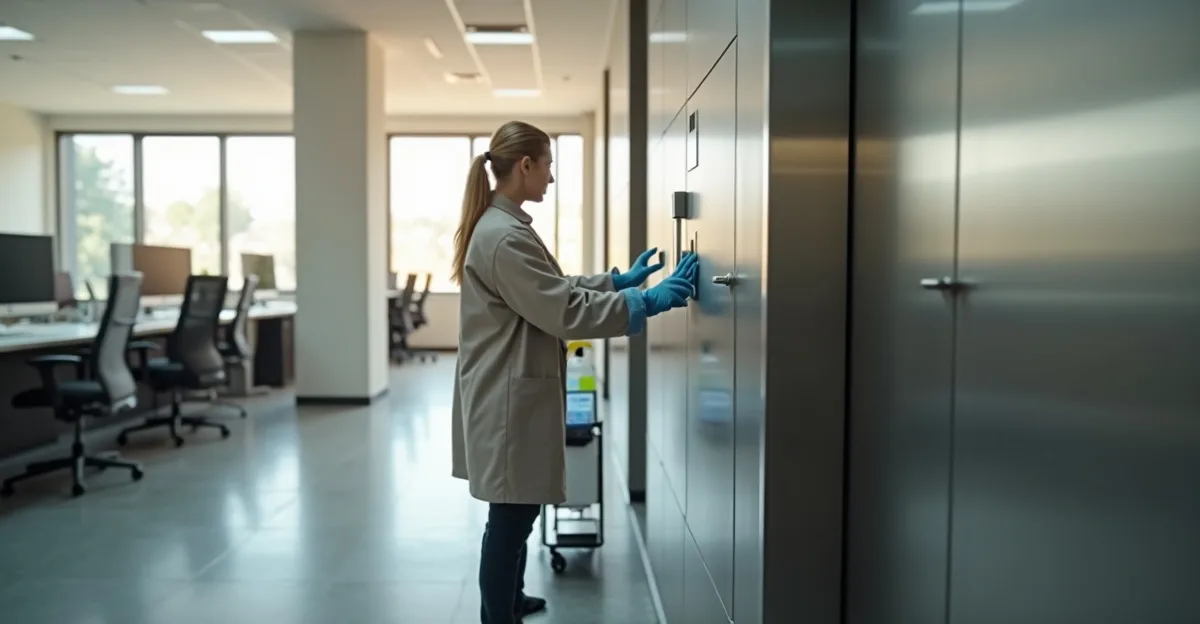
Many businesses assume cleaning crews automatically handle disinfection, but cleaning vs disinfecting services involve different tasks, products, and expectations. We often see confusion around this point. If we ask whether cleaners handle disinfection too, the answer depends on the agreed scope, the risk level, and whether we clearly include high-touch surfaces and compliance requirements in the contract.
Key Takeaways
- Cleaning removes dirt and improves appearance, while disinfecting uses approved chemicals to reduce bacteria and viruses on surfaces.
- Disinfection often sits in a separate service scope with different products, dwell times, labour, and cost.
- High-touch surfaces like door handles, lift buttons, and shared desks usually require structured disinfection, especially in higher-risk settings.
- Healthcare sites, high-traffic offices, and strata properties typically require clear disinfection protocols and documented records.
- Clear contracts and cleaning compliance records prevent confusion about whether disinfection is included or triggered by specific events.
Cleaning Does Not Automatically Mean Disinfection
Cleaning does not automatically equal disinfection. Many businesses assume both are included in one service, but they serve different purposes.
Cleaning focuses on removing dirt, dust, spills, and organic matter from surfaces. It improves appearance, reduces grime, and supports general hygiene. Floors are vacuumed, bins are emptied, desks are wiped, and bathrooms are scrubbed. The space looks and feels fresh.
Disinfecting goes further. It uses appropriate chemicals to kill or inactivate bacteria and viruses on surfaces, as outlined by the Centers for Disease Control and Prevention (CDC). The goal is to reduce microbial risk, not just visible dirt.
This distinction matters with cleaning vs disinfecting services. In commercial cleaning vs disinfection, cleaning is the first step. If a surface isn’t cleaned properly, disinfectants can’t work effectively. Dirt and residue block contact between the chemical and the pathogen.
A desk can look spotless and still carry germs if it hasn’t been disinfected. Visual cleanliness does not guarantee reduced infection risk.
Workplace hygiene standards expect both steps in the right order where needed. What’s often missed is that disinfection is usually a separate scope, with different products, processes, and timing. That’s why clarity in service agreements is essential.
Cleaning vs Disinfecting Services: Scope, Purpose, Frequency, and Cost
Cleaning and disinfection overlap, but they are not interchangeable. Understanding the difference helps facilities budget correctly and set realistic expectations.
How They Differ in Practice
Here’s a simple breakdown of commercial cleaning vs disinfection in real-world settings:
- Purpose: Cleaning removes grime and improves presentation. Disinfecting reduces the risk of disease-causing microorganisms.
- Scope: Standard cleaning may include floors, bathrooms, kitchens, and general surfaces. Office cleaning and disinfecting often adds high-touch surface disinfection such as door handles, lift buttons, light switches, keyboards, shared phones, and meeting room tables.
- Frequency: Cleaning is often daily or several times per week. Disinfection may be daily for high-touch areas, or periodic and risk-based.
- Products: Routine cleaning uses detergents. Hospital-grade disinfectant commercial cleaning uses approved disinfectants with specific dwell times.
- Time: Disinfectants require contact time to work. Surfaces must remain wet for a set period in accordance with U.S. Environmental Protection Agency (EPA) disinfectant label requirements. This affects scheduling and labour allocation.
- Cost: Additional labour, chemical use, equipment, and reporting increase overall cost.
When clients ask what does a commercial cleaner include, the honest answer is: it depends on the agreed scope. A standard contract may cover cleaning tasks but exclude full-site disinfection unless specified. For clarity on standard inclusions, we often point teams to details similar to those covered in what commercial cleaning covers and how this differs from specialised services.
High-touch surface disinfection became common during the pandemic. Today, many facilities still request it selectively. In some cases, it’s a set schedule. In others, it’s triggered by increased illness or specific incidents.
Budget matters. Multi-site facilities must balance risk reduction with operational cost. Daily hospital-grade treatment across every surface may not be necessary in a low-risk office, but targeted high-touch surface disinfection usually makes sense.
Clear scope prevents confusion. Without it, one party assumes disinfection is included, while the other prices for cleaning only.
When Disinfection Is Typically Required in Commercial Settings
Not every building requires hospital-level protocols. The right level depends on occupancy, use, and risk.
Medical centres and allied health clinics sit at the high end of the spectrum. Medical centre cleaning requirements include treatment rooms, waiting areas, reception desks, and clinical touchpoints, consistent with Australian Department of Health infection prevention and control guidelines. These environments carry higher expectations for documented disinfection protocols and consistent high-touch surface management. In these settings, structured medical and healthcare facility cleaning is standard practice.
High-traffic office spaces also benefit from structured office cleaning and disinfecting. Shared desks, meeting rooms, kitchens, and bathrooms create regular contact points. During flu season or after a confirmed outbreak, targeted disinfection reduces risk without unnecessary blanket treatments.
Strata properties present another layer. Lifts, handrails, entry doors, shared gyms, and bin rooms see constant public contact. Strata cleaning compliance ties closely to duty of care. Committees and building managers must show they’ve taken reasonable steps to maintain safe common areas, particularly after illness outbreaks.
Post-illness or confirmed contamination usually calls for focused intervention. That may involve targeted disinfection of affected zones rather than ongoing hospital-grade treatment across the entire property.
Risk assessment should guide decisions. A low-density office with minimal public traffic won’t require the same frequency as a busy clinic. The goal is appropriate coverage, based on real exposure — not unnecessary escalation.
Compliance, Duty of Care, and Documentation
Compliance does not have to feel complicated. At its core, it means demonstrating that sensible steps have been taken to maintain hygienic environments.
Healthcare facilities operate under strict hygiene expectations. Shared commercial buildings carry duty of care obligations to occupants and visitors. Even standard offices have workplace hygiene standards that require safe and sanitary conditions under Safe Work Australia’s employer duty of care guidelines.
This is where cleaning compliance documentation becomes critical. Clear records protect both building managers and service providers.
We recommend formal documentation that includes:
- Service schedules that outline frequency and task scope
- Task checklists signed or digitally logged
- Chemical safety data sheets for all products used
- Incident response records for contamination events or outbreak cleans
Documentation supports audits, resolves complaints, and assists during insurance or incident investigations. It also improves accountability. If something changes — like a confirmed illness case — there’s a written trail of the response.
A professional cleaning partner should provide clarity and consistent reporting. For teams comparing service models, resources like the difference between janitorial and commercial cleaning and cleaning terms every property manager should know help clarify expectations before issues arise.
Transparency builds trust. Strong processes reduce confusion.
Questions to Ask Your Cleaning Provider
Decision-makers should review their contracts with a simple, direct lens. Clarity prevents mismatched expectations.
Key questions to cover include:
- Does our agreement clearly separate cleaning vs disinfecting services?
- Are high-touch surfaces disinfected, and how often?
- Which products are used, and are they suitable for our environment?
- Is hospital-grade disinfectant commercial cleaning included where required?
- What cleaning compliance documentation do we receive?
- How is service frequency adjusted after illness outbreaks?
Answers to these questions reveal whether disinfection is routine, conditional, or excluded. For context on scope detail, reviewing guides such as what is included in an office clean or what office cleaning involves can help interpret service descriptions.
Property managers comparing professional cleaning services Adelaide and Sydney should ensure providers outline both standard cleaning and disinfection clearly. Ambiguity often leads to service gaps.
A short contract review today avoids bigger problems later.
Aligning Service Levels With Risk, Budget, and Operations
Service levels should match actual risk. A low-risk office requires a different approach from a clinical environment. A single-site tenancy has fewer moving parts than a multi-site portfolio.
Increased disinfection means increased labour time and product cost. Dwell times extend task durations. After-hours schedules may need adjustment. Strata environments often require coordination for lift access or staged cleaning of shared facilities.
Operational planning matters. Frequent high-touch surface treatment may be scheduled during business hours. Broader disinfectant applications often need quieter periods.
The objective is appropriate disinfection, not maximum disinfection at all times. Over-servicing wastes budget. Under-servicing increases exposure.
We support businesses across industries through structured commercial cleaning services, targeted high-touch surface cleaning, and full-site deep cleaning where required.
If there’s uncertainty about whether current cleaning covers proper disinfection, we’re ready to review the site. We’ll walk through risk levels, usage patterns, and documentation needs. No pressure. Just clear guidance based on real conditions. For a practical discussion about scope, teams can reach out through our contact page and start the conversation.
Frequently Asked Questions
Cleaning removes visible dirt, dust, and debris from surfaces using detergents, while disinfecting uses approved chemicals to kill or inactivate bacteria and viruses. Cleaning improves appearance and prepares surfaces, but disinfecting reduces microbial risk. Both steps are important in commercial environments, especially on high-touch areas where germs can spread easily.
Commercial cleaning contracts do not always include disinfection by default. Standard agreements often cover general cleaning tasks such as vacuuming, mopping, and bathroom sanitation. Disinfection may be listed as a separate service with specific products, dwell times, and documentation requirements. Businesses should review their scope of work to confirm what is included.
High-touch surfaces in offices should typically be disinfected daily, especially in shared or high-traffic areas. Items like door handles, lift buttons, light switches, and shared desks carry higher contact frequency. During flu season or illness outbreaks, increased disinfection frequency may be necessary to reduce the risk of virus transmission.
Hospital-grade disinfectant is not required for every workplace. Low-risk offices with limited public access may only need targeted high-touch disinfection. However, healthcare facilities, medical centres, and high-traffic environments often require hospital-grade products to meet compliance standards and reduce infection risk effectively.
Cleaning is required before disinfecting because dirt and organic matter can block disinfectants from contacting pathogens, a principle widely recognised in infection prevention and control guidance. Disinfectants need direct surface contact and specific dwell time to work properly. Without proper cleaning first, the chemical may not effectively reduce bacteria or viruses, limiting the overall effectiveness of the disinfection process.