
Cleaning Compliance for Medical Admins
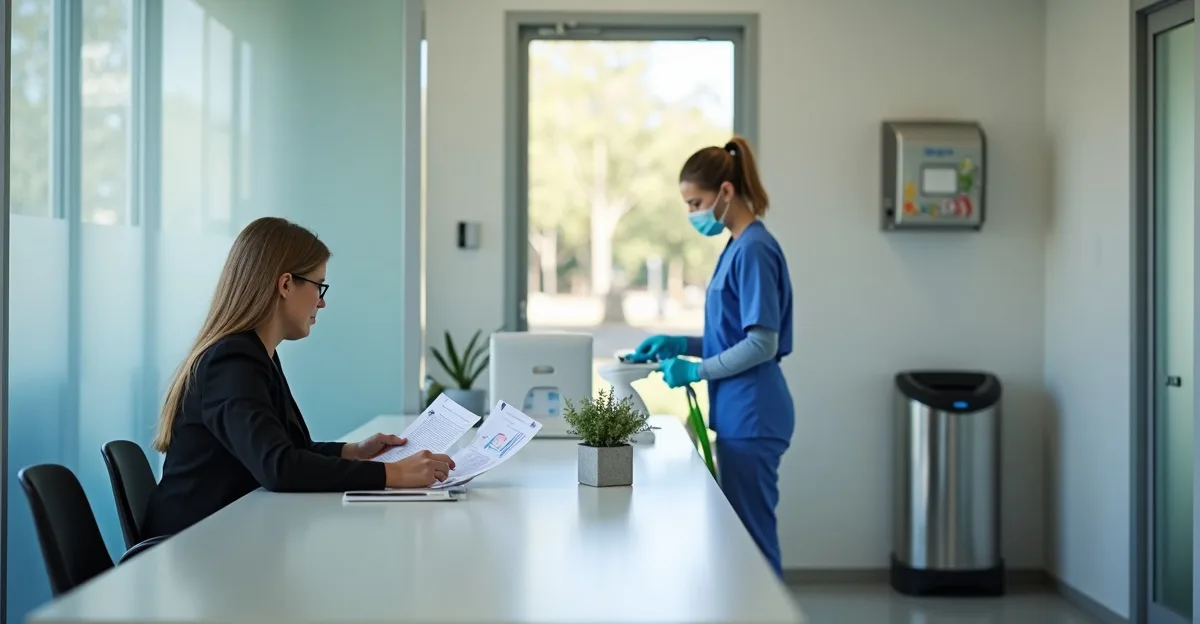
Cleaning compliance for medical admins demands that we align daily cleaning, infection control, waste management, and documentation with national and state standards. This medical cleaning regulations guide clarifies what regulators expect in Australian clinics. We focus on risk-based zoning, high-touch surface disinfection, contractor oversight, and audit-ready records so clinics stay prepared at all times.
Key Takeaways
- Medical cleaning compliance in Australia requires us to meet NHMRC, Safe Work Australia, and state health department standards through documented, risk-based cleaning systems that inspectors can easily review.
- We carry responsibility for enforcing infection control cleaning requirements, maintaining compliant waste segregation, and holding cleaning contractors accountable for consistent performance.
- Day-to-day compliant cleaning relies on structured high-touch surface disinfection, correct chemical selection and dwell times, and clearly defined zoning for low, medium, and high-risk clinical areas.
- Audit readiness depends on accurate documentation, including signed cleaning logs, zone-specific checklists, chemical safety data, staff training records, and complete incident reports.
- Clinics often fall short when teams treat medical spaces like standard offices, apply inconsistent high-touch cleaning, mismanage waste segregation, or rely on outdated and incomplete cleaning records.
What Medical Cleaning Compliance Actually Means in Australia
Medical cleaning compliance Australia means meeting the cleaning, infection control, and documentation standards set by healthcare regulators. It requires aligning daily cleaning tasks with national frameworks like the NHMRC Australian Guidelines for the Prevention and Control of Infection in Healthcare, Safe Work Australia requirements, and state health department expectations in SA and NSW
In simple terms, compliance means this: cleaning processes must support infection risk reduction, follow healthcare cleaning standards Australia, and produce verifiable records. This medical cleaning regulations guide breaks down what that looks like in practice. It isn’t legal advice. It’s a clear explanation of what regulators expect to see in real facilities.
Clinical cleaning guidelines Australia go further than standard commercial expectations. They address how treatment rooms are disinfected, how waste is segregated, how chemicals are handled, and how processes are documented.
The key difference between office and healthcare cleaning is intent.
Office cleaning focuses on presentation and general hygiene. Floors are vacuumed. Bins are emptied. Bathrooms are sanitised.
Medical cleaning focuses on infection prevention. It follows defined infection control cleaning requirements. It prioritises high-touch surface cleaning standards. It includes documented processes and compliant waste management medical facilities Australia must follow.
The shift is significant. A well-presented clinic is not automatically a compliant one.
What Administrators Are Responsible For (Legally and Operationally)
Medical centre administrators and practice managers carry real responsibility for compliance. Clinicians manage treatment. Admin teams ensure the environment supports safe care.
Operationally and legally, admins are expected to ensure:
- Infection control cleaning requirements are implemented consistently
- Contractors providing medical cleaning services Adelaide or medical cleaning services Sydney can demonstrate compliance
- Waste management medical facilities Australia mandates is properly segregated and handled
- Cleaning schedules align with patient flow and practitioner use
Contractor management matters. Verbal assurances are not enough. Healthcare cleaning audit requirements assume evidence exists.
Real-world pressures make this harder. Budgets are tight. Some practices operate across multiple sites. After-hours access must be coordinated. Patient complaints about hygiene can trigger scrutiny.
Responsibility doesn’t mean doing the cleaning personally. It means ensuring systems work. When regulators review a clinic, they look at processes and documentation. Admins sit at the centre of that system.
What Compliant Cleaning Looks Like Day to Day in a Medical Centre
Compliance is practical. It shows up in small, consistent actions.
Treatment or procedure rooms are cleaned between patients where risk profiles require it. At the end of the day, those rooms receive a thorough clean based on risk level.
High-touch surface cleaning standards apply across the facility. This includes door handles, reception desks, EFTPOS machines, waiting chairs, light switches, and shared equipment. In many cases, clinics engage structured high-touch surface cleaning programs to manage this risk systematically.
Bathrooms and staff areas are cleaned according to clinical cleaning guidelines Australia, not standard office frequency. Waiting areas are disinfected with attention to peak traffic times.
Risk-based zoning helps structure cleaning frequency:
- Low-risk areas: administrative offices
- Medium-risk areas: waiting rooms, corridors
- High-risk areas: treatment and procedure rooms
Each zone has defined cleaning methods and frequency. A “wipe-down” with a damp cloth is not disinfecting. Disinfection requires the correct product, proper dilution, and manufacturer-specified disinfectant contact (dwell) times as outlined in national infection control guidance. Removing a chemical too quickly reduces effectiveness
In a multi-practitioner clinic in Adelaide or Sydney, staggered room use adds complexity. One practitioner finishes a consult. Another begins shortly after. Room turnaround cleaning must be built into the schedule. Without coordination, compliance fails even if intent is good.
A structured medical centre cleaning checklist aligned with infection control cleaning requirements keeps everyone accountable.
Documentation, Record-Keeping and Audit Expectations
Healthcare cleaning audit requirements focus heavily on evidence. Inspectors and accrediting bodies look for clear, dated documentation.
Typical audit expectations include:
- Signed cleaning logs by area and date
- Task checklists for each zone
- Chemical usage records and Safety Data Sheets (SDS)
- Staff training records specific to healthcare environments
- Incident reports with corrective actions
The principle is simple: if it isn’t documented, it didn’t happen.
Documentation demonstrates that healthcare cleaning standards Australia are consistently applied. It helps align with SA and NSW health department expectations. It supports compliance with NHMRC infection control guidelines and Safe Work Australia’s model Code of Practice for managing hazardous chemicals in the workplace.
Consider a common scenario. A patient files a hygiene complaint after a visit. Without records, the clinic has nothing to reference. With clear logs showing time-stamped cleaning of the treatment room and waiting area, the practice can respond confidently.
Strong documentation reduces stress during inspections. It turns compliance from a reactive scramble into a controlled process.
Common Compliance Gaps in Medical Centres
Most compliance gaps are gradual, not dramatic. Small oversights build up.
Common issues include:
- Treating medical cleaning like general commercial cleaning. A clinic may assume that because an office looks clean, it meets healthcare cleaning standards Australia.
- Inconsistent high-touch surface cleaning during busy periods. Reception counters and EFTPOS machines are often missed during peak hours.
- Poor segregation of clinical and general waste. Sharps, contaminated materials, and general waste must follow defined streams under NSW Health clinical waste management requirements for healthcare facilities and equivalent state regulations.
- Outdated or incomplete cleaning logs. Templates exist, but they aren’t updated daily.
- No formal medical centre cleaning checklist aligned with clinical cleaning guidelines Australia.
Long-term cleaners are an asset. However, tenure alone doesn’t ensure medical cleaning compliance Australia. Cleaning teams require healthcare-specific training and ongoing supervision.
Small gaps compound quickly across multiple practices in Adelaide or Sydney. Over time, risk exposure increases.
A Practical Compliance Self-Check and How to Evaluate Your Cleaning Provider
Administrators can use a simple internal review to gauge their position.
A practical self-check may include:
- Do we have a documented cleaning schedule by risk area?
- Are treatment rooms cleaned according to infection control cleaning requirements?
- Are high-touch surfaces disinfected and recorded daily?
- Is waste management medical facilities Australia compliant and traceable?
- Can our provider clearly explain healthcare cleaning standards Australia?
If answers are unclear, compliance risk exists.
Provider evaluation is equally important. When reviewing companies offering medical services, key questions include:
- How do processes align with NHMRC infection control guidelines?
- What documentation will we receive for audits?
- How are staff trained for regulated healthcare environments?
Healthcare facilities require specialists. General cleaners often follow office-based routines. Healthcare environments demand structured systems. Providers with experience in medical facility cleaning understand zoning, documentation, and inspection pressures.
For practices that operate across sites or need coordinated daily support, integrated janitorial services structured around compliance can simplify oversight.
A focused walkthrough often reveals small but important gaps. We regularly conduct compliance assessments that review schedules, logs, zoning, and workflow alignment. A short site review can clarify where systems are strong and where adjustments are needed. Clinics ready to strengthen their processes can request a compliance-focused assessment through our contact page and take the pressure out of meeting regulatory expectations.
Frequently Asked Questions
Australia’s medical cleaning compliance typically aligns with NHMRC infection prevention guidance, Safe Work Australia workplace safety requirements, and state or territory health department expectations. In practice, this means clinics must use risk-based cleaning schedules, approved disinfectants with correct dilution and dwell time, and maintain audit-ready documentation. Administrators should also ensure contractor training, chemical safety records, and waste handling procedures match healthcare settings.
Risk-based zoning divides a clinic into low-, medium-, and high-risk areas, then assigns cleaning methods and frequency to each zone. Low-risk zones include admin offices, medium-risk zones include waiting rooms and corridors, and high-risk zones include treatment or procedure rooms. Zoning works best when it’s documented in a cleaning schedule, paired with zone-specific checklists, and reviewed when patient flow or room use changes.
High-touch surfaces are items many people touch throughout the day, such as door handles, reception counters, EFTPOS terminals, waiting-room chairs, light switches, and shared equipment. They should be disinfected on a structured schedule that matches traffic and risk, often multiple times daily in busy areas. Disinfection requires the correct product, proper dilution, and full dwell time, not a quick wipe that dries immediately.
Auditors typically expect signed cleaning logs, zone-based checklists, and evidence that the clinic follows consistent processes over time. Common supporting records include Safety Data Sheets (SDS) and chemical usage logs, staff training records relevant to healthcare environments, and incident reports with corrective actions. Documentation should be dated, legible, and easy to retrieve. If records are incomplete or inconsistent, it can be treated as non-compliance.
The most common mistake is treating a clinic like a standard office and relying on appearance rather than infection prevention processes. Other frequent issues include missed high-touch disinfection during peak periods, incorrect waste segregation between clinical and general streams, and outdated or partially completed cleaning logs. Clinics also risk non-compliance when contractors lack healthcare-specific training or cannot explain their zoning, chemicals, and audit documentation.