
Can One Cleaner Handle a Large Office?
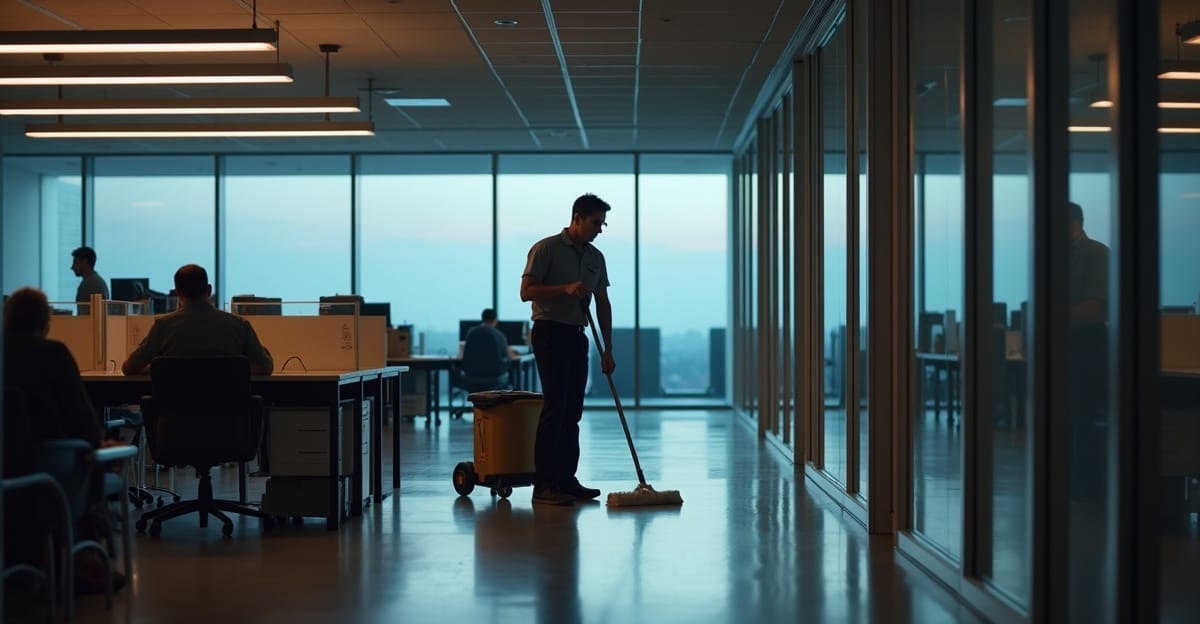
One cleaner can manage a large office in certain situations, but the real answer depends on cleaning capacity per cleaner, available hours, layout, foot traffic, and compliance standards. We don’t measure performance by square metres alone. Wet areas, surface finishes, task detail, and service expectations shape what one person can realistically complete in a single shift.
Key Takeaways
- Cleaning capacity varies widely; in low-traffic offices we may cover 300–600+ sqm per hour for basic tasks, but output drops in high-traffic or detail-intensive areas.
- Fixed ratios like “one cleaner per X square metres” oversimplify staffing decisions and often create under-resourced cleaning contracts.
- Bathrooms, kitchens, glass partitions, and daytime interruptions greatly increase workload compared to open-plan desk zones.
- Medical and strata sites reduce capacity because compliance steps, documentation, and tighter hygiene controls demand extra time.
- Ongoing problems like missed details, overflowing bins, and repeated complaints usually point to misaligned labour hours rather than lack of effort.
What One Cleaner Can Realistically Achieve in a Large Office
One cleaner can sometimes handle a large office—but only under the right conditions. The real question isn’t size alone. It’s cleaning capacity per cleaner, based on hours available, task complexity, compliance requirements, and layout.
Floor area plays a role, but it’s only one metric. Office cleaning productivity rates vary depending on traffic, surface types, wet areas, and whether the scope includes detailed work or basic maintenance. Commercial cleaning hours per square metre give a rough guide, yet they rarely tell the full story.
In a standard, low-traffic office, one cleaner may cover approximately 300–600+ square metres per hour for basic tasks such as vacuuming, emptying bins, and surface wiping, consistent with industry cleaning productivity benchmarks published by professional facilities management associations. Add multiple bathrooms, glass partitions, or frequent meeting room resets, and the same cleaner covers far less.
Here’s how it typically plays out in real terms:
A 3-hour shift in a 1,000 sqm quiet office can be manageable. One cleaner could vacuum common areas, empty bins, wipe desks, and service 2–3 bathrooms and a small kitchenette. The result may be solid, provided expectations align with the hours.
Now compare that to a 3-hour shift in a 2,000 sqm high-traffic office with several bathrooms and boardrooms. Corners get cut. High dusting slips. Detail cleaning fades. The space may look presentable at first glance, but consistency drops.
Extend that to a 5-hour shift and outcomes improve—if the task scope matches the hours allocated. More time without adjusting expectations doesn’t solve understaffing. Clear alignment between workload and labour does.
When clients ask how many square metres one cleaner can clean, we explain that square metres alone don’t define capacity. Real cleaning performance depends on conditions onsite.
For a clear breakdown of what everyday service includes, review our guide to what office cleaning involves. It helps frame realistic expectations before calculating staffing.
Why “One Cleaner Per X Square Metres” Is an Oversimplification
Fixed square-metre benchmarks ignore context. Relying on them often leads to understaffed cleaning contracts.
We’ve seen proposals built entirely around area ratios. The problem is that cleaning workload calculation depends on far more than floor size. Overgeneralising with a flat metric like “one cleaner per 1,000 sqm” misses critical variables.
Key factors that change commercial cleaning staffing levels include:
- Office layout: Open plan spaces clean faster than partitioned offices with glass panels and individual rooms.
- Wet areas: Bathrooms and kitchens take disproportionate time compared to desk areas.
- Foot traffic: A quiet executive suite stays cleaner than a busy call centre.
- Surface types: Carpet, hard floors, stone, and glass all require different methods.
- Frequency: Daily service reduces build-up. Three-times-per-week servicing increases workload per visit.
- Cleaning schedule: Daytime cleaning can slow output due to staff presence and interruptions.
A 2,000 sqm office with high foot traffic is very different from a quiet corporate suite. The first may need multiple cleaners during peak hours. The second may function well with one cleaner and appropriate scheduling.
For larger or multi-storey environments, scaling labour strategically becomes critical. Our article on scaling cleaning for multi-level buildings explains how layout and movement between floors affect productivity.
Commercial cleaning staffing levels should reflect workload, risk, and expected standards. Area alone doesn’t determine labour.
When Compliance Changes Everything: Medical and Strata Environments
General office cleaning differs from regulated environments. In medical or strata settings, compliance changes the workload entirely.
Medical centre cleaning requirements involve strict disinfection processes, colour-coded systems, clinical touchpoint cleaning, and documented procedures in line with Australian healthcare infection prevention and control guidelines. Time per room increases because cleaners must follow sequence protocols and maintain audit trails. Accuracy matters as much as visible cleanliness.
Strata cleaning compliance adds another layer. Shared facilities, lobbies, lifts, and public access zones carry risk management and WHS considerations under Safe Work Australia’s workplace risk management framework. Cleaning becomes part of safety oversight.
In these environments, cleaning capacity per cleaner reduces significantly. A task that takes five minutes in a standard office may take ten or fifteen minutes under regulated processes. Documentation, reporting, and checks add labour time.
Ignoring compliance creates exposure. Liability increases. Audits can fail. Tenants and practitioners raise complaints. The issue isn’t speed; it’s meeting operational standards consistently.
In these settings, single-cleaner arrangements rarely provide margin for quality control. Supervisory oversight and shared workload often protect performance standards.
Signs Your Office May Be Understaffed
Understaffing rarely appears overnight. It shows up gradually through consistency issues.
Common warning signs include:
- Detail cleaning declines. Skirting boards, corners, and high dusting get skipped.
- Bathrooms look clean initially but fail hygiene standards by midday.
- Bins overflow occasionally or are missed.
- Staff complaints increase.
- The cleaner appears rushed every visit.
- Turnover rises and burnout becomes evident.
- Service gaps repeat, suggesting an understaffed cleaning contract.
These issues often signal misaligned commercial cleaning staffing levels rather than poor effort. A capable cleaner can’t maintain high office cleaning standards without enough time.
The risks go beyond appearance. Compliance gaps emerge. Results vary week to week. Trust declines.
Proper staffing protects consistency, risk management, and long-term reliability. It isn’t about adding labour for the sake of size. It’s about aligning hours with expectation.
If recurring issues persist, it may be time to reassess scope. Our guide on when to review your cleaning plan outlines practical triggers for action.
How to Evaluate Commercial Cleaning Staffing Levels in a Proposal
Property managers and facilities teams should look beyond total price. The logic behind allocated hours matters more.
When reviewing a proposal for commercial cleaning services, consider this checklist:
- How many hours per visit are allocated?
- How many cleaners will be onsite at one time?
- What assumptions were used in the cleaning workload calculation?
- Are bathrooms, kitchens, and high-touch areas itemised separately?
- Is supervision included?
- How are medical centre cleaning requirements or strata cleaning compliance addressed?
Ask the provider to explain how they calculated commercial cleaning hours per square metre. Transparent reasoning signals experience and planning, aligning with best-practice service specification standards promoted by Australian facilities management bodies.
Traffic levels, meeting room usage, tenant density, and event frequency all influence labour. A proposal should reflect actual building behaviour, not general averages.
This applies whether sourcing commercial cleaning Adelaide, commercial cleaning Sydney, or services nationally. Local conditions vary, but workload principles stay consistent.
Transparency, communication, and realistic hour allocation form the backbone of strong office cleaning standards.
Matching Staffing to Quality, Risk, and Long-Term Reliability
One cleaner can handle a large office in certain scenarios. A smaller footprint with low traffic, limited wet areas, and a clear scope may operate well with a single professional and structured hours.
In larger or more complex buildings, splitting the workload across multiple cleaners improves quality control, accountability, and consistency. It also supports staff retention. Overloading one person often leads to fatigue and turnover, a risk recognised in workplace fatigue management guidance from Safe Work Australia.
The real concern behind this question is reliability. Managers want to know that standards won’t slip, compliance won’t fail, and issues won’t surface unexpectedly.
We clean offices—big ones, small ones, and everything in between. We assess cleaning capacity per cleaner based on real site conditions, not guesswork or flat ratios.
If current commercial cleaning staffing levels feel stretched, we recommend a capacity review. A practical site assessment clarifies whether allocated hours truly match workload.
For support or a detailed evaluation, visit our contact page. We’ll review current scope and provide clear recommendations grounded in real operational logic.
Frequently Asked Questions
Cleaning capacity by cleaner is calculated by assessing available labour hours against task complexity, traffic levels, and compliance requirements. Square metres provide a baseline, but bathrooms, kitchens, and detailed surface work significantly affect output. A proper calculation also considers frequency of service, layout efficiency, and whether cleaning occurs during or after business hours.
One cleaner may manage 900–1,800 square metres in a low-traffic office during a standard shift focused on basic maintenance tasks. However, this range drops in high-traffic environments or spaces with multiple wet areas. Capacity depends on time allocated, task detail, and service expectations rather than floor size alone.
Cleaning capacity decreases when offices include multiple bathrooms, kitchenettes, glass partitions, or high-touch surfaces. Heavy foot traffic and daytime interruptions also slow productivity. In regulated environments, such as medical or strata sites, compliance steps and documentation requirements further reduce how much one cleaner can complete per hour.
One cleaner can manage a 2,000 sqm office only if traffic is low, wet areas are limited, and sufficient hours are allocated. In busy offices with meeting rooms and frequent use of shared facilities, a single cleaner often struggles to maintain consistent standards. Staffing should align with workload, not just total area.
Misaligned cleaning hours often show through recurring issues such as missed detail work, inconsistent bathroom standards, or overflowing bins. Frequent complaints and visible rushed service also signal insufficient labour allocation. Reviewing cleaning capacity by cleaner against actual site conditions helps determine whether staffing levels match expectations.