
Can Cleaners Be Trusted With After-Hours Access?
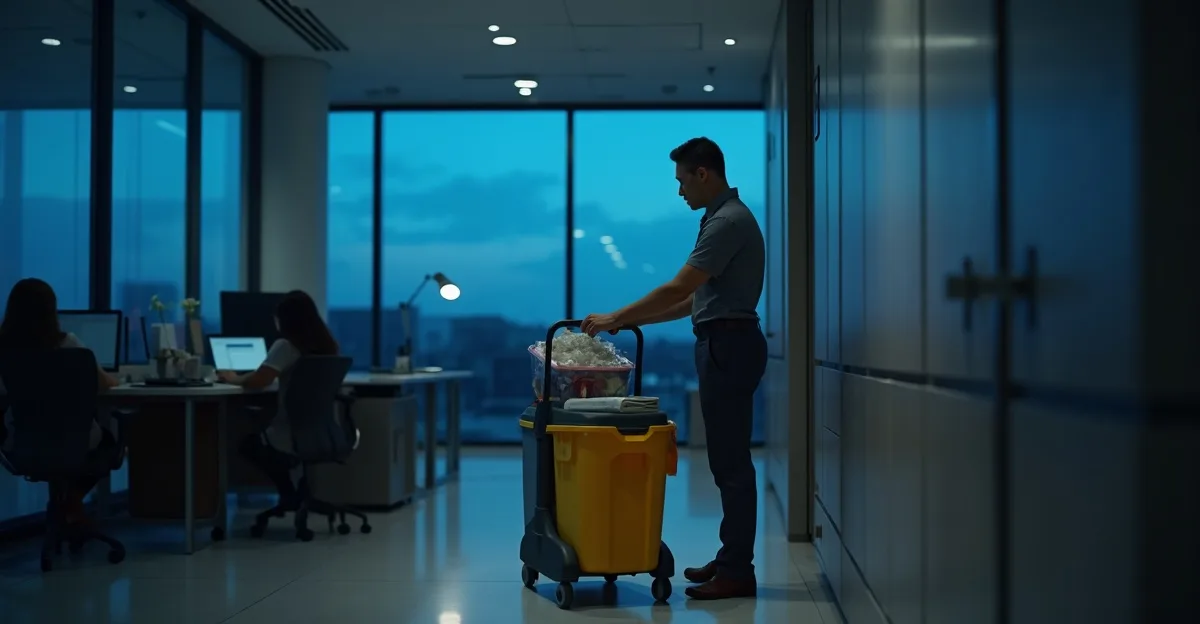
Granting cleaners access to a building after hours raises real concerns about theft, data security, alarm handling, and key control. We see these risks most often in medical centres, strata properties, and corporate offices. After-hours cleaner trust relies on structured systems such as background checks, documented procedures, controlled access, supervision, and clear accountability when no one is onsite.
Key Takeaways
- After-hours cleaning is often necessary for safety, efficiency, and minimal disruption, but risks must be managed with clear systems.
- Professional providers use police checks, reference checks, training, and supervised site audits to reduce security exposure.
- Strong key management, individual alarm codes, lock-up checklists, and documented open/close procedures create accountability.
- Insurance coverage and incident reporting processes support structured commercial cleaning risk management.
- Before granting access, we should confirm background checks, access controls, supervision, escalation steps, and proof of insurance.
Why After-Hours Access Feels Risky — and Why It’s Often Necessary
Granting after-hours building access raises valid concerns. Theft, data breaches, alarm mishandling, lost keys, and property damage are all reasonable fears.
These risks feel even sharper in sensitive environments. Medical clinics hold patient records and must meet strict infection control standards. Strata buildings have shared foyers, lifts, and car parks accessed by multiple tenants. Corporate offices store confidential documents and high-value IT equipment. In each case, security relies on trust and clear systems.
Medical centre cleaning compliance requires careful handling of patient information and adherence to documented procedures. Strata cleaning security must account for shared access points and multiple stakeholders. Corporate workplaces demand discretion around data and equipment. These are not small issues. They deserve direct answers.
At the same time, after-hours office cleaning is common for practical reasons. Cleaning while staff are present slows the job and increases disruption. Desks, meeting rooms, kitchens, and high-traffic areas are easier and safer to service when they are empty. Large facilities in Adelaide and Sydney CBDs often operate extended hours, making night or early morning cleaning the only workable option.
Many businesses recognise the benefits of after-hours cleaning. It reduces interruptions, protects productivity, and allows thorough work without stepping around staff.
The real issue is not eliminating risk. It is about managing it properly. Professional commercial cleaning risk management systems reduce exposure through structure, oversight, and documentation.
After-hours cleaner trust comes down to one core question: What systems are in place when no one is watching?
What Professional Commercial Cleaning Security Procedures Actually Look Like
Strong commercial cleaning security procedures are not guesswork. They are built into recruitment, access control, supervision, and insurance.
Recruitment, Supervision, and Controlled Access
Cleaner background checks form the first line of defence. Effective processes include:
- National police checks as administered by the Australian Criminal Intelligence Commission
- Reference checks from previous employers
- Identity verification during onboarding
- Structured training before site access
Screening alone is not enough. Supervision and accountability matter. Area managers or team leaders conduct scheduled site audits. Clear reporting lines mean cleaners know who to contact if there is an issue. Escalation pathways ensure problems do not sit unresolved.
Alarm and access procedures must also be controlled. Best practice includes individual alarm codes rather than shared codes. Lock-up checklists confirm doors are secured, lights are off where required, and alarms are activated. Documented open and close protocols reduce human error and create accountability.
These systems support structured commercial cleaning services that operate consistently across different sites.
Key Management and Insurance Protection
Key management protocols are often overlooked. They should not be.
A secure provider uses coded key tags with no visible business names or addresses. Keys are stored in limited-access cabinets. Sign-in and sign-out logs track movement. Key duplication is restricted and authorised.
This reduces the risk of loss or misuse and creates a clear audit trail.
Cleaning company insurance coverage provides another safety layer. That typically includes:
- Public liability insurance
- Workers’ compensation insurance in accordance with SafeWork NSW employer requirements
- Property damage cover
Insurance does not replace strong systems. It complements them. Combined with proper commercial cleaning risk management, it creates a structured approach rather than relying on informal trust.
Structured Commercial Providers vs Ad-Hoc Cleaners
There is a clear difference between structured commercial providers and informal arrangements.
Ad-hoc cleaners may do good work. However, they often operate with limited documentation. Background checks may be unverified. Key management systems might be basic or nonexistent. Insurance details are not always transparent. If someone is absent, there may be no backup staff.
Structured providers work differently. Formal processes guide daily operations. Written standard operating procedures outline tasks, security steps, and escalation processes. Incident reporting systems document issues. Digital reports or logbooks confirm attendance and completed work. Clients often receive service confirmations after each clean.
Training programs prepare cleaners before they step onto sensitive sites. Supervision ensures standards are maintained.
These systems matter in Adelaide and Sydney, where larger commercial properties require consistency and compliance. Businesses looking for secure cleaning services in these cities must assess systems rather than promises.
We often recommend reviewing practical indicators when vetting a cleaning company. Our guide on signs of a poorly cleaned office highlights gaps in quality control that often reflect deeper operational weaknesses.
In corporate environments, structured corporate workplace cleaning programs combine supervision, documentation, and compliance oversight. That framework protects both cleanliness standards and site security.
Compliance and Accountability in Medical and Strata Environments
Medical centre cleaning compliance carries higher scrutiny than general office cleaning. Patient records must remain secure. Clinical areas require infection control procedures consistent with Australian Guidelines for the Prevention and Control of Infection in Healthcare. Cleaning processes often need documentation for audits.
Clear task documentation and time-stamped logs show what was cleaned and when. Incident reports document spills, sharps handling, or unexpected hazards. Supervisor reviews confirm work meets required standards.
Strata cleaning security introduces a different set of challenges. Multiple tenants share foyers, bin rooms, lifts, and car parks. Access points vary. Owners corporations, tenants, and building managers all have a stake in maintaining safety.
Effective commercial cleaning risk management in strata properties includes clear communication channels. Time-stamped service logs show attendance. Incident reporting tracks issues such as vandalism or access malfunctions. An escalation process ensures building managers are informed promptly when concerns arise.
Providers offering medical and healthcare facility cleaning or large-scale office cleaning must align with Australian compliance expectations. Documentation and supervision are not optional. They are central to maintaining trust and meeting regulatory standards.
What to Ask Before Granting After-Hours Access
Before handing over keys or alarm codes, structured questions bring clarity. Documented procedures matter more than verbal assurances.
Consider confirming the following:
- Do you conduct national police checks and reference checks?
- How are keys stored, labelled, and logged?
- Who has access to alarm codes, and are they individualised?
- What is your public liability and workers’ compensation coverage?
- How do you document incidents or security breaches?
- Who supervises cleaners, and how often are site audits performed?
- What is your escalation process if something goes wrong?
- Can you provide reference clients in Adelaide or Sydney?
Clear answers signal preparation. Vague responses signal risk.
It also helps to align cleaning schedules with operational needs. Our article on the best time for office cleaning outlines how to balance practicality with security considerations.
Building after-hours cleaner trust comes down to process, not promises. Systems, documentation, insurance, and supervision create confidence. Professional providers welcome these questions because structured safeguards protect everyone involved.
Trust is not assumed after hours. It is built through consistent, documented action every day.
Frequently Asked Questions
Professional cleaning companies reduce theft risk through background screening, controlled access systems, and supervision. This typically includes national police checks, reference verification, individual alarm codes, and secure key logs. Many providers also conduct site audits and maintain incident reporting systems. These measures create traceability and accountability, lowering the likelihood of unauthorised access or internal misconduct.
Cleaners should not access confidential documents unless explicitly authorised. In corporate and medical environments, sensitive files should be secured in locked cabinets or password-protected systems before cleaning begins. Reputable providers train staff in data privacy awareness and restrict handling of paperwork or IT equipment. Clear workplace policies combined with documented procedures reduce the risk of data breaches.
A commercial cleaning company should carry public liability insurance, workers’ compensation insurance, and property damage cover. Public liability insurance, as defined by business.gov.au, protects against third-party injury or damage claims, while workers’ compensation covers staff injuries onsite. Adequate insurance demonstrates financial protection and risk management. Clients should request certificates of currency to confirm coverage is active before granting after-hours access.
Alarm systems are best managed using individual access codes assigned to each cleaner rather than shared codes, consistent with ASIAL access control best practice guidance. This creates an audit trail showing who entered and exited the premises. Cleaners should follow documented lock-up checklists, confirm alarm activation, and report any faults immediately. Structured alarm procedures reduce false alarms and ensure clear accountability when no staff are present.
After-hours cleaning can be safer operationally because it reduces disruptions, trip hazards, and interference with staff. Empty workspaces allow thorough cleaning of high-traffic areas without navigating around employees. However, safety depends on strong access control, supervision, and documented procedures. When supported by proper risk management systems, after-hours cleaning can balance efficiency with site security.