
Best Practices for Cleaning Corporate Headquarters
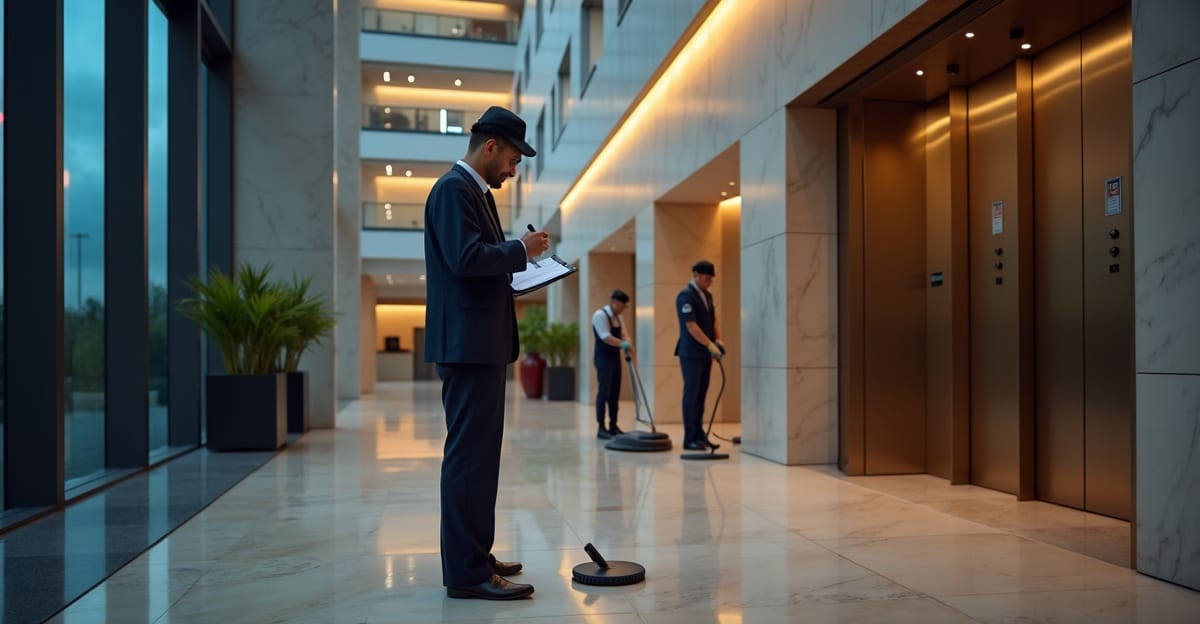
A practical corporate office cleaning guide for headquarters must address multi-floor coordination, executive presentation standards, high-traffic areas, and strict compliance obligations that smaller offices don’t encounter. We know that cleaning at this level directly supports brand perception, employee wellbeing, risk management, and business continuity. We structure it carefully, document consistently, and supervise it closely.
Key Takeaways
- Corporate headquarters cleaning requires documented standards, site-specific checklists, clear supervision, and defined escalation pathways.
- High-traffic and high-risk areas such as lobbies, lifts, bathrooms, kitchens, and boardrooms demand frequent, structured attention to protect safety and presentation.
- Layered schedules that cover daily, weekly, and periodic tasks protect operations and reduce disruption, especially when we align them with after-hours access and security protocols.
- Quality control systems, including inspections, digital logs, and regular reporting, maintain consistency across multiple floors and departments.
- Compliance with Safe Work Australia’s WHS framework and duty guidance , safe chemical handling, and formal incident procedures remains essential to control risk and support workplace safety..
What Quality Cleaning at Headquarters Level Actually Looks Like
Corporate headquarters cleaning operates on a completely different scale to a small office clean. Large sites often span multiple floors, include mixed-use areas, house executive suites, and manage high daily foot traffic. Standards are higher. Visibility is greater. Expectations are stricter.
At this level, cleaning plays a direct role in brand perception, staff wellbeing, risk management, and business continuity. A neglected reception or poorly maintained bathroom reflects on leadership. Strong cleaning standards support a professional image and help reduce operational risk.
Any practical cleaning corporate office guide should address the realities of headquarters environments. That includes multi-floor coordination, executive presentation standards, and documented commercial office cleaning standards aligned to the building’s use.
Quality setups should include:
- Documented cleaning standards tailored to the site.
- A site-specific head office cleaning checklist.
- Clear supervision structure and defined escalation pathways.
- An after-hours office cleaning plan aligned with building security.
For office managers, strata managers, medical administrators, and corporate operations leads in Adelaide and Sydney, these structures aren’t optional. They are the baseline for accountable corporate headquarters cleaning and effective strata and corporate cleaning services.
We see one core difference at headquarters level: cleaning must be structured. It cannot rely on memory, informal task lists, or reactive service calls. It must be systemised.
High-Traffic and High-Risk Areas That Require Structured Attention
Head office cleaning must prioritise high-traffic zone cleaning office requirements. These areas absorb the heaviest use and reveal quality gaps first.
Critical Zones in Corporate Headquarters Cleaning
The following areas require specific planning and frequent review:
- Lobbies and reception: glass, entry flooring, visitor seating, counters, and high-touch contact points must be reset daily. These areas form first impressions and reflect your brand.
- Lifts and foyers: buttons, handrails, mirrors, and floors require daily sanitisation. Lift foyers often experience the highest congestion at peak hours.
- Bathrooms: hygiene compliance, consumables monitoring, odour control, and floor safety must be managed continuously.
- Kitchens and breakout zones: shared appliances, benchtops, sinks, and waste require structured wipe-downs and rotation.
- Executive offices and boardrooms: detailing is often scheduled before key meetings. Presentation standards here are higher.
- Shared desks and hot desks: surfaces must be disinfected and reset for the next user.
Mixed-use or multi-tenant buildings may have medical tenants, consulting suites, or health-related services within the complex. In these cases, lift lobbies, shared bathrooms, and communal areas may require stricter high-touch sanitisation standards.
Risk management remains central. Slip hazards from wet floors, waste overflow in kitchens, or cross-contamination in shared spaces expose employers to avoidable incidents, as outlined in SafeWork NSW guidance on slips, trips and falls. High-traffic zone neglect is often the first sign that quality control is slipping in commercial cleaning.
Well-managed high-touch surface cleaning programs, consistent with public health guidance on cleaning high-touch surfaces , reduce these risks, particularly in lifts, foyers, and shared equipment zones.
Clear zoning and task frequency planning prevent inconsistencies between floors. Large buildings fail when each level is treated differently without alignment to consistent commercial office cleaning standards.
Structured Cleaning Schedules That Protect Business Continuity
Professional headquarters environments require layered schedules. Daily cleaning alone is not enough. Weekly detailing and periodic restorative tasks must be planned in advance.
A structured program should include:
Daily tasks:
- Sanitising high-touch surfaces.
- Bathroom cleaning and restocking.
- Kitchen wipe-downs and waste removal.
- Vacuuming and mopping high-use areas.
Weekly tasks:
- Detailed floor care.
- Interior glass cleaning.
- Dusting vents, skirting boards, ledges, and partitions.
Periodic services:
- Carpet extraction.
- Strip and seal treatments.
- Upholstery cleaning.
- Targeted deep cleaning cycles.
Large sites often benefit from structured janitorial services where staff remain visible and responsive across the workday.
After-hours office cleaning reduces disruption and prevents workflow interference. Meetings run without vacuum noise. Lifts are cleaned outside peak movement. Sensitive departments maintain privacy.
For deeper insight into this model, the advantages are clearly outlined in this overview of the benefits of after-hours cleaning for businesses.
Scheduling must also consider:
- Security access and sign-in procedures.
- Alarm codes and lock-up coordination.
- Multi-floor team deployment.
- Noise control around call centres, executive offices, or health-related spaces.
Alignment with Australian WHS expectations is essential. Cleaning must support safety without creating new risks. For guidance on determining frequency requirements, this breakdown of how often offices should be professionally cleaned provides a useful reference point.
Well-planned scheduling keeps operations steady. Cleaning should move quietly in the background while daily business continues without interruption.
Quality Control, Reporting, and Accountability Systems
Consistency across multiple floors is a defining benchmark of professional corporate headquarters cleaning. That consistency relies on supervision, reporting, and structured quality control.
Effective quality control in commercial cleaning should include:
- Scheduled inspections and spot audits.
- Digital logs or service records.
- Photo verification where required.
- Defined escalation pathways for unresolved issues.
On larger sites, supervision may be structured as an on-site supervisor supported by senior management, or through designated team leads assigned per floor or zone. Either way, visibility matters. Cleaning teams should have leadership present and accountable.
Communication frameworks should support:
- Regular review meetings with property or facilities managers.
- Issue tracking with response time standards.
- Clear single points of contact.
If reports, audits, or structured feedback are absent, there may be a gap in the provider’s systems. Commercial office cleaning standards should be documented, measurable, and reviewable.
Understanding the scope is also essential. This explanation of what office cleaning involves outlines typical inclusions that should appear in documented standards.
Professional providers delivering commercial cleaning services across multi-floor sites operate with systems, not assumptions.
Compliance, Safety, and Risk Management Expectations
Cleaning in corporate headquarters forms part of workplace safety obligations under Australian WHS requirements. It cannot sit outside compliance discussions.
Core expectations include:
- Safe chemical storage and labelled containers.
- Accessible Safety Data Sheet (SDS) requirements for workplace chemicals documentation.
- Staff training records.
- Incident reporting procedures.
Shared buildings introduce additional coordination. Strata and corporate cleaning services must align with base building management, tenant responsibilities, and defined liability boundaries, (see NSW Fair Trading guidance on strata responsibilities and common property). Clear documentation reduces disputes.
Poor cleaning increases exposure. Slippery floors increase fall risk. Cross-contamination raises hygiene concerns. Waste overflow creates safety hazards. A poorly maintained environment damages reputation.
High-level environments, especially those operating within corporate workplace cleaning frameworks, treat compliance as non-negotiable.
Cleaning supports workplace safety. It does not operate separately from it.
How to Evaluate Your Current Cleaning Setup
Strong office cleaning best practices rely on structure. Evaluating an existing setup requires honest internal review.
Use this practical head office checklist to assess performance:
- Are high-traffic areas consistently maintained across all floors?
- Are consumables restocked proactively rather than after complaints?
- Is there a written scope aligned with commercial office cleaning standards?
- Are inspection reports shared regularly?
- Is after-hours office cleaning reducing disruption?
- Is there one clear point of contact?
Warning signs often include repeated complaints from the same floor, limited supervision visibility, reactive communication, or undocumented quality control in commercial cleaning.
Another common issue is overlooked spaces. This guide to commonly missed office areas helps identify gaps that leadership teams often notice first.
Corporate headquarters cleaning must operate with clarity and accountability. A structured cleaning corporate office guide ensures expectations are written, measured, and reviewed. If gaps appear, it may be time to request a site-specific review or reassess how the cleaning program aligns with the building’s operational standards.
Strong systems protect presentation. They protect staff. They protect the business.
Frequently Asked Questions
A cleaning corporate office guide for headquarters should include documented standards, site-specific checklists, layered schedules, and clear supervision structures. It must define daily, weekly, and periodic tasks while outlining escalation procedures and compliance requirements. Including high-traffic zone protocols and after-hours access planning ensures consistency across multiple floors and departments.
A corporate headquarters should receive daily cleaning for high-touch and high-traffic areas, with weekly detailing and scheduled deep cleaning services. Frequency depends on foot traffic, building size, and tenant mix. Layered cleaning schedules help maintain hygiene, presentation standards, and operational continuity without disrupting staff or visitors.
After-hours cleaning reduces operational disruption and protects business continuity. Cleaning teams can sanitise lifts, vacuum open-plan areas, and service executive offices without interrupting meetings or workflow. This approach also supports privacy, aligns with security protocols, and allows detailed work to be completed efficiently.
Common mistakes include relying on informal task lists, lacking documented standards, and failing to inspect performance regularly. Inconsistent cleaning across floors, poor communication channels, and reactive responses to complaints also weaken quality control. Structured reporting systems and clear accountability prevent these gaps.
Evaluate a corporate office cleaning service by reviewing inspection reports, checking consistency across high-traffic zones, and confirming compliance documentation. Look for digital service logs, defined escalation pathways, and proactive consumable restocking. Effective providers operate with measurable standards and regular performance reviews rather than informal oversight.